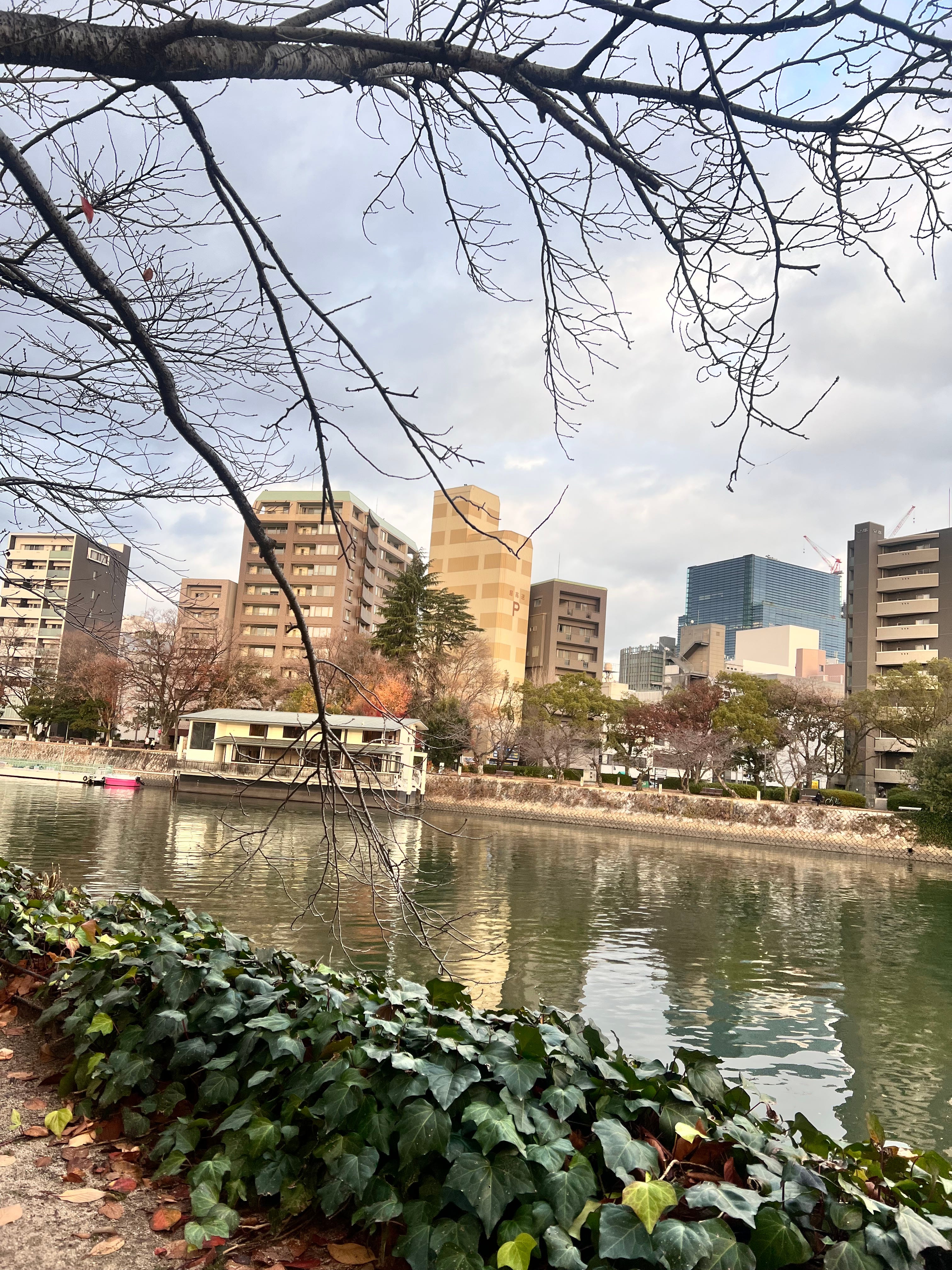
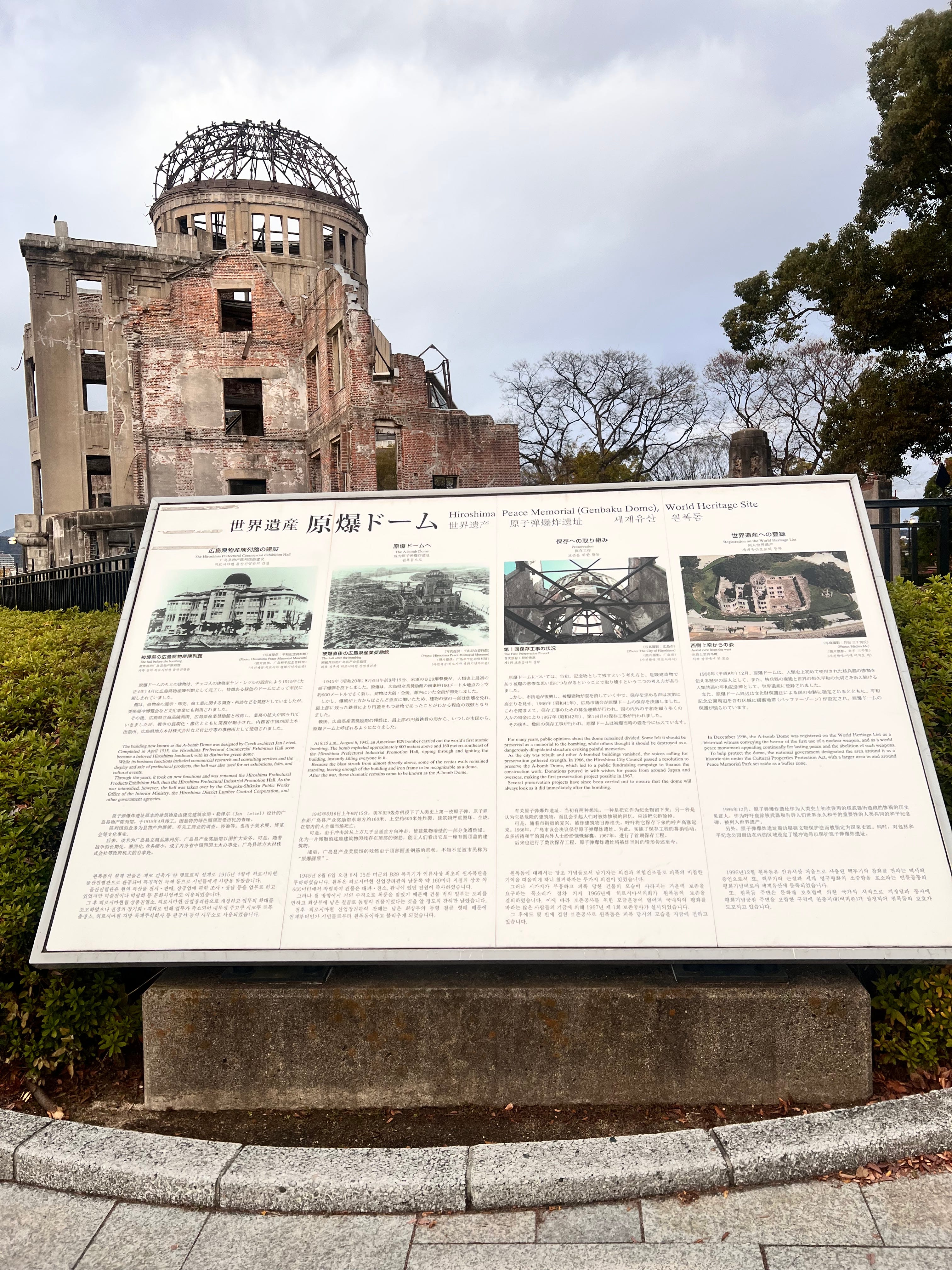
During my recent trip to Japan, I realized that Hiroshima was only 300km away from Osaka. While that initially seemed like a lot coming from a country that measures 40x20km, it was just an hour and twenty minutes on the Shinkansen (bullet trains). So it made the two hour journey from my hotel room to the memorial not that bad of a day trip.
It’s pretty remarkable how Japanese high-speed rail began over sixty years ago in 1964 with speeds of up to 210km/h. Today the Shinkansen tops out at 320km/h and while its network might be less impressive than that of the Chinese, it’s still advanced (and a whole lot more punctual) compared to most of the developed world.
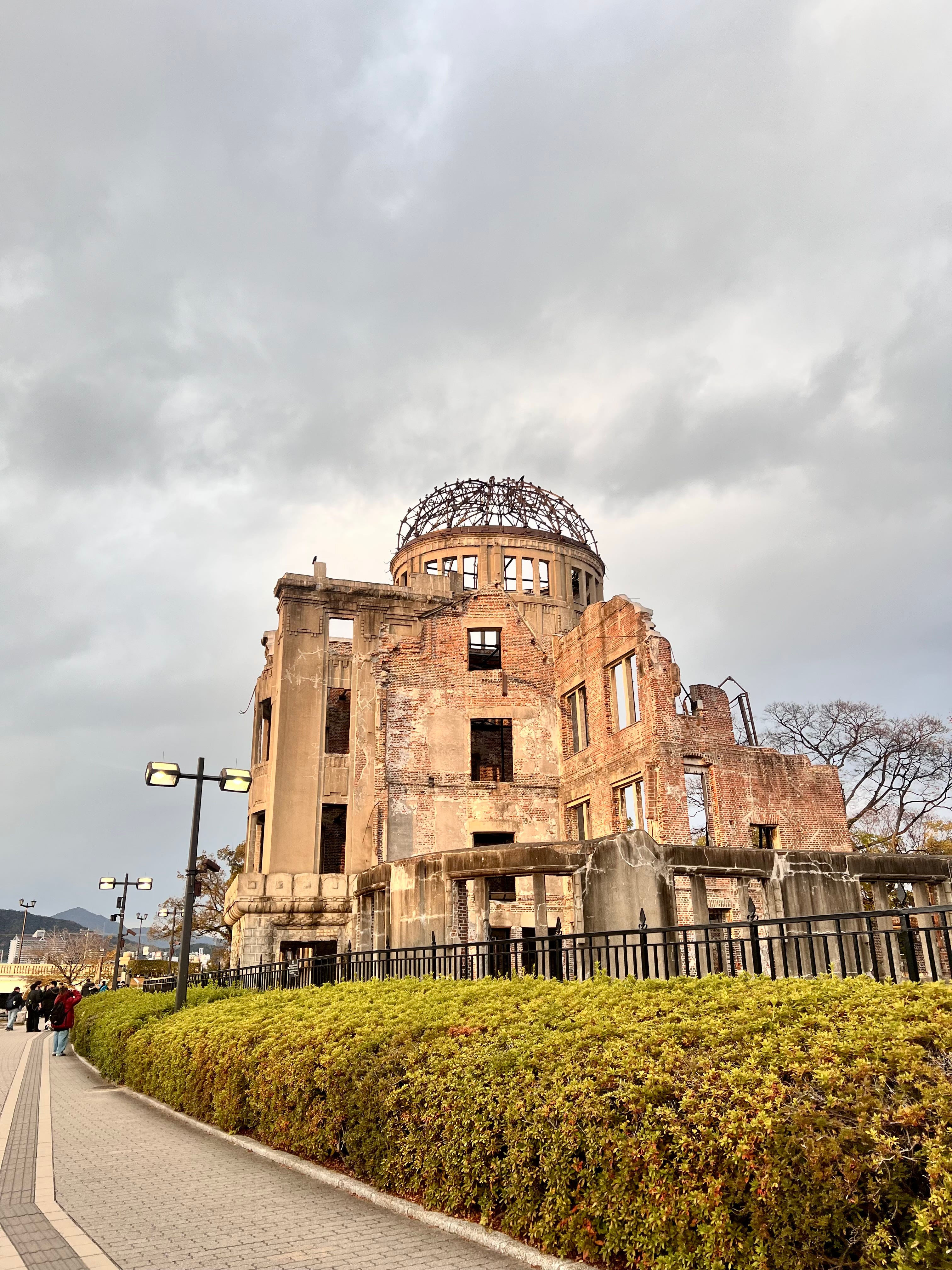
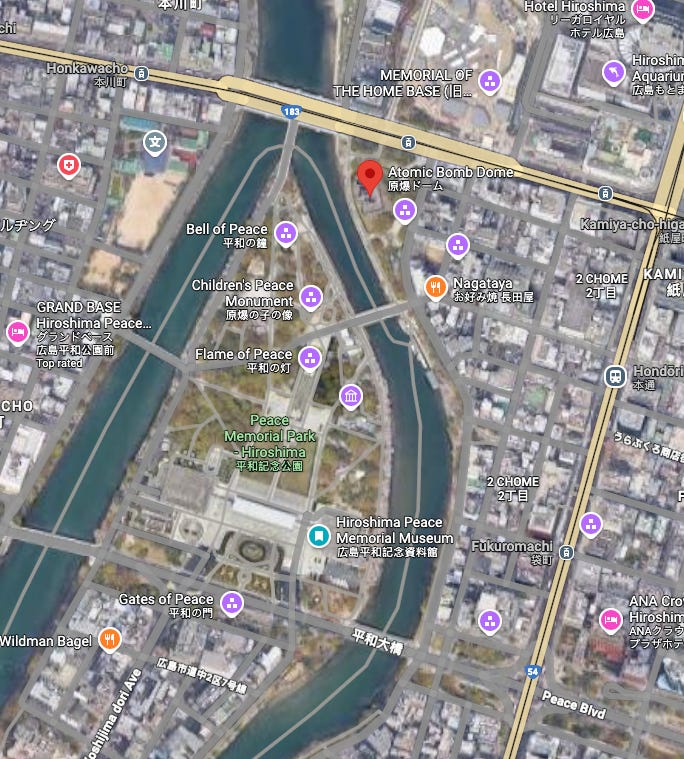
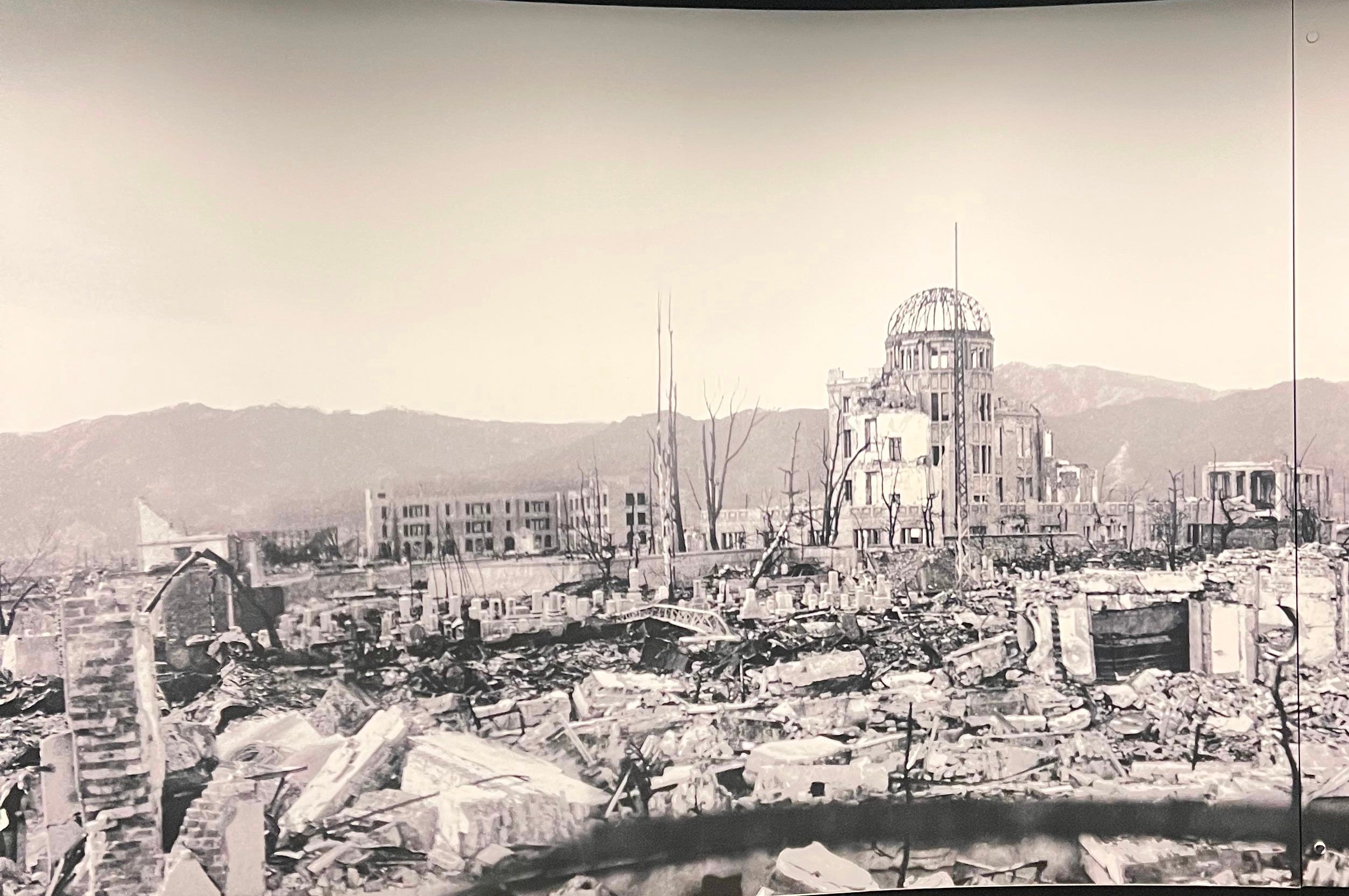
After arriving at Hiroshima station, we took trams to the Atomic Bomb Dome. The building is near the hypocenter of the explosion and mostly survived due to its reinforced stone and steel structure. The city preserved it and built a memorial park around the area with a museum to document the bombing and its aftermath.
The park sits directly beneath the T-shaped Aioi Bridge, which was supposed to be the original aiming point for the bomb. However, the actual detonation occurred a few hundred meters to the southeast.
While Hiroshima will forever be immortalized in history, it isn’t just history for the 100,000 or so survivors of the Hiroshima bomb still alive today. For reference, the population of the city was estimated at around a million at the time of the bomb in August 1945 and around 100,000 died on the first day with a further 70,000 dying because of the effects of the bomb by the end of the year. This doesn’t include the many hundreds of thousands of people who continued to suffer throughout their lives because of the radiation from the bomb and died in later years.
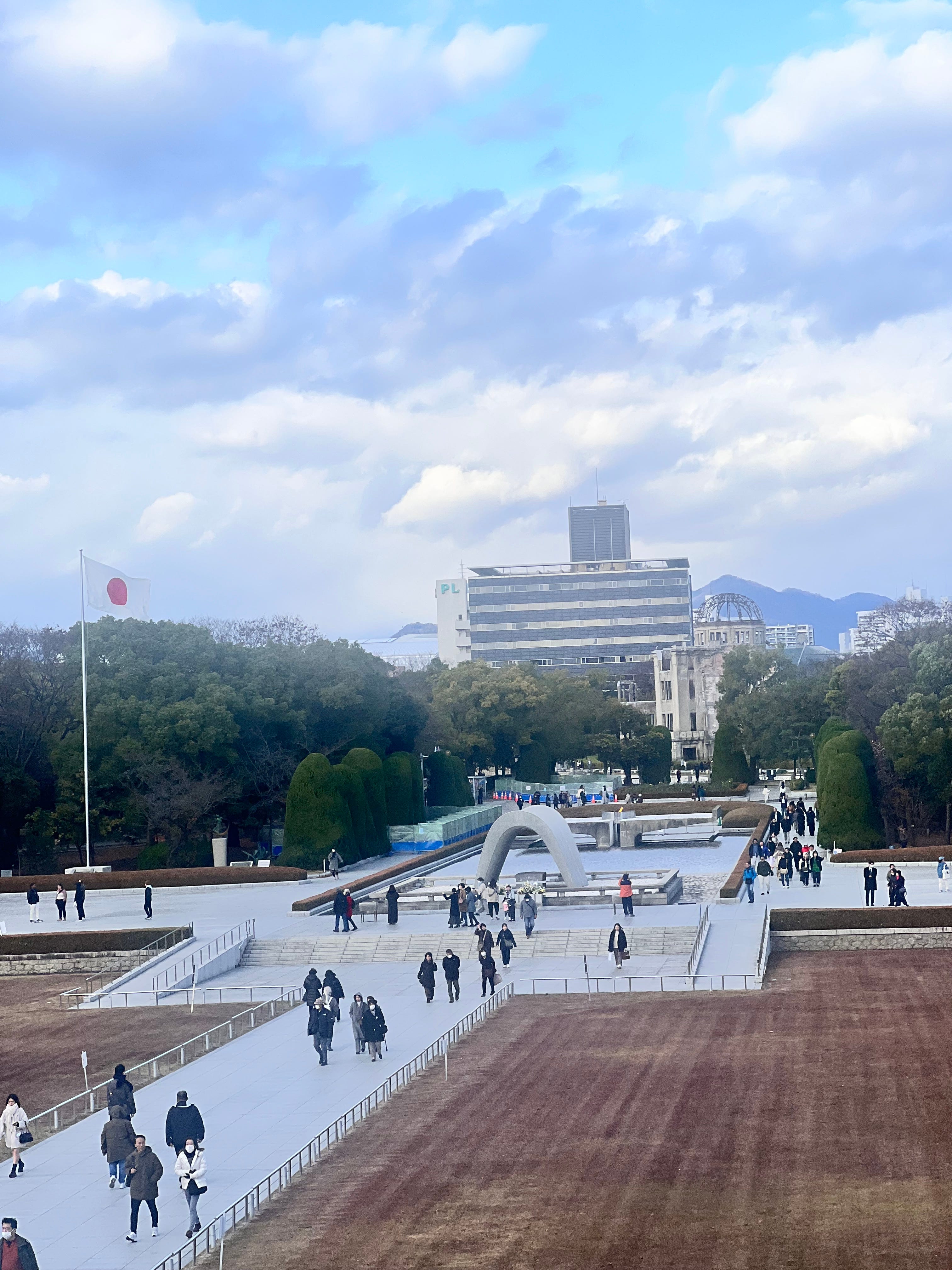
One common misconception is that it’s somehow similar to Chernobyl but that clearly isn’t the case as the radiation levels went back to normal within a year or even less as the bomb exploded 500m above the ground. The city was also largely rebuilt within a few years and returned to pre-war levels relatively quickly. Also Hiroshima and Nagasaki weren’t the only Japanese cities to get reduced to rubble, Tokyo and a whole plethora of other cities were targets of extensive firebombing campaigns by the Allies that some argue were worse than the two atomic bombs in terms of human loss and suffering.
While the magnitude of the bomb and its lasting effect on the way humans think about conflict, not to mention the instantaneous erasure of hundreds of thousands of civilians, was not lost on me, I couldn’t help but feel uneasy about the way Japan remembers WWII.
I had just come from Tokyo where there is essentially no public acknowledgement about the war. Well, technically there is the Yasukuni Shrine, which enshrines thousands of soldiers who fought for Imperial Japan (including people classified as war criminals by the International Military Tribunal for the Far East) and there’s a small museum attached with some aircraft. But that’s about it. Also, the shrine and museum are deemed controversial and apparently Japanese Emperors and Prime Ministers have mostly stopped visiting it. The war is otherwise absent from the country’s public consciousness other than the memorials at Hiroshima and Nagasaki which are monuments dedicated to Peace.
I’ll admit that I don’t know anything about post-war Japan other than that they were an industrial might that peaked in the 80s and 90s and kind of was in a place where China is today vis-à-vis the United States in those days. Then of course the housing and stock market bubble popped and the following three decades have been considered the ‘Lost Decades’ with its stagnant economic growth, low wages, low birth rates etc etc.
I would have thought that American influence would have led to some acknowledgement like there is in Germany with museums confronting their past mistakes and such but alas. Maybe it’s too soon or Cold War priorities or an East-West cultural difference or the fact that the Emperor who oversaw Imperial Japan continued to rule until his death in 1989 and that his grandson is the current Emperor.
It’s with this perspective that the Hiroshima Peace Memorial and Park felt strange to me despite the art and stories throughout the park and museum advocating for peace and an end to nuclear weapons. The museum documents horrific stories of what the people who were ‘lucky’ enough to survive went through for the rest of their lives. The effects of radiation sickness, cancers, social stigma and more. After the Americans took over following the surrender of Imperial Japan soon after, they suppressed information about the true effects of the weapon and even the Japanese government failed to provide adequate medical support for decades which was partly due to ignorance about radiation’s long-term consequences.
The museum acknowledged the Japanese surprise attack on Pearl Harbor, which surprised me, given what I’d seen in Tokyo. But I guess they can’t not include that bit when they try to explain a version of why the Americans decided to use this new horrific weapon against them.
As you would expect, Americans constitute a majority of the international tourists to this place. There were McDonald’s and Starbucks outlets round the corner, families walking past photos of charred bodies and belongings of children killed in an instant. I can’t help but think of how ephemeral it all really is. I kept looking up at the sky southeast of the Atomic Bomb Dome trying to imagine how high up 500m would have been and how tiny the Enola Gay must have looked before the blinding light and fireball engulfed everything.
It truly is a miracle that humans have not used the atomic bomb since those two days in August eight decades ago and while I’m pessimistic about human nature in war, I hope that I continue to be wrong.