

I was first introduced to the idea of traveling alone after reading Shoe Dog by Phil Knight when I was twelve. While the Nike founding story of importing running shoes from Japan was interesting, what has stayed in the back of my mind since is the story of Knight leaving Oregon to travel the world alone for a year.
The year was 1962 and the twenty-four-year-old Knight had graduated from the University of Oregon, served a year in the U.S. Army and just completed Stanford Business School where he had written a paper about the rise of Japanese sports shoes when he had a “Crazy Idea” to start his own shoe company. However, before he began, he wanted to travel the world.
It had all the hallmarks of a grand young man’s world tour as he flew around on a yearly Pan Am pass visiting dozens of countries in the 60s. He went through Asia (where he made Japanese business contacts that were later crucial for starting Nike), Africa, the Middle East, and Europe all whilst thinking about the history of each place, visiting monuments, reading, wandering and immersing himself in the culture.
I went to Hong Kong and walked the mad, chaotic streets, horrified by the sight of legless, armless beggars, old men kneeling in filth, alongside pleading orphans...
I went to the Philippines, which had all the madness and chaos of Hong Kong, and twice the poverty....
I went to Bangkok, where I rode a long pole boat through murky swamps to an open-air market that seemed a Thai version of Hieronymous Bosch...
I went to Vietnam, where streets were bristling with American soldiers, and thrumming with fear...
Days before Christmas, 1962, I went on to Calcutta, and rented a room the size of a coffin...
I flew to Kathmandu and hiked straight up the clean white wall of the Himalayas...
I went on to Kenya, and took a long bus ride deep into the bush...
I went to Cairo, to the Giza plateau, and stood beside desert nomads and their silk-draped camels at the foot of the Great Sphinx, all of us squinting up into its eternally open eyes...
I went to Jerusalem, to the rock where Abraham prepared to kill his son, where Muhammad began his heavenward ascent...
I went on to Istanbul, got wired on Turkish coffee, got lost on the twisty streets beside the Bosphorus...
I went to Rome, spent days hiding in small trattorias, scarfing mountains of pasta, gazing upon the most beautiful women, and shoes, I’d ever seen...
I went to Florence, spent days seeking Dante, reading Dante, the angry, exiled misanthrope...
I went by train up to Milan, communed with Da Vinci, considered his beautiful notebooks, and wondered at his peculiar obsessions...
I went to Venice, spent a few languorous days walking in the footsteps of Marco Polo, and stood I don’t know how long before the palazzo of Robert Browning...
I hurried to Paris, descended far belowground to the Pantheon, put my hand lightly on the crypts of Rousseau—and Voltaire...
I flew to Munich, drank an ice-cold stein of beer at the Bürgerbräukeller, where Hitler fired a gun into the ceiling and started everything. I tried to visit Dachau, but when I asked for directions people looked away, professing not to know.
I went to Berlin and presented myself at Checkpoint Charlie...
I went to Vienna, that momentous, coffee-scented crossroads, where Stalin and Trotsky and Tito and Hitler and Jung and Freud all lived, at the same historical moment, and all loitered in the same steamy cafés, plotting how to save (or end) the world.
At last I flew to London. I went quickly to Buckingham Palace, Speakers’ Corner, Harrods. I granted myself a bit of extra time at Commons. Eyes closed, I conjured the great Churchill... I spent my last night thinking back over my trip, making notes in my journal. I asked myself, What was the highlight?
Greece, I thought. No question. Greece.
Phil Knight, Shoe Dog
While there are a lot more lessons one could have gleaned from an autobiographical business book, one of the things that I had learnt was the wonders of solo travel. Knight’s experience and my further investigations into it by watching YouTubers traveling on Eurail passes all through Europe made it all seem so grand and wonderful. The idea of going somewhere far alone by yourself, standing before ruins and monuments having read books and thinking about history and coming back with a better understanding of yourself and the world seemed amazing. In the story of Knight’s life and Nike, this trip seemed like it was the origin myth that began it all.
Around the same time, I also read Walter Isaacson’s biography on Steve Jobs and it had a similar idea which looking back probably cemented both these ideas deeper into my twelve-year-old brain. When he was nineteen, Jobs went to India to find a guru for a spiritual awakening and to reach enlightenment of sorts.
One reason Jobs was eager to make some money in early 1974 was that Robert Friedland, who had gone to India the summer before, was urging him to take his own spiritual journey there. Friedland had studied in India with Neem Karoli Baba (Maharaj-ji), who had been the guru to much of the sixties hippie movement. Jobs decided he should do the same, and he recruited Daniel Kottke to go with him. Jobs was not motivated by mere adventure. “For me it was a serious search,” he said. “I’d been turned on to the idea of enlightenment and trying to figure out who I was and how I fit into things.” Kottke adds that Jobs’s quest seemed driven partly by not knowing his birth parents. “There was a hole in him, and he was trying to fill it.”
Jobs’s interest in Eastern spirituality, Hinduism, Zen Buddhism, and the search for enlightenment was not merely the passing phase of a nineteen-year-old. Throughout his life he would seek to follow many of the basic precepts of Eastern religions, such as the emphasis on experiential prajñā, wisdom or cognitive understanding that is intuitively experienced through concentration of the mind.
Walter Isaacson, Steve Jobs
So somewhere in my mind, these two stories had intertwined and inspired me to do the same during the long break I had between national service and the start of university. While scheming to start a Nike or becoming spiritually enlightened would have been cool, I wanted it to be a Napoleon and history pilgrimage through Europe. However, before I could stand before the tomb of the Emperor at Les Invalides, visit the battlefields, paintings, and palaces, and walk through the rooms he had been in, I decided to start the trip by visiting the birthplace of Western civilization and democracy.
To prepare myself for each of the places in my trip, I decided to read a travel book about it and for Athens I decided on The Colossus of Maroussi (1941) by American author Henry Miller which receives a lot of praise for the way it describes Greece and its way of life. Miller wrote the book about his nine-month-long sabbatical in Athens and the various Greek islands in 1939 right before the outbreak of WWII and I found his writing to be such a joy to read as you would have expected of a book that has not only stood the test of time but is heralded as one of the author’s best.
The interwar time period which the book is set in would be a common thread in the subsequent books that I read to prepare myself for the other cities on this trip such as Vienna, Berlin and Paris. Miller had spent nine years in Paris prior to this trip having relocated from New York City and the thing that struck me the most about his beautifully written ramblings is just how different travel is these days. While I would much rather travel by planes than ships and get to a place in hours instead of weeks, the meticulous planning and lack of spontaneity just doesn’t quite give you as many pages in a book that will stand the test of time.
The most extreme version of this is that of short form video creator Kevin Droniak who goes viral for his “Day Trips from NYC” videos. He flies from NYC to places all around the globe like Cairo or Paris or New Delhi and spends just a few hours as a tourist visiting a famous site or two and eating the local food before heading back to the airport by night. While he obviously does it for content purposes, a lot of modern travel isn’t that far off. While my trip wasn’t exactly like that, what felt almost magical about Miller’s travelogue was how spontaneous everything was from his hotels to the people he met to the food he was trying, and the ancient Greek ruins he was seeing without first having seen thousands of pictures and videos about the place all his life. He would show up at a hotel and get the last room or just hike up to random hills and see ancient ruins and sites with barely anyone let alone arrive at a specific time with pre-booked online QR code ticket and wear an audioguide headset listening to a monotonous recording tell him about a place.
The Athens of 1939 that Miller visited seemed incredibly foreign to me when I went. In fact, the most relatable thing from the book ended up being Miller lamenting that he hadn’t read the Iliad and the Odyssey by Homer which I thought about as well while wandering the narrow streets and climbing up and down hills looking at the remnants of the great civilization which I knew very little about.
On the other hand, Knight’s trip reminded me a bit of my own as he pondered the various people and history of the places he was visiting albeit he did so with guidebooks instead of the internet.
While Miller had trains and ships to get him to Athens, I had the closest possible thing which was a twelve-hour Scoot budget airline flight. It was the only non-stop flight between Singapore and Athens and while there were other options they involved transiting the Middle East (which didn’t seem like a good idea even when I was booking them a month before the Iran War had started which led to mass flight cancellations and direct Asia to Europe flights almost quadrupling in price). While I was relieved that I wasn’t affected, I realized that I had about six more flights to take intra-Europe that I had been procrastinating on and quickly booked those before the fares were hiked because of oil prices increasing.
The flight took off at 3am so I slept or at least tried to sleep the whole way through but kept waking up every twenty minutes because of my neck falling over and my back hurting and would suddenly in a sleep-deprived state remember that I was stuck in a metal tube for twelve hours to begin a month long solo trip in a different continent.
Eventually the plane landed in Athens at 9am and despite the lack of sleep, the adrenaline kept me awake and after slowly walking through the zig-zag immigration line for an hour, I finally made it out of the airport. Miller would have probably spoken to a horse to bring him to the city or whatever they did back then in the 30s. But luckily I had the AI Overview in Google search which told me to take a direct Express Bus to Syntagma Square and that I could just tap my card. After about forty minutes, the bus arrived at the square and it was just a short five-minute walk away from my hotel on Ermou street (which I soon found out was one of the main shopping streets in Athens and was crowded with people at all hours of the day). The hotel kindly allowed me to check in early and I was impressed by how well it dampened the street noise with the exception of what seemed like irregular church bells ringing from the 11th century Byzantine church at the end of the street and weird water flowing noises from the plumbing in the hotel.
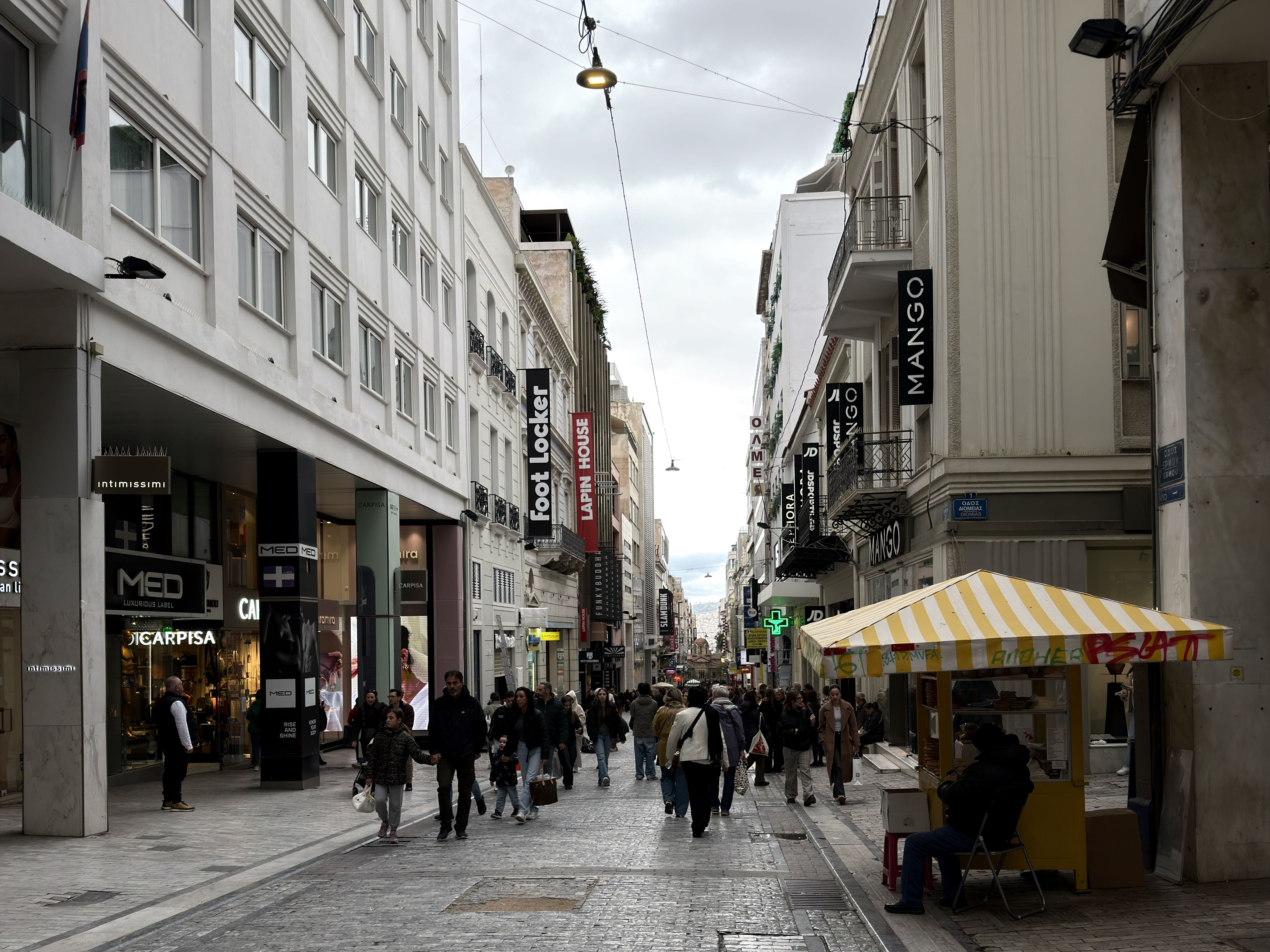
After some time recovering from the plane and hauling my heavy r/onebag 40L backpack, I headed out to find the ‘Ancient Agora of Athens’ which I had pre-booked a time slot and tickets for. The sheer surreality of being 9,000km away from home alone just to wander and look at old rocks hit me and I got lost trying to find the entrance because Google Maps didn’t account for renovations taking place and I eventually found the entrance after spotting a tour group entering the site.
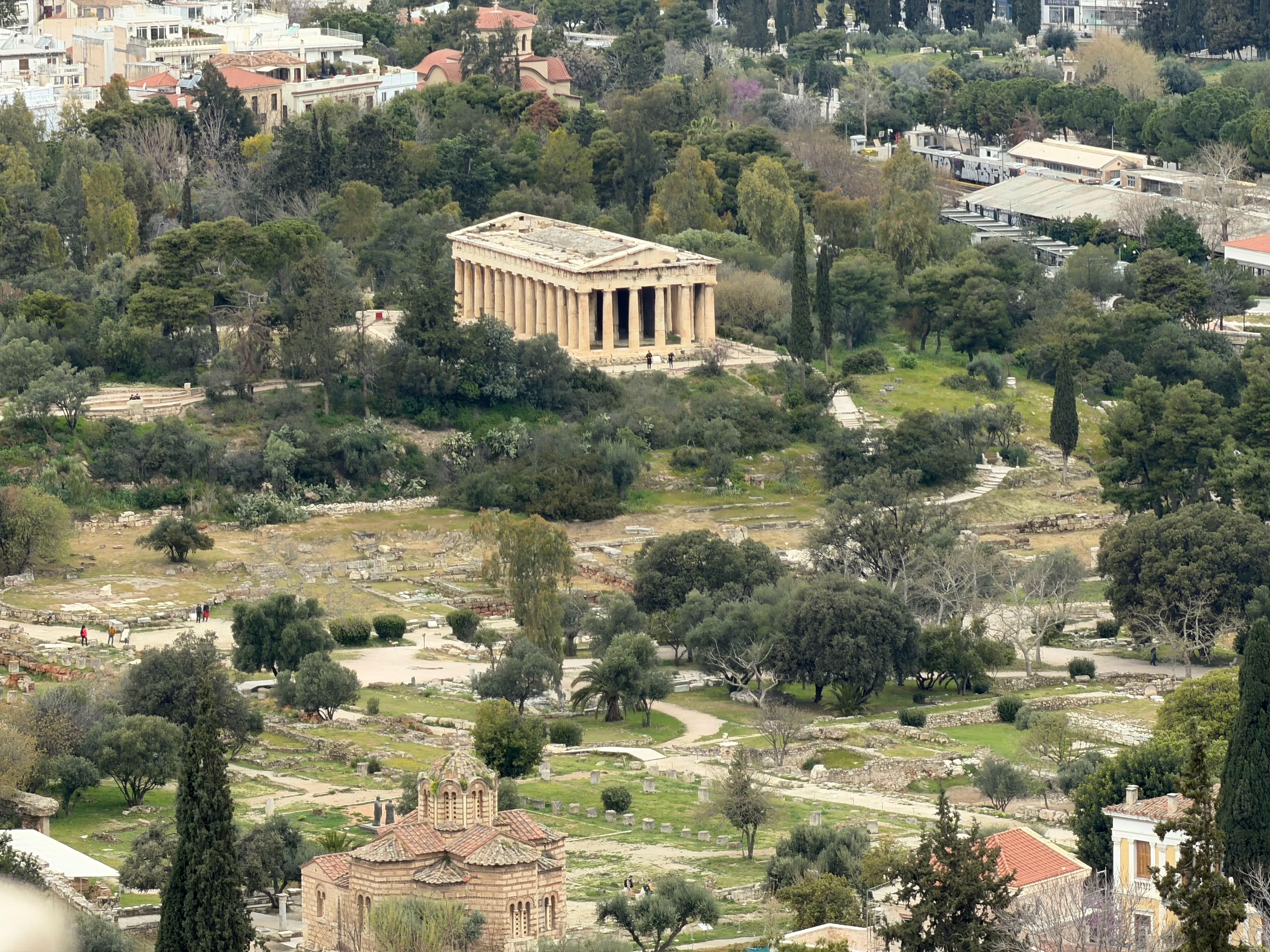
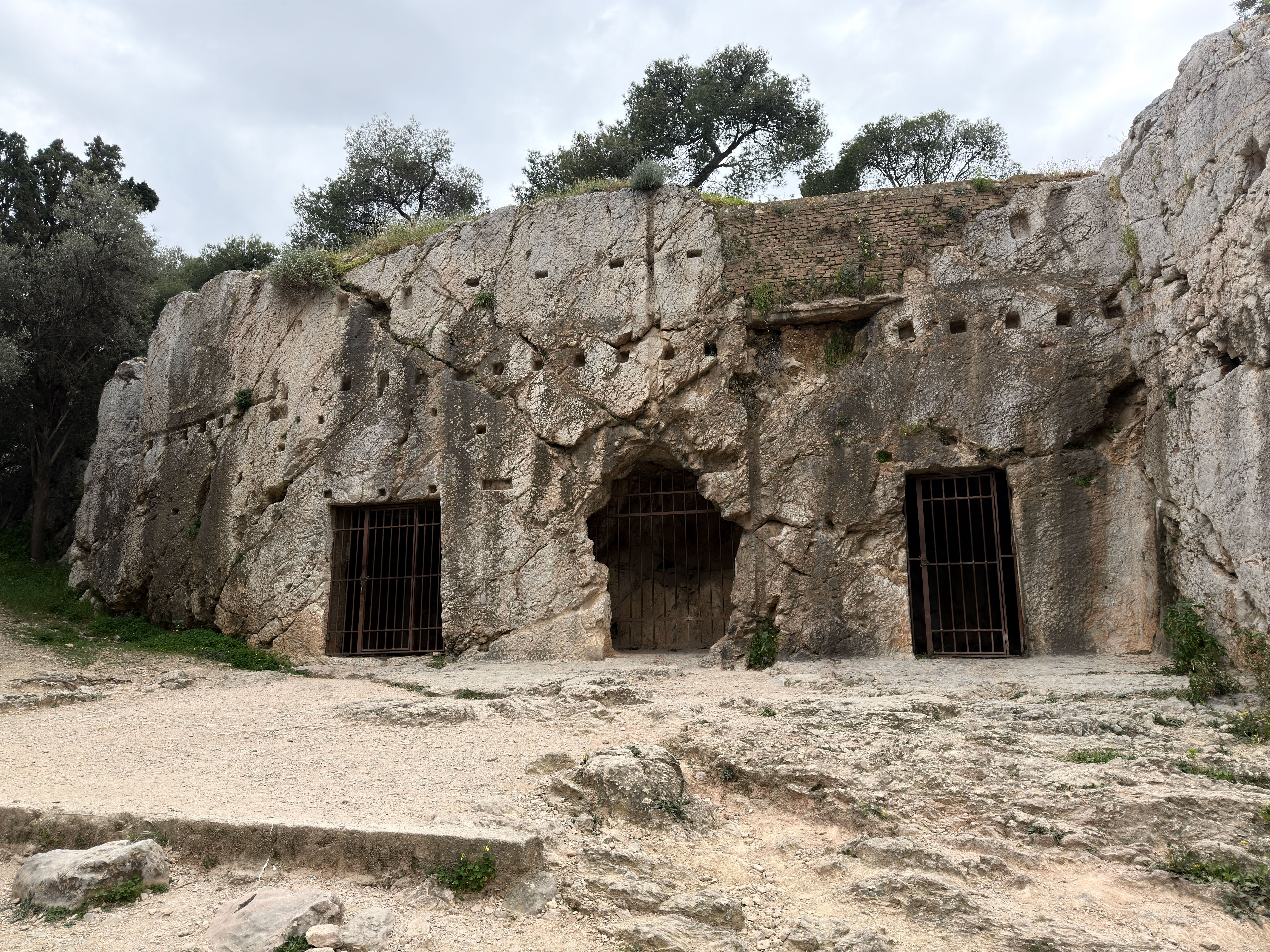
The Ancient Agora was the main town square of ancient Athens and it looked pretty surreal. There were not that many people walking around which made pondering while reading the information signs and ruins calming after walking through the crowded streets with my fellow spring tourists. After that I walked to the base of the nearby Pnyx Hill to see the prison where Socrates was apparently held which looked like a destroyed cave. Then, I hiked up the hill for about ten minutes before reaching the top for a view of the city and the Acropolis which looked majestic. After the hike, I decided to end off my day by going to the Acropolis Museum nearby which is the main museum in Athens and is also home to a lot of the actual artifacts from the Acropolis in order to protect them from the elements.
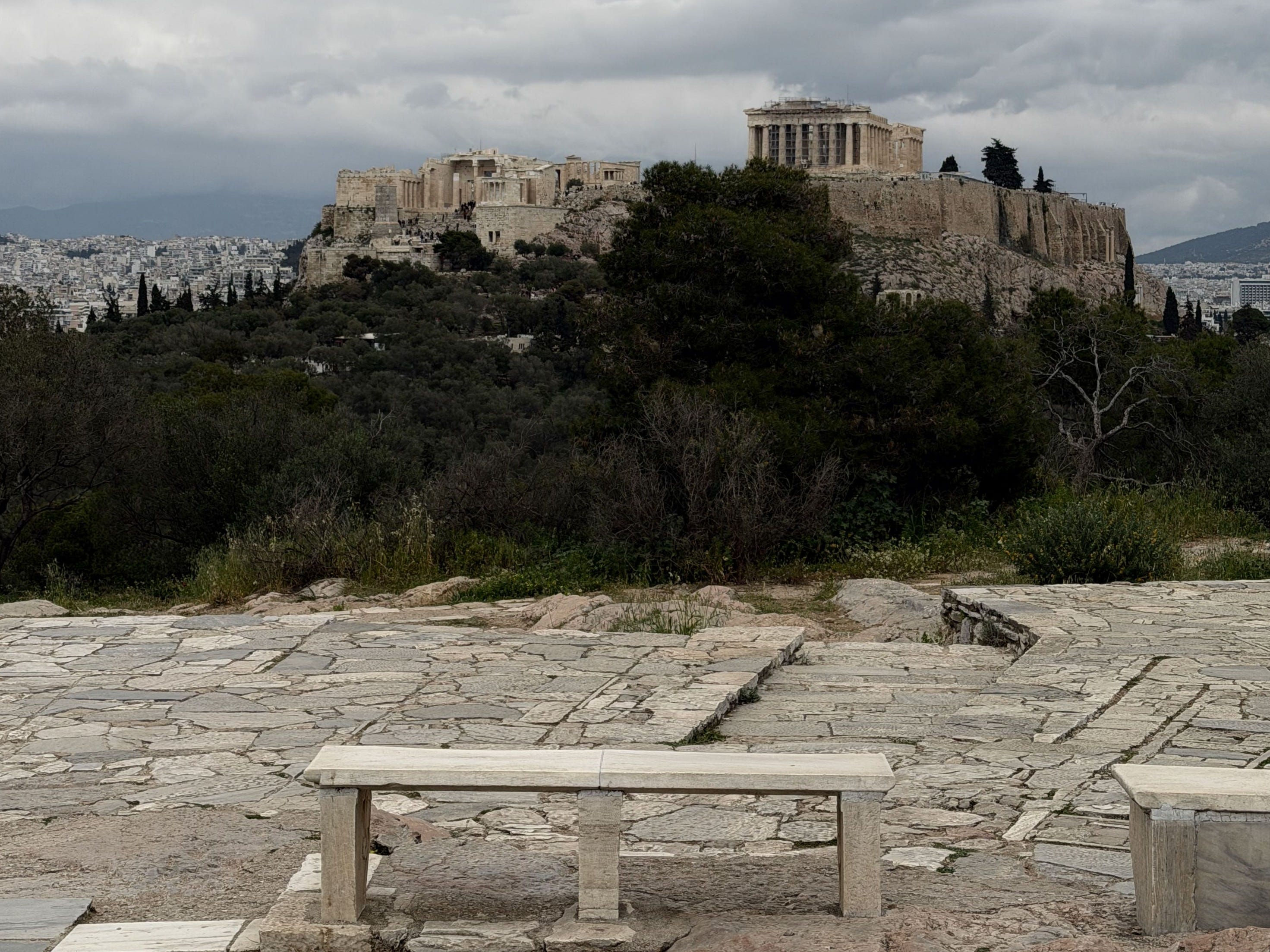
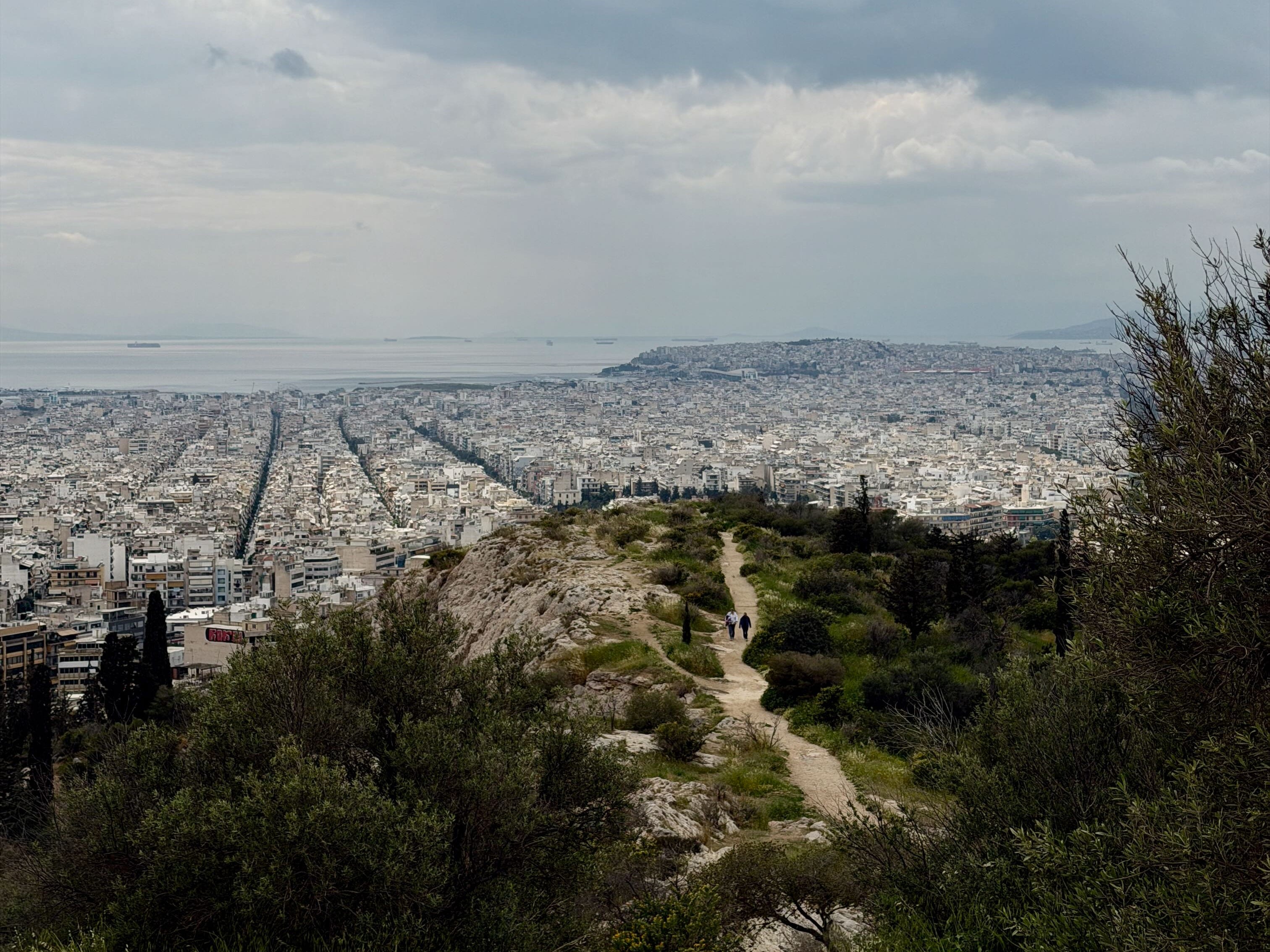
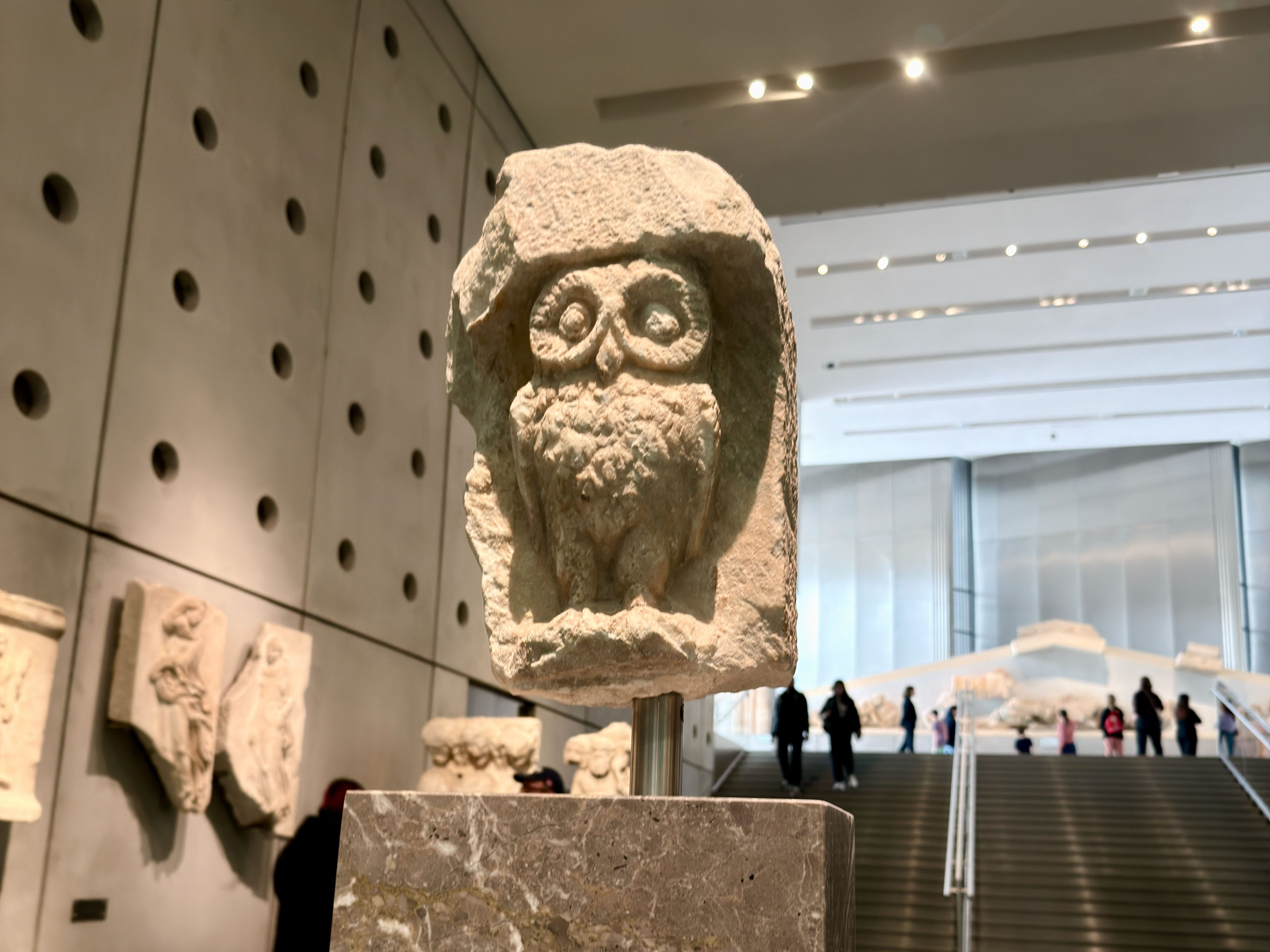
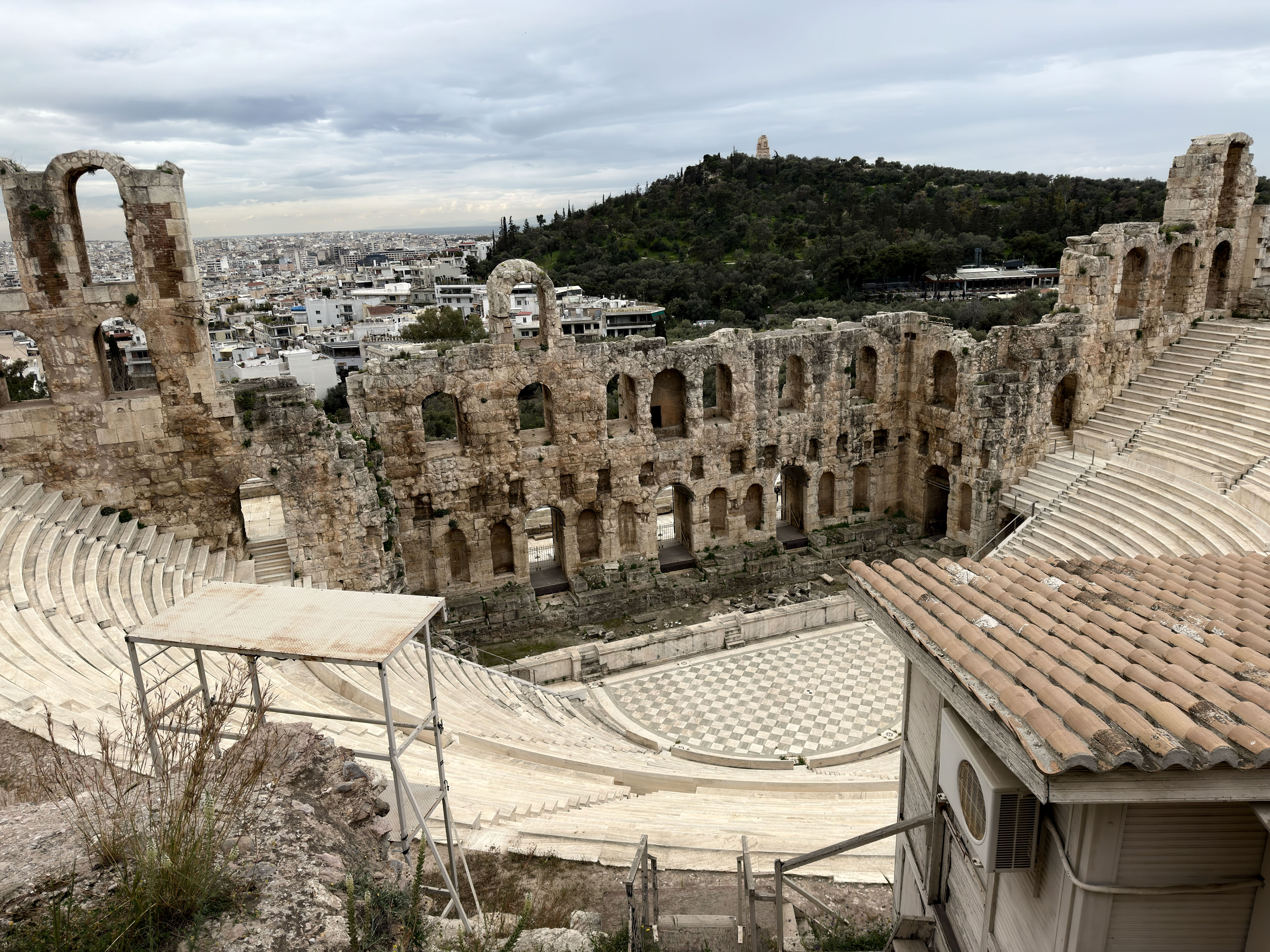
The next morning, I woke up early and headed to the Acropolis to avoid the crowds. I had already booked tickets and after going in, it took about thirty minutes to walk up to the top as there were lots of ruins, sites, and views to take in, including the Theatre of Dionysus.
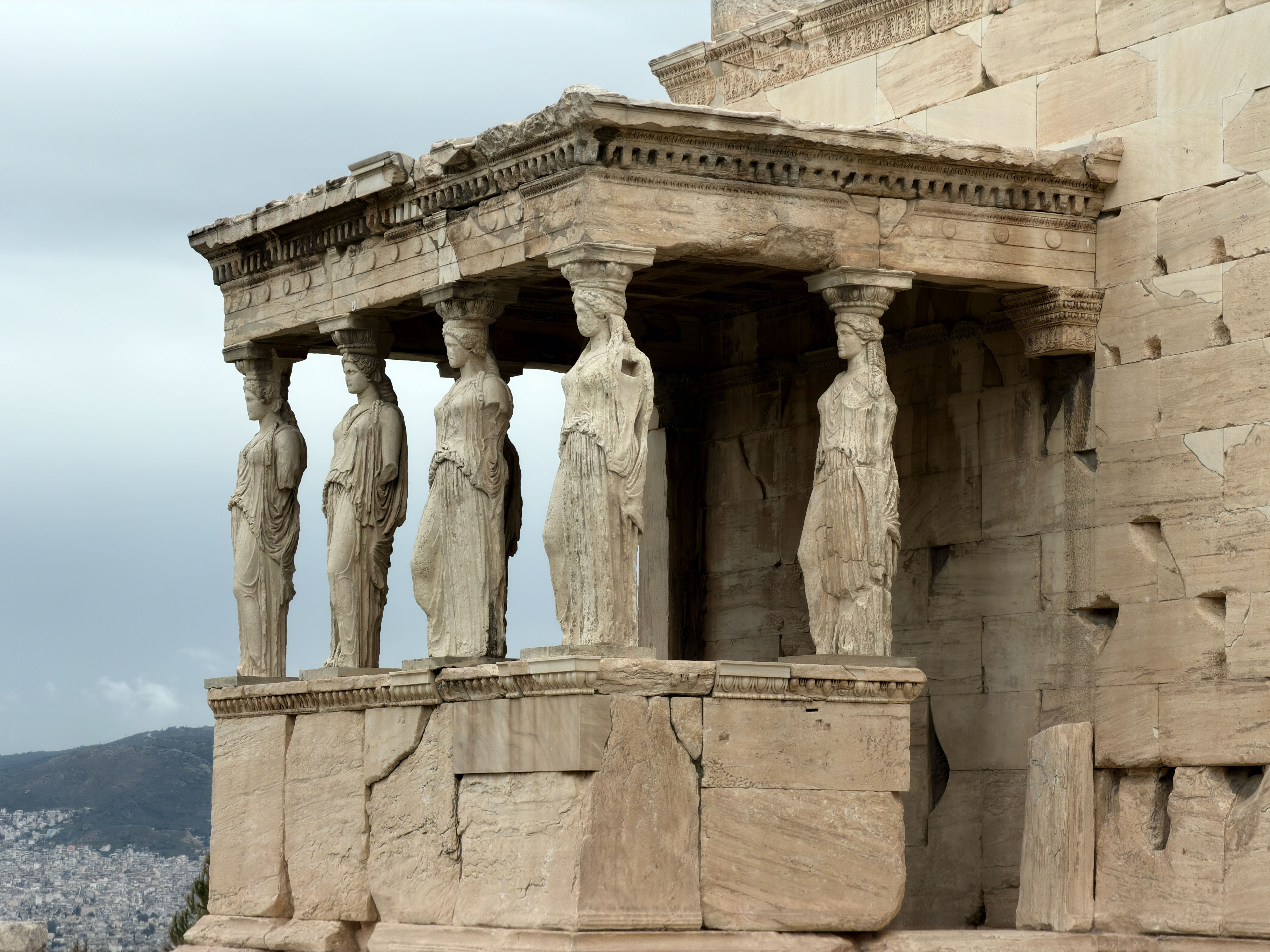
When I first left Oregon I was most excited about two things on my itinerary
I wanted to pitch the Japanese my Crazy Idea.
And I wanted to stand before the Acropolis.
Hours before boarding my flight at Heathrow, I meditated on that moment, looking up at those astonishing columns, experiencing that bracing shock, the kind you receive from all great beauty, but mixed with a powerful sense of—recognition?
Was it only my imagination? After all, I was standing at the birthplace of Western civilization. Maybe I merely wanted it to be familiar. But I didn’t think so. I had the clearest thought: I’ve been here before.
Then, walking up those bleached steps, another thought: This is where it all begins.
On my left was the Parthenon, which Plato had watched the teams of architects and workmen build. On my right was the Temple of Athena Nike. Twenty-five centuries ago, per my guidebook, it had housed a beautiful frieze of the goddess Athena, thought to be the bringer of “nike,” or victory.
It was one of many blessings Athena bestowed. She also rewarded the dealmakers. In the Oresteia she says: “I admire . . . the eyes of persuasion.” She was, in a sense, the patron saint of negotiators.
I don’t know how long I stood there, absorbing the energy and power of that epochal place. An hour? Three? I don’t know how long after that day I discovered the Aristophanes play, set in the Temple of Nike, in which the warrior gives the king a gift—a pair of new shoes. I don’t know when I figured out that the play was called Knights. I do know that as I turned to leave I noticed the temple’s marble façade. Greek artisans had decorated it with several haunting carvings, including the most famous, in which the goddess inexplicably leans down . . . to adjust the strap of her shoe.
Phil Knight, Shoe Dog
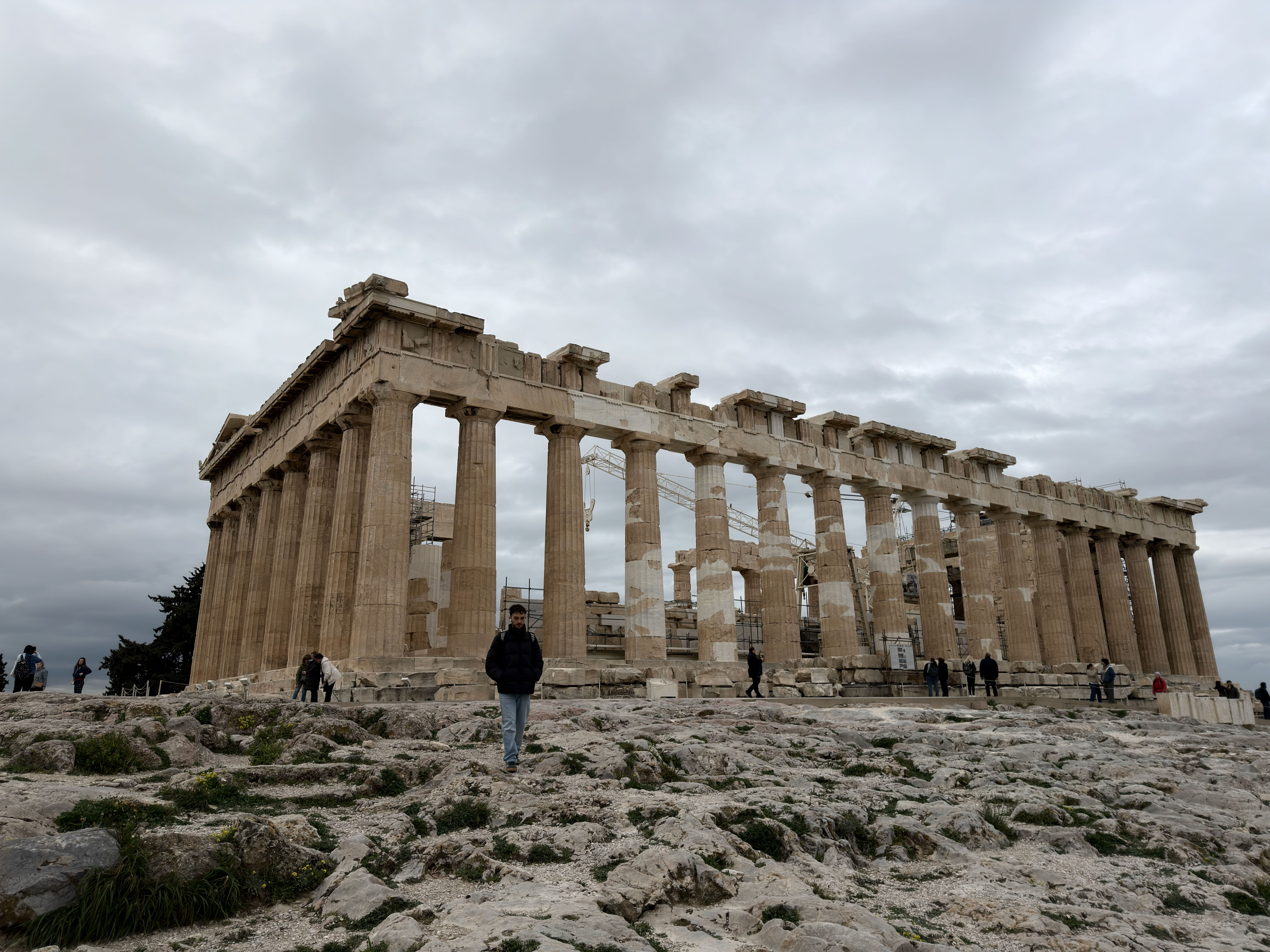
The Acropolis was incredible. The Parthenon is one of those monuments that feels almost unreal to look at in person and that too at such close proximity having seen it so many times online. Even though it hadn’t even been a full day since I arrived in Athens, I had seen it dozens of times from walking the streets to Pnyx Hill to the Acropolis Museum where they had a viewing area but it was even more amazing than I had expected it to be. Just thinking about how long ago those columns were built and how many empires and wars and human history it had survived made it feel incredibly surreal that I was standing in front of it.
I didn’t have the same revelation that Knight had with regards to starting a company that changes the world of shoes, but it was cool nonetheless. More importantly, I overheard a tour guide talking about how the Temple of Athena Nike was what had inspired the name of the famous shoe company and thought about the twenty-four-year-old Knight sixty-odd years ago who was wandering the same hill in awe as those tourists were today, not knowing that his “Crazy Idea” would one day be forever immortalized on the ancient wonder as well.
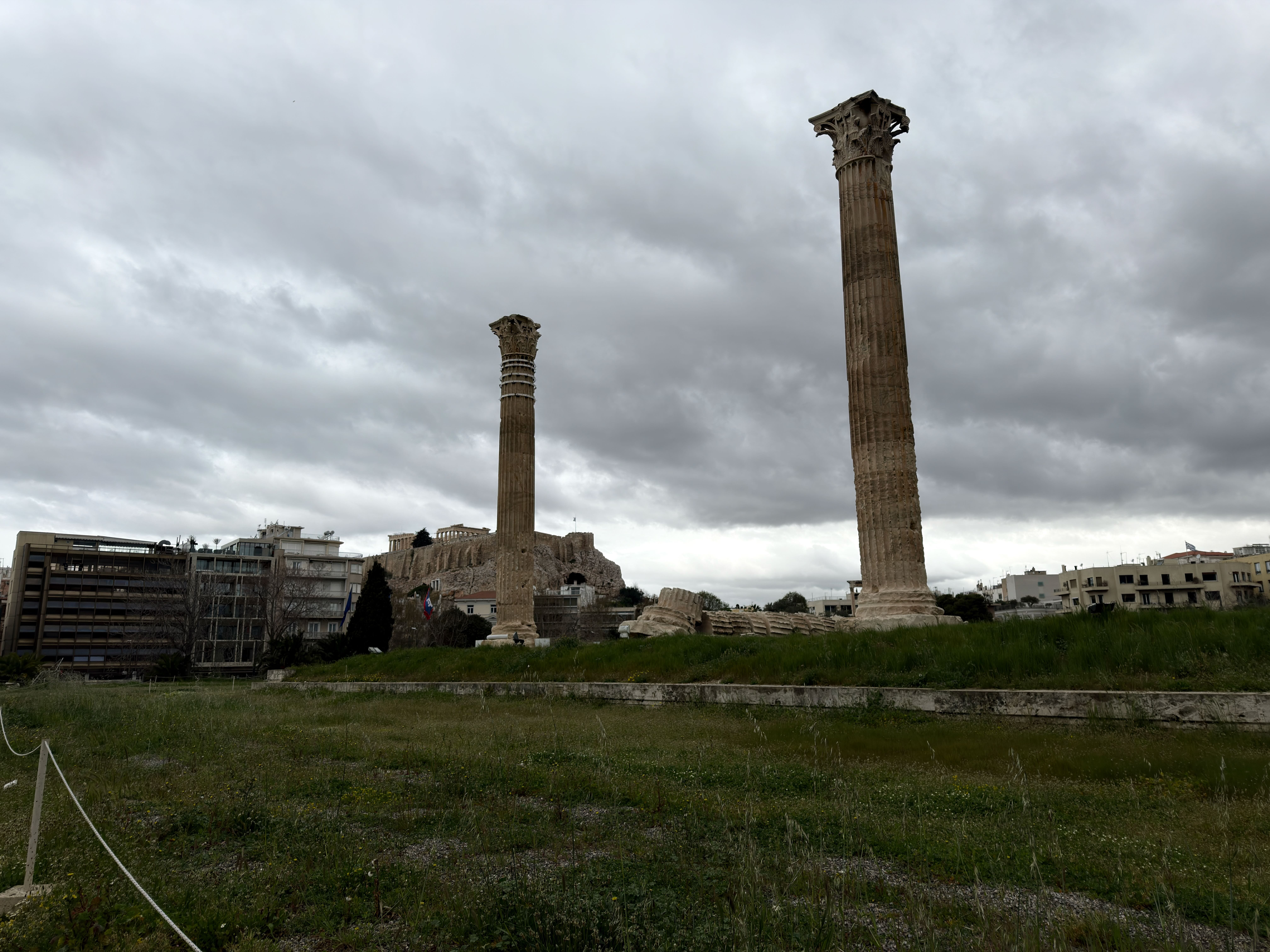
After an hour or two taking pictures and roaming around, I decided to head back down as it was drizzling and walked over to Hadrian’s Gate and the Temple of Olympian Zeus which was the largest temple in ancient Athens. Hadrian’s Gate was outside on the street but the latter required a ticket to enter the grounds and while there were ruins, most of the columns had apparently been destroyed long ago and the remaining ones were covered in scaffolding as it was undergoing renovations. That coupled with the rain meant that there was almost no one there and I decided to just sit down and read after walking around all day.
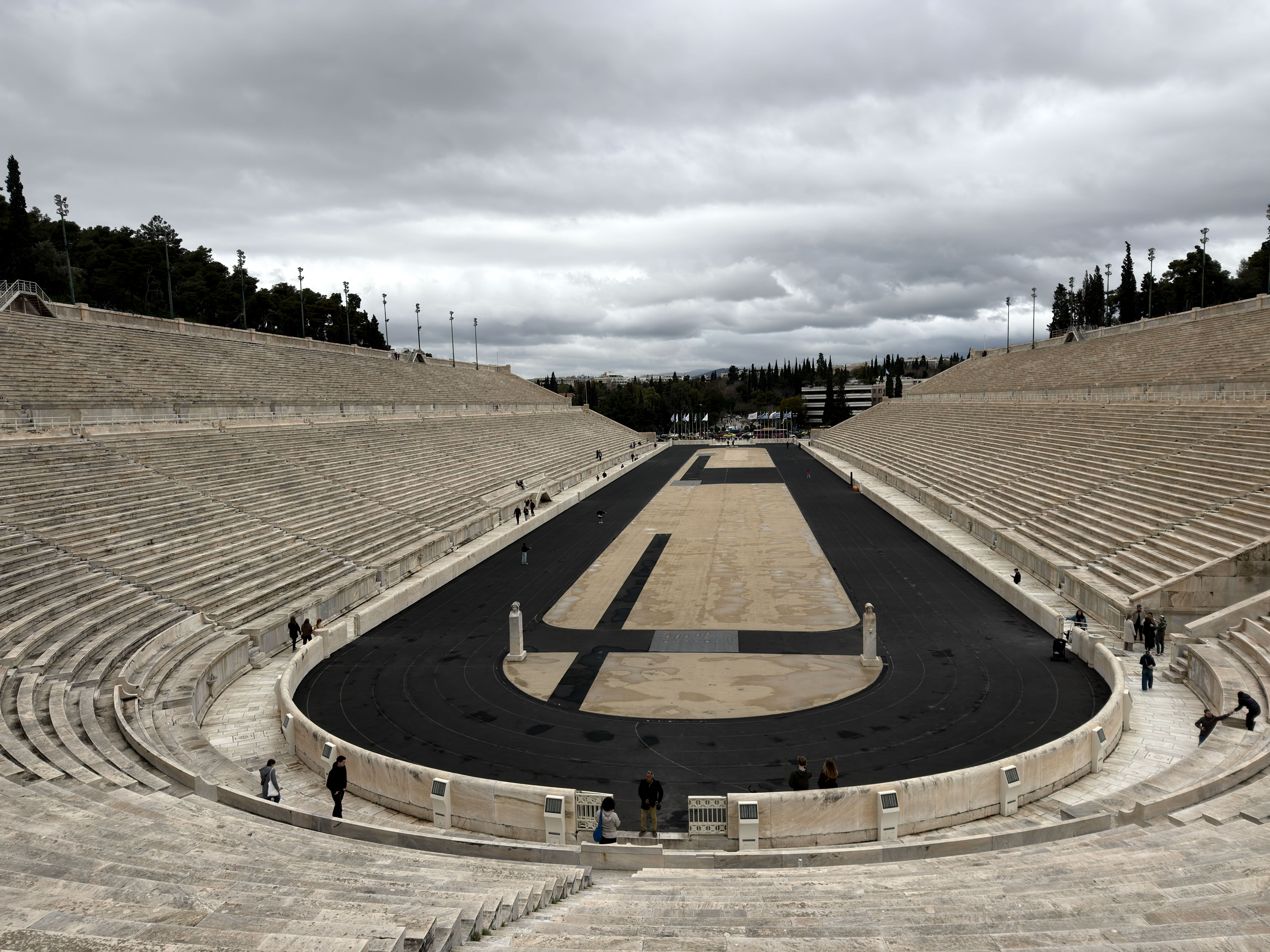
I then headed to the Panathenaic stadium which is said to be the only stadium in the world built entirely out of marble. There was an ancient stadium at the same place two thousand years ago but it was mostly abandoned until the site was excavated and rebuilt in the late 1800s in time for the first modern Olympic Games in 1896.
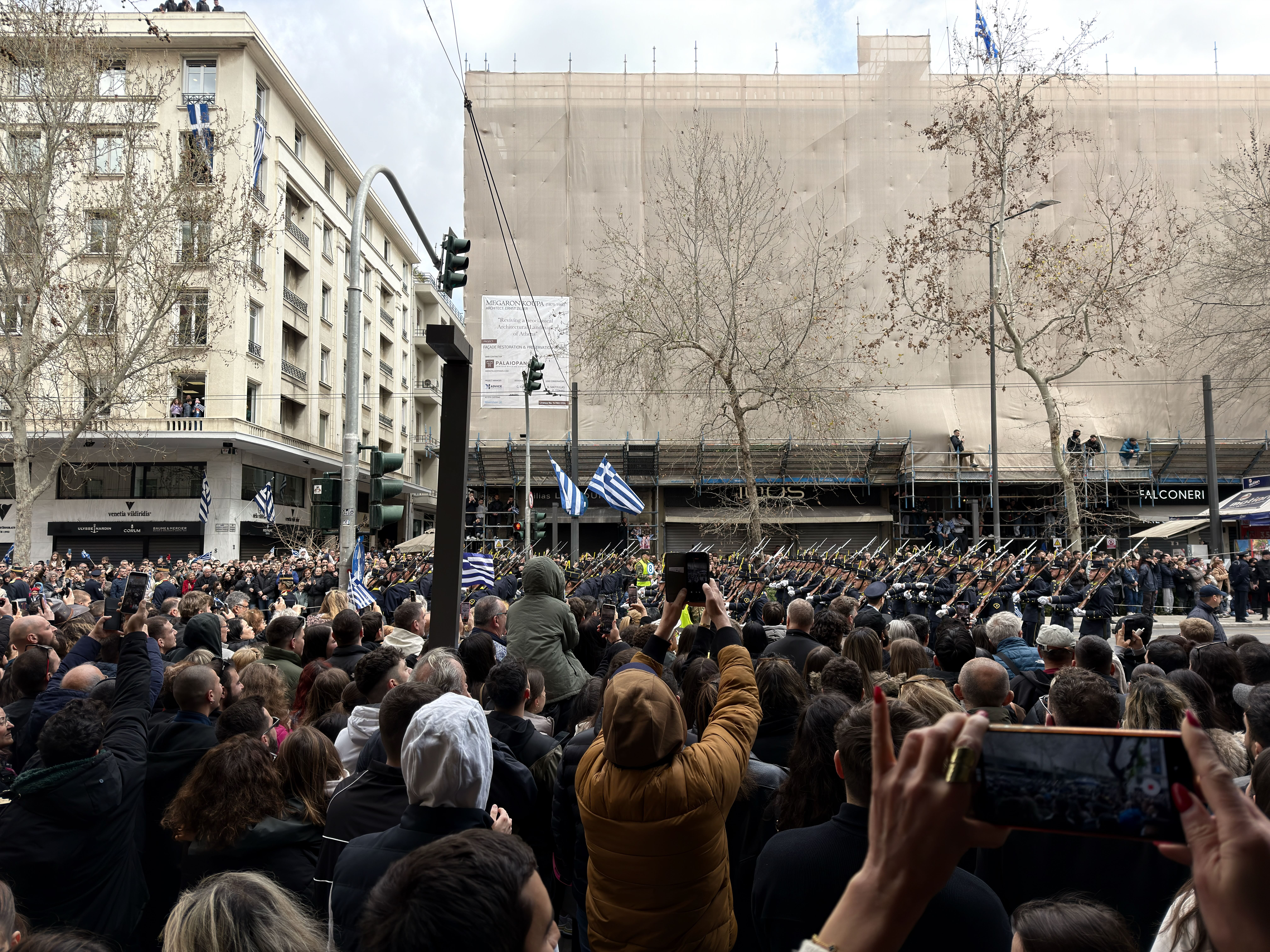
My third day in Athens was Greek Independence Day. As my hotel was near Syntagma Square, the streets around my hotel were barricaded and completely packed with Greeks waving their flag celebrating the 205th anniversary of them being independent after defeating the Ottoman Empire. Thus, as I couldn’t go anywhere else because all the museums were closed, I decided to just watch the parade with the Greeks by the street. It was the typical national day parade of soldiers and firefighters and police and all the rest marching and there were drones and helicopters and military aircraft overhead with lots of cheering and singing and flag waving about.
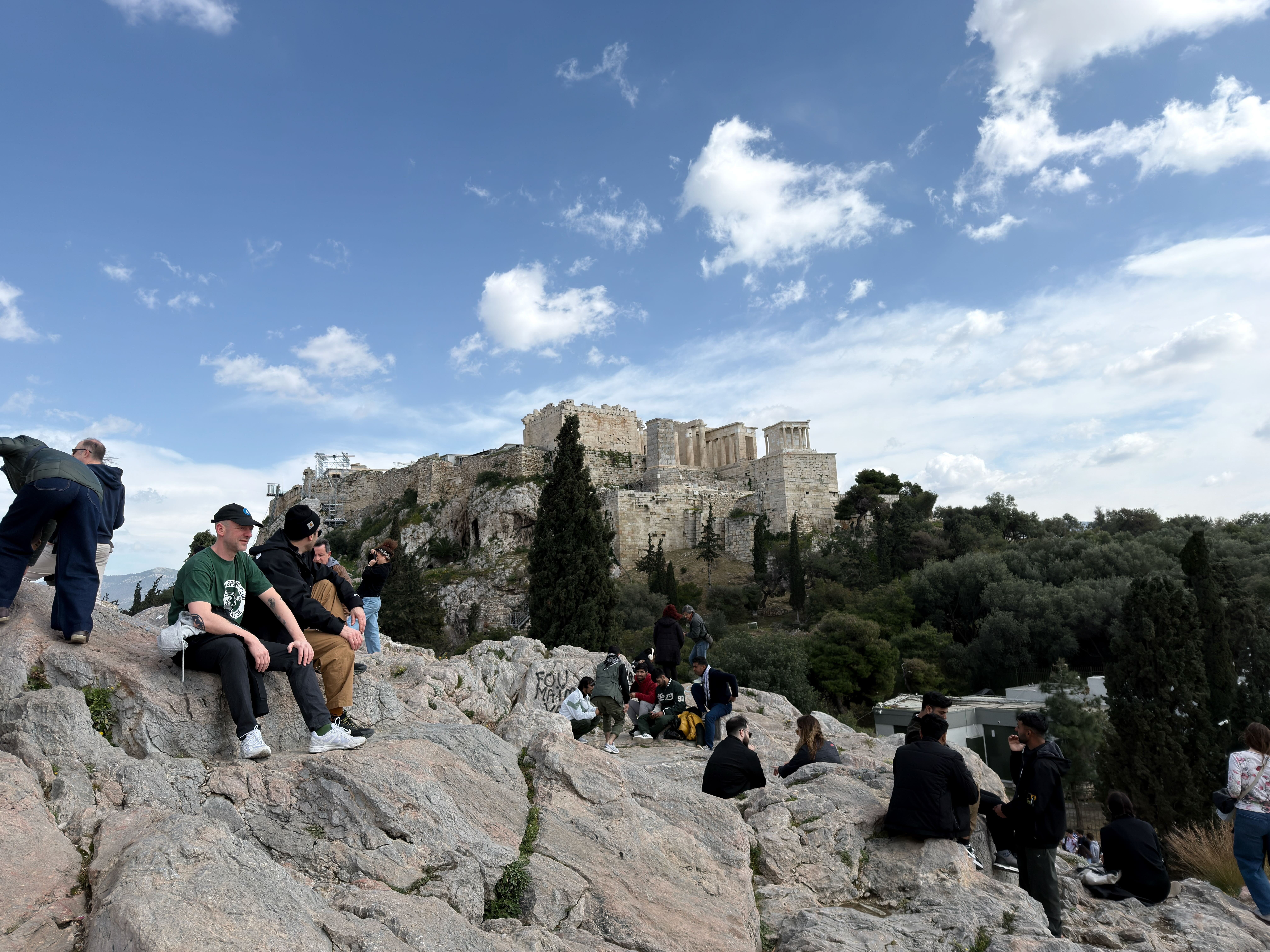
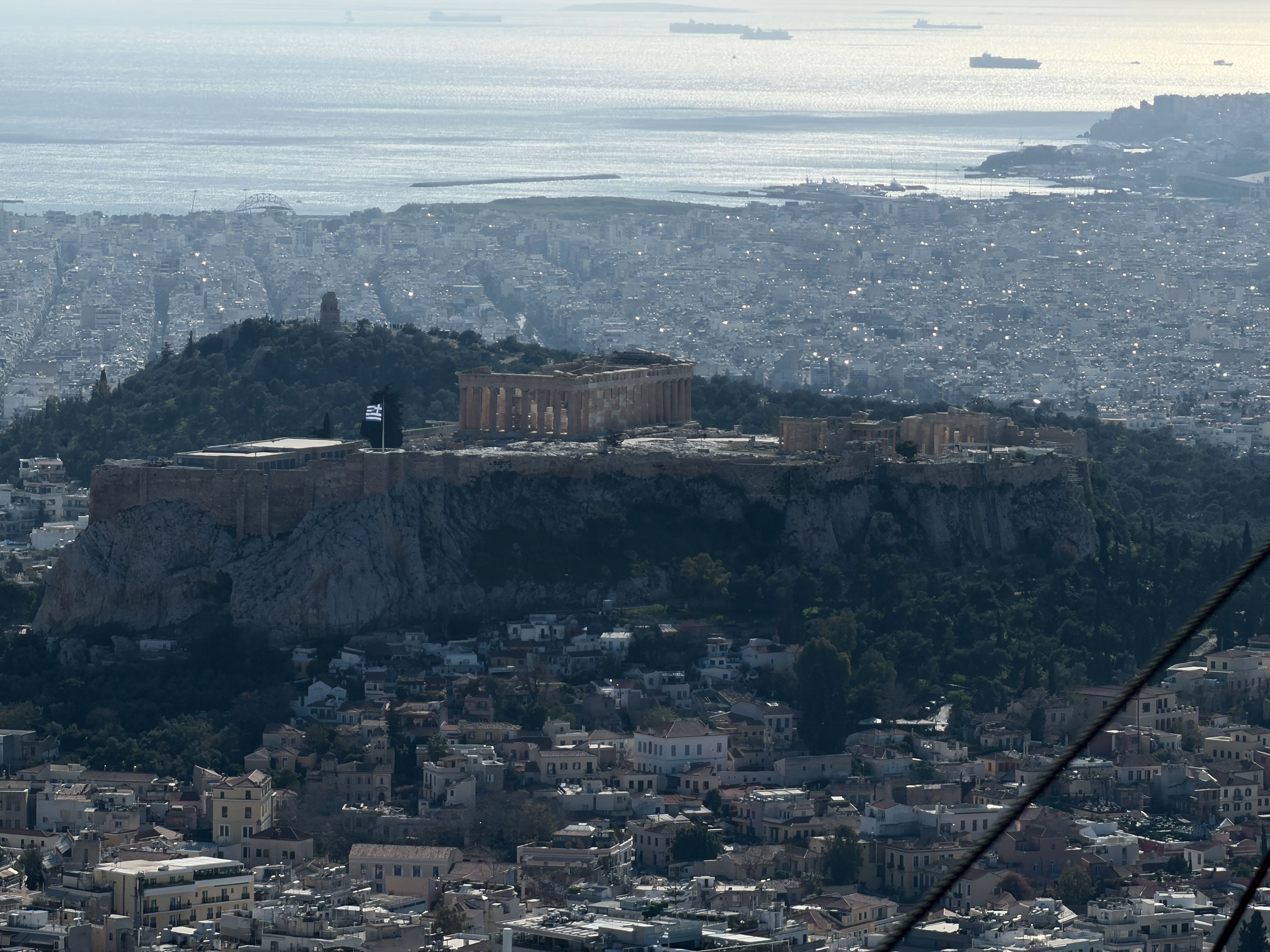
After the parade, I decided to head back again to Areopagus Hill which is a rocky hill viewpoint near the Acropolis. It was raining yesterday so there was barely anyone there when I went but today it was packed and it was so windy that I had to make sure my glasses didn’t fly off. After that, I decided to stroll along the streets and hills of Athens again and then took an Uber to the top of Mount Lycabettus which is the highest point in Athens. Due to the public holiday, the Acropolis was closed so I got to see it without people on top and it looked even more breathtaking with the sun shining and the Aegean Sea glistening in the background.
The next day, I checked out from my hotel in the morning and decided to head to the airport seven hours early because I wanted to catch up on reading before heading to my next destination of Vienna. I took the bus from Syntagma Square again and an hour later, I was back at the airport. After eating lunch, I swapped seats four times around the pretty underwhelming and tiny Athens international airport as I got through the first two hundred pages of The World of Yesterday by Stefan Zweig to get an inkling of what the Austro-Hungarian Empire and Vienna were like at the turn of the 20th century before boarding my plane.
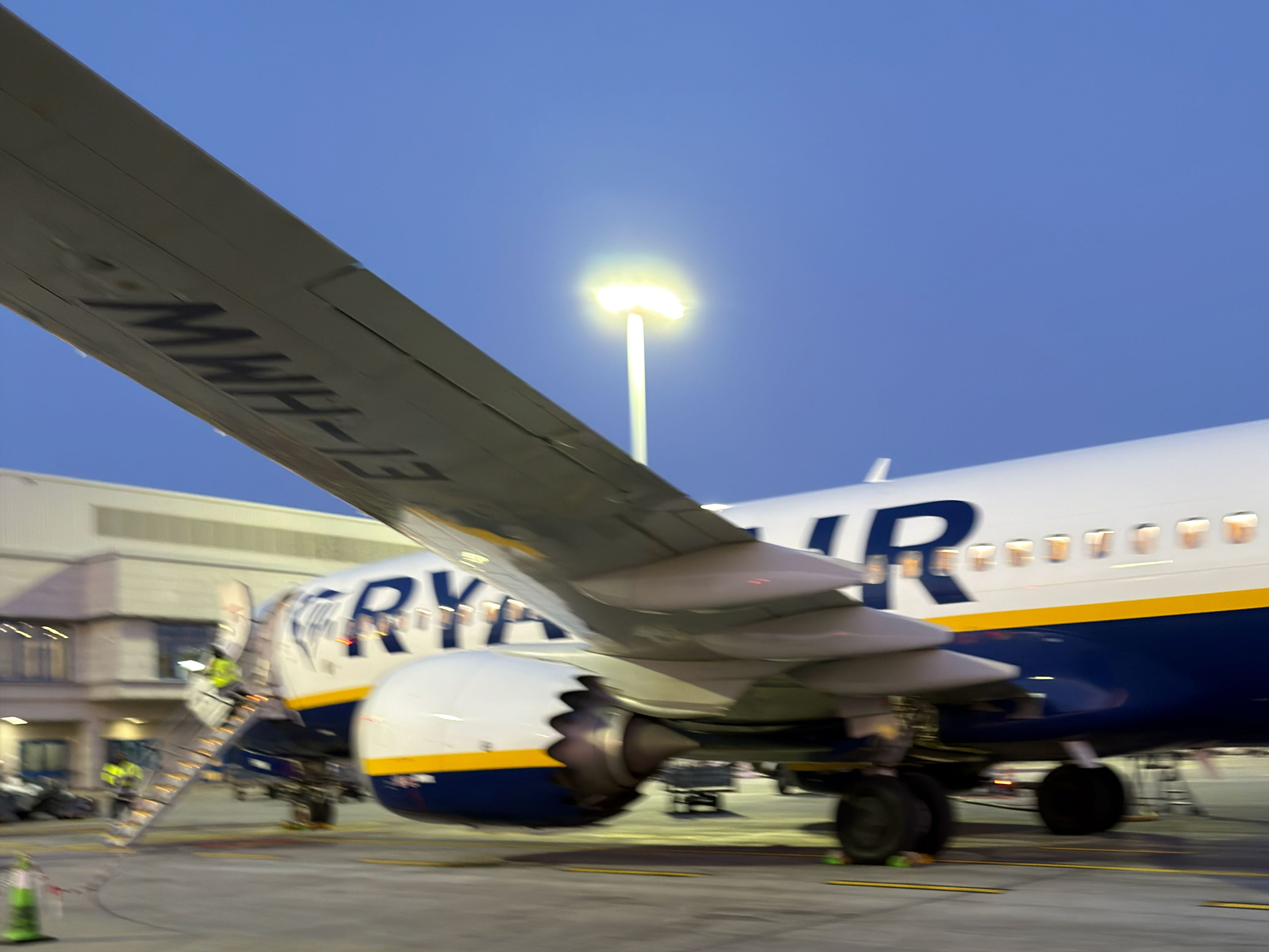
A few minutes after we had reached cruising altitude, whilst I was trying to nap listening to soothing Central Cee music (he includes plane references in almost all his music), people started clapping. I could barely figure out whether it was said in Greek or German as I was too focused on the British rap. While a bit annoyed, I stopped my music just in time to hear the pilot ask in English for the flight to clap for a group of school children on the plane traveling to Vienna for an art competition and hearing that reference made it all worth it. It reminded me of how real it felt walking right outside the New York Stock Exchange and overhearing some guy in a suit enquiring about how a stock was performing or walking outside the United Nations headquarters and hearing people talk about sanctions.
Throughout the flight to Vienna, I couldn’t help but think about how Ryanair has one of the best corporate marketing strategies in the age of social media where they almost rudely boast about how much money they save by being “skimpy” on flights and offering multi-hour flights for the price of an average meal. To save time and costs, Ryanair forces everyone to check in on their app or else face a 55 euro fine and they cut on other things as well such as a reclining seat or fold-down tray table let alone drinks or meals on the plane. While they are known for their strict weight and size standards for bags and hefty fines, that is the price of a low-cost ticket and in my opinion it’s so worth it. While the company has become a meme and people love to make fun of it, it is probably one of the best airlines I’ve flown with because of its efficiency. Anyways, all of this to say, I loved my Ryanair flight and wish there were more airlines like this that could be unabashed in offering the bare legal minimum when flying (Scoot comes close but they could go even lower in terms of effort to maximize efficiency and lower costs when traveling such short distances).
Anyways, back to Henry Miller. While the spontaneity and adventures that Miller had in Greece were fascinating, it was mixed in with him complaining about his countrymen and their way of life which everyone had expected of him as an American writer. While I understand that Miller had fled NYC right after the 1929 crash, and spent time in Paris before Greece, I still found his luddite rants undeveloped, basic and almost cringe at times. Maybe these ideas were novel in the 30s but still. He rants on and on about the machines ruining everything and people having ambition and wanting money and things and over-glorifies the ‘slower’ European life which isn’t exactly the most unique or profound insight one could glean from a vacation in Greece. While I would have loved to put down this book for its almost incessant irrelevant ramblings, it was interwoven with wonderfully written prose about Greece and traveling that more than made up for it.
“The Turk aroused my antipathies almost at once. He had a mania for logic which infuriated me. It was bad logic too. And like the others, all of whom I violently disagreed with, I found in him an expression of the American spirit at its worst. Progress was their obsession. More machines, more efficiency, more capital, more comforts – that was their whole talk. I asked them if they had heard of the millions who were unemployed in America. They ignored the question. I asked them if they realized how empty, restless and miserable the American people with all their machinemade luxuries and comforts. They were impervious to my sarcasm. What they had wanted was success - money, power, a place in the sun.”
Henry Miller, The Colossus of Maroussi
Overall, I enjoyed Miller’s book and would recommend reading it before a trip to Greece. But it has now been more than two months since I left Athens, and the phrase that keeps coming back to me is that there are no ancient Greeks in Athens.
Aside from the literal fact that there are indeed no ancient Greeks, I kept thinking about it because of the ideals that Athens has represented throughout history. I had gone with all these inherited ideas of what travel was supposed to be like through not just Knight, Jobs and Miller but also the whole content industrial complex raving about what it would be like. While I certainly had fun on the first four days of what was to be a thirty-five-day trip, Athens didn’t feel like it had some grand secret waiting for me to uncover. It was the beginning of an amazing adventure and I am glad that I began it there at the birthplace of Western civilization but what struck me the most was how ephemeral everything is even for great civilizations that still inspire the best of humanity today.
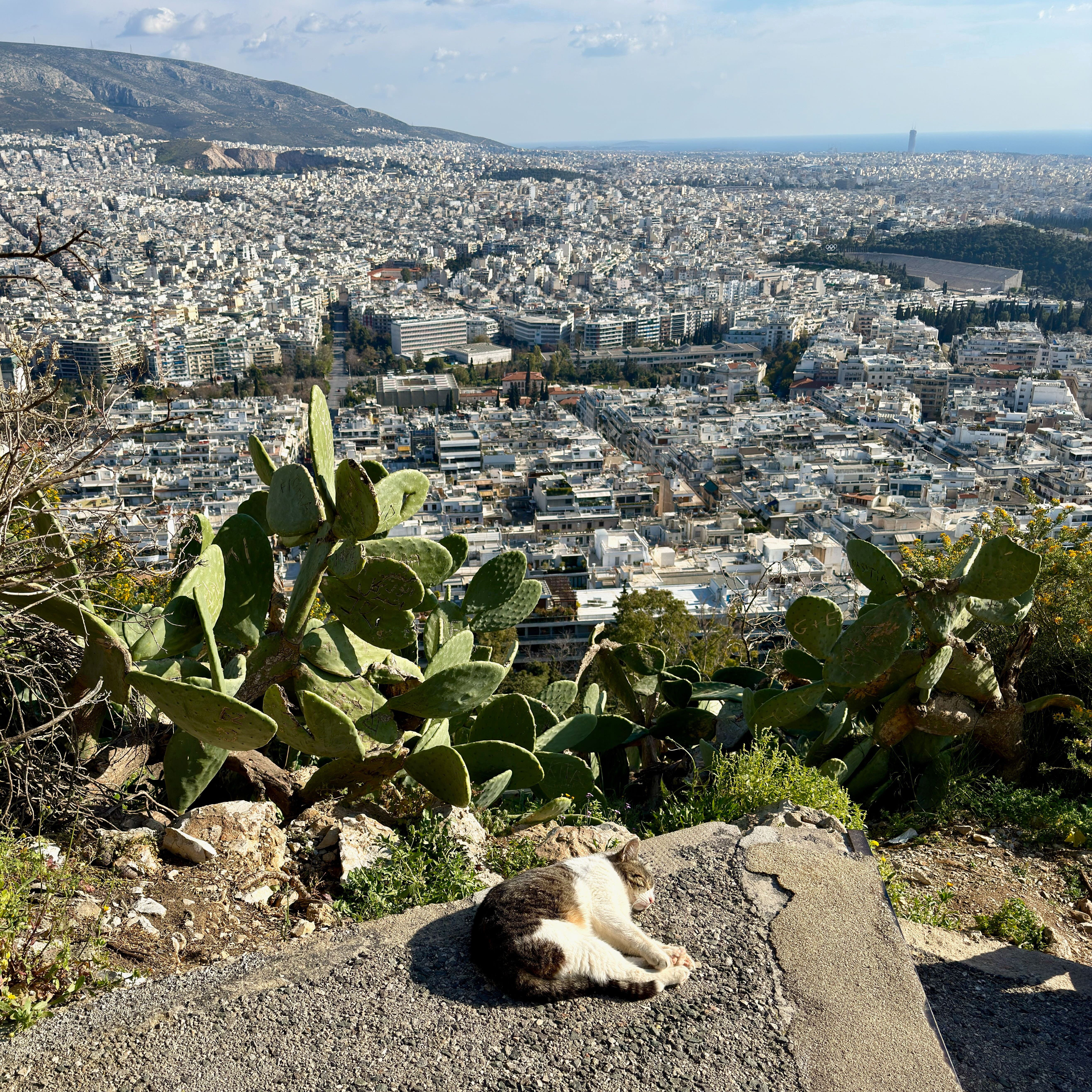
There were stones where buildings used to be, a cave where the greatest of humans was supposedly imprisoned, columns that had survived empires and wars, museums protecting items for future generations, street cats roaming around thousand-year-old rocks representing the greatest of civilizations while tourists eat at restaurants just a few feet away. While it was disappointing not to meet the ancient Athenians whom I had read so much about, I found the Greeks alright and Athens will always be Athens, just as it had been for Knight and Miller.