

The day after he had submitted the manuscript for The World of Yesterday (1942), a personal memoir detailing the decline of Vienna and the Austro-Hungarian Empire, the writer Stefan Zweig and his wife Charlotte Altmann were found to have overdosed and committed suicide together.
The year was 1942 and the Vienna-born Jewish writer was in exile in Brazil after having left everything he had loved behind as the Nazi regime took over Europe. The world he had grown up in was over and the famous sixty-year-old writer had lost all hope.
The tragic backstory behind the memoir certainly adds to what is heralded as one of the best books written about the fall of the Austro-Hungarian Empire, Vienna and by extension the continent itself. While the Axis threat would be neutralized a few years after Zweig’s suicide, I don’t think much of what he had to say would have changed. The Europe that he had known and loved all his life had suffered a fatal blow in the First World War and would eventually all but cease to exist after the second.
Zweig starts the book by talking about his upper-middle-class Jewish childhood in Vienna and just how cultured and refined the education system was. He says it cultivated in him and his peers not just excellence but reverence for the arts like literature, music and more. The initial few chapters read as prideful and at times even boastful as the author recollects his childhood but the city does have good credentials to back it up having been the home of Mozart, Beethoven, Freud, Klimt etc.
The book was also a history of the Jews in Vienna and Europe and their participation in and contribution to the grand culture of the city, although, of course, it was interspersed with stories of what was happening in real time during WWII as Zweig was hearing rumors about death camps where thousands of his people were being murdered.
After elaborate and interesting stories from his childhood, Zweig talks about his career in writing and how he became one of the most popular writers of his age. He writes about being friends with the other great writers throughout Europe in Paris and London and Berlin and Milan and the like. However, as Zweig reminds everyone, this was during those “wonderful forty years of peace” in between the revolutions of the 1870s and the advent of the Great War in 1914.
While the whole book was wonderful to read, one of the parts that I found most fascinating was his personal story regarding the start of what eventually became known as WWI. History portrays the assassination of Archduke Franz Ferdinand of Austria in Sarajevo as a watershed moment and while it was, it certainly didn’t seem that way to those living through it. Zweig was on vacation reading a book when the music playing stopped and people hurried around a telegram that just came in announcing the news.
More and more people came up, thronging around this notice. The unexpected news passed from mouth to mouth. But to be honest, there was no special shock or dismay to be seen on the faces of the crowd, for the heir to the throne had not by any means been popular. I still remember another day, in my earliest childhood, when Crown Prince Rudolf, the Emperor’s only son, was found shot dead at Mayerling. Then, the whole city had been in emotional turmoil, and enormous crowds had gone to see him lying in state, expressing their overwhelming sympathy for the Emperor and their horror at the idea that his only son and heir, of whom the nation had cherished great expectations as a progressive member of the Habsburg dynasty who was personally unusually likeable, had died in the prime of life. Franz Ferdinand, however, lacked what mattered most for anyone to win true popularity in Austria—an attractive personality, natural charm and a friendly manner… And my almost eerie presentiment that this man with the bulldog neck and cold, staring eyes would bring some kind of misfortune on us was not peculiar to me, but widespread in the country, so that the news of his assassination did not arouse any deep sympathy. Two hours later there was no sign of real grief to be seen. People were talking and laughing, later that evening musicians performed in the cafés again. There were many in Austria who secretly breathed a sigh of relief that day, because now the old Emperor’s former heir had been replaced by young Archduke Karl, a far more popular figure.
Stefan Zweig, The World of Yesterday


Later on, he recounts where he was a few weeks later when news of the various European countries declaring war on each other dropped. He found himself on the other side of the newly established boundaries of Europe and quickly made his way to a train station to catch what was perhaps the last train back to his Austrian side. He recounts encountering Austrian soldiers heading the other way to begin their campaign and the sheer excitement around it as the young had not known the depths and ramifications of war for many decades during those “wonderful forty years of peace”. The dramatic scenes that he describes as the people were grappling with what the war meant for them and wondering just how bad it could get and whether it would even take longer than a few days or weeks were just surreal to read about.
Zweig managed to use his status and connections as a writer to get a job in the “Archives of the Ministry of War”. He then talks about how he and his friends in other countries (even opposing sides) tried their best to not write propaganda and instead report honestly because they were peace-intending people though the historical record differs on this account. Anyways, Zweig experiences the war from that perspective and is at times sent near the frontlines for reporting purposes where he sees the reality of that horrific war that destroyed his world.
During the interwar period, Zweig recounts his further rise in popularity and success as a writer but it is intertwined with his gloomy feelings and lamentations about how the decline of Europe had already begun during the Great War. Then Hitler starts to rise and Zweig realizes the threat of Hitler more so than his other Jewish friends in Austria and leaves before the strict movement laws and deportations to concentration camps had begun.
He recounts how oblivious his fellow Jews and Austrians were in Vienna and how much they ignored the outside world and what was happening despite being at what was ground zero almost. He talks about his last few times walking the streets of Vienna where people were just continuing their lives as though nothing had happened. They were still at the cafés and operas and appeared to not have a worry in the world for the impending destruction of their way of life, at the hands of a man who had failed to make it in the city and become one of them many years ago.
Strange as it may seem, I was in Vienna during those historic February days of 1934, and saw none of the crucial incidents going on there, nor did I know the least thing about them while they were in progress. Artillery was fired, buildings were occupied, hundreds of dead were carried away—and I never saw a single body. Every newspaper reader in New York, London and Paris knew more about what was really going on than those of us apparently well placed to witness it… On the morning of the fourth day, as soon as the trains were running again, I went back to Salzburg, where two or three acquaintances whom I met in the street immediately bombarded me with questions about what had been going on in Vienna. And I, a ‘first-hand witness’ of the revolution, had to tell them honestly: “I’m afraid I don’t know. You’d better buy a foreign newspaper.”
Stefan Zweig, The World of Yesterday
As Hitler rose to power in the 1930s and increased his influence over Austria before his eventual ‘Anschluss’, Zweig’s books were slowly becoming more and more restricted by virtue of him being a Jew until they were eventually banned in Austria and then throughout Europe.
Eventually, Zweig and his wife found a way to leave Vienna for London as the situation was getting more and more pernicious over time. He talked about finally setting foot in London as a fifty-something-year-old man and being humiliated that he had to start life afresh with no belongings and little money after his books were banned in Europe by the expanding Nazi regime not to mention the fact that he hadn’t made money in years because it was all stolen from him by the regime.
He eventually moved to Brazil where he thought he could live out the rest of the war but hearing the news from Europe about what was happening to his family and friends who were left behind was much too devastating. As mentioned earlier, he had submitted the manuscript of this book (that was typed by his wife) to the publisher and then both of them were found to have committed suicide the day after.
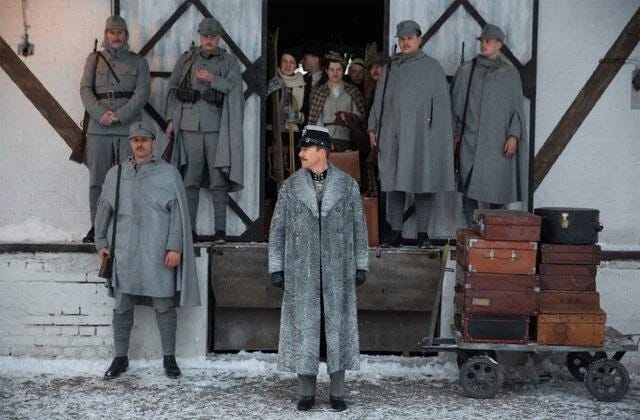
I decided to watch The Grand Budapest Hotel (2014) by Wes Anderson because it was said to be heavily inspired by a bunch of Zweig books that Anderson was reading and it didn’t disappoint. The scenes showcasing the beginning of war in the movie reminded me heavily of this book. Not only that, but the whole movie revolves around the same themes as Zweig as it talks about an older Europe which was once incredibly cultured and lively but which is now lost to time.
I later read The Royal Game (1941) which was the last book ever published by Zweig before he died and while there was nothing of Vienna or his personal life in this novel, it was still a fascinating story about chess and obsession set during WWII.
Having known how the story ends, the book was sad from the start but it was a great story of life under the Austro-Hungarian Empire and captured the sentiment of what Vienna once used to be. And while perhaps the lives of Zweig and his friends were wonderful as successful artists born into the “refined” upper classes of society of sorts, one can’t help but feel like Vienna is a living memorial to what it had once been. Zweig’s generation were the last who had known what Europe was like at its zenith before the wars.


I started reading this book in Athens before I boarded the flight to Vienna and couldn’t help but compare the two. The Greeks can take solace in the fact that they ‘peaked’ more than two thousand years ago and then again it was the Ancient Greeks and not the Greeks of today who we are thinking about.
However, the Viennese have a much more recent history and after days of wandering the museums and palaces of the Habsburg monarchy and sites where Napoleon Bonaparte once stood, the place where I felt the history truly come to life was at the Sigmund Freud Museum.
The museum is located at the place where his office in Vienna once stood, however, most of the objects still remain at the London museum as that is where he fled after the ‘Anschluss’ of Austria in 1938. The first half of the museum was pretty typical with the usual life story and the impact of his seminal works but where it truly came to life was in the second half which focused on the horrors of the Holocaust and its impacts on Freud and his family in Vienna. While the eighty-two-year-old Freud was able to escape even after the annexation thanks to the help of influential friends (including a certain “Princess Bonaparte” of Paris), his sisters and almost his whole extended family were left behind.
The office where Freud had practiced for decades was seized by the Nazis and used for “forced collective housing”. Over the years, 79 Jewish people were crammed in the rooms before many were eventually sent to the extermination camps. Four of Freud’s sisters, who were by then in their eighties, were similarly expelled from their homes and eventually murdered. The museum also explored the history of Vienna’s Jewish community after the war, including the long process of denazification in Austria and the eventual opening of the museum in 1971 by Freud’s daughter.
Walking back out into the cold and rainy early-spring streets of Vienna, it was difficult not to imagine the horror that the city had witnessed some eighty-odd years ago. The image that remained frozen in my mind was that of Jewish people being forced to clean pro-Austrian independence slogans that were on the pavements with their bare hands as Nazi troops and onlookers watched, mocked and abused them. Having spent the preceding days wandering Vienna, I found the streets disturbingly familiar and it was a striking reminder that this was not ancient history but something that happened only a lifetime ago.
And yet the imperial palaces remained, the opera houses and the cafés were still full, and the trams continued waltzing around the same grand buildings that Zweig, Freud and so many others had once known and called home. While Vienna may still resemble the city of its glorious past, the world that had produced it very much remains the world of yesterday.