

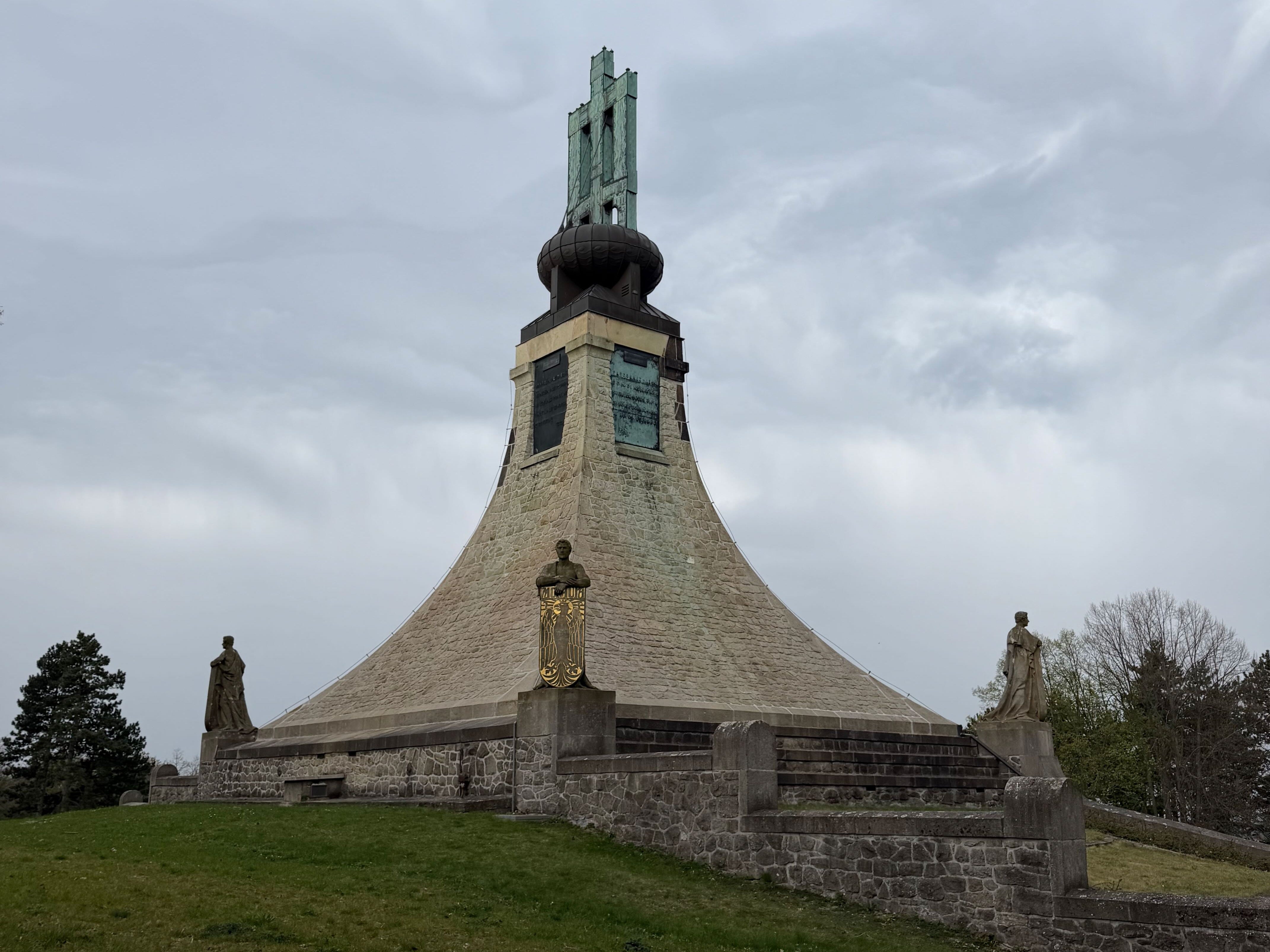
After a day of exhausting all the touristy things to do in Prague, I decided to take a three and a half hour train to Brno, the second largest city in the Czech Republic, and then a thirty-minute Uber to visit the site of Napoleon’s greatest victory at the battlefield of Austerlitz.
Napoleon Bonaparte crowned himself Emperor of the French on the 2nd of the December 1804. Almost exactly a year later, on the night of the 1st of December 1805, Napoleon and his men found themselves in a farmland surrounded by a plateau known as the Pratzen heights near the town of Austerlitz.
It was about to be the last major engagement of the War of the Third Coalition and Napoleon had already captured the Austrian capital of Vienna back in November. But now, he was about to face off against the combined forces of the Russian and Austrian Empires which were around 85,000 men compared to his 67,000 (with a further 7,000 that would come in as reinforcements during the battle). The battle of Austerlitz is also known as the Battle of the Emperors due to the presence of the three Emperors on the battlefield.
The site that I went to is actually called the Mohyla míru or Cairn of Peace and is a monument dedicated to all those who lost their lives on that day. It is said to be the first peace memorial in Europe and was completed right after WWI. The structure has a chapel inside and there is a little museum nearby that details the events of the battle.
I had just arrived from Paris where I had seen the many monuments and paintings that are dedicated to this victory. The most famous of which is perhaps the Arc de Triomphe located at the end of the Champs-Élysées. It was commissioned by Napoleon to commemorate Austerlitz and built in the style of the ancient Roman triumphal arch. There is also the Place Vendôme which is a public square with a victory column in the middle with a Napoleon statue on top (also in the style of the ancient Romans).
It was famously torn down during the Paris Commune of 1871 before being re-erected in its present form with a replica. There is also a bridge, train station and various other references to Austerlitz all throughout Paris. Not least of which is ‘Austerlitz’ being engraved on the mosaic floor around the tomb of Napoleon at Les Invalides with seven other great victories of his.


One of the main advantages that Napoleon had during the War of the Third Coalition was his strategic and permanent use of the corps system. While he didn’t invent the corps system, Napoleon took it further than any general had done before by making it a permanent part of his army. He split his army up into smaller armies with their own infantry, cavalry, artillery, engineers and supplies. This allowed them to be more mobile by taking different routes when traveling (and made living off the land much easier) before they eventually combined again before battles began. This allowed them to travel faster and catch their enemies off guard.
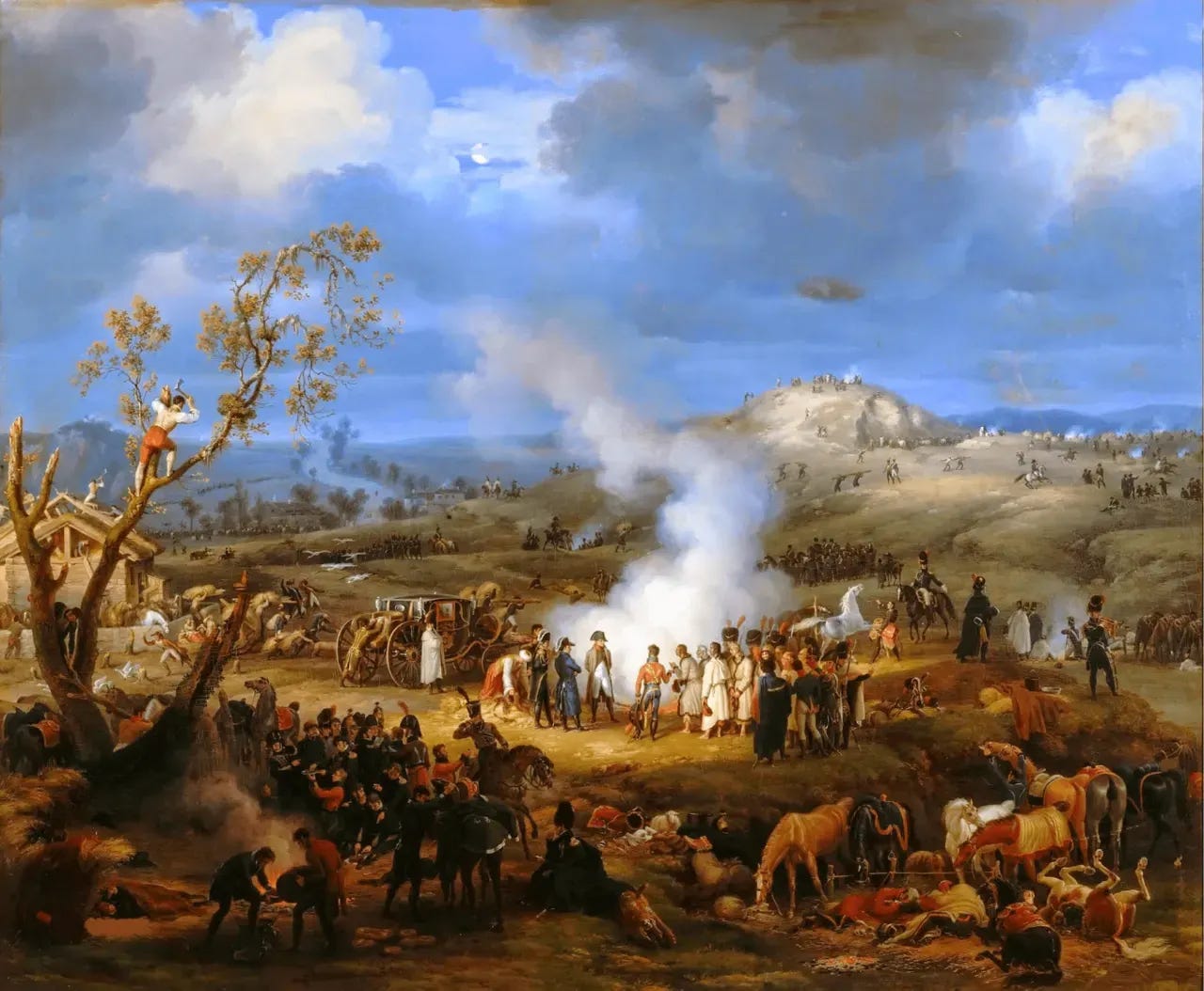
Napoleon chose the site at Austerlitz, a small village in the modern Czech Republic. Situated on the important road from Olmütz to Pressburg, it was in the proximity of the most commanding hill in the area, the Pratzen Heights. The plain below was crossed by a small, swift stream (it was early winter), the Rokytnice, a tributary of a small river, the Goldbach, and its crossing points were vital in a battle as the Rokytnice was hard to ford; there were two sizeable pools in the plain as well.
Michael Broer, Napoleon: Spirit of the Age
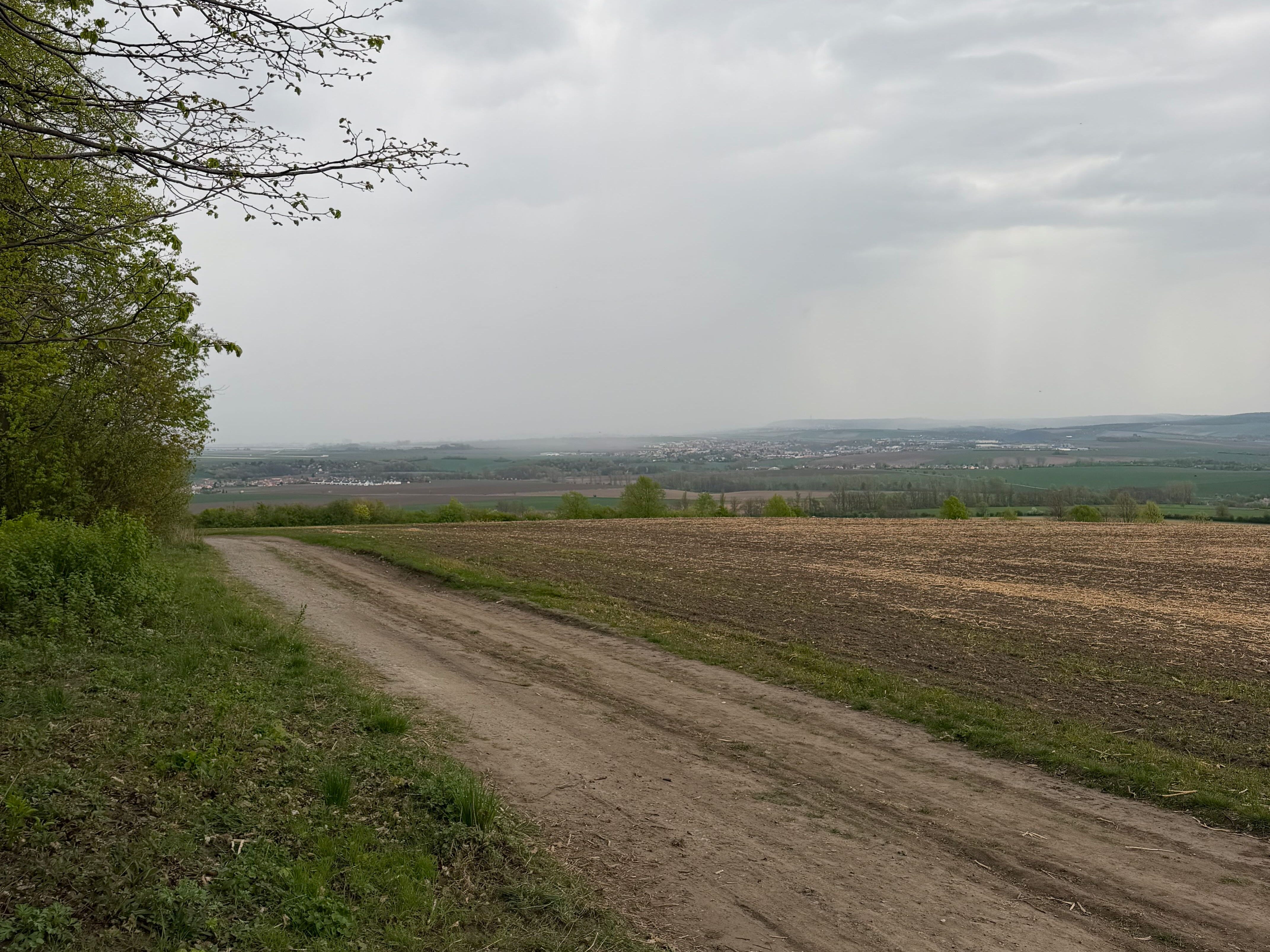
It was the middle of spring and raining lightly when I had reached the Cairn of Peace located at the top of the Pratzen heights. It was a bit foggy at first and while that didn’t help much in seeing the actual farmland that was the battlefield, it did simulate the conditions that the French faced on the first anniversary of their Emperor’s coronation.
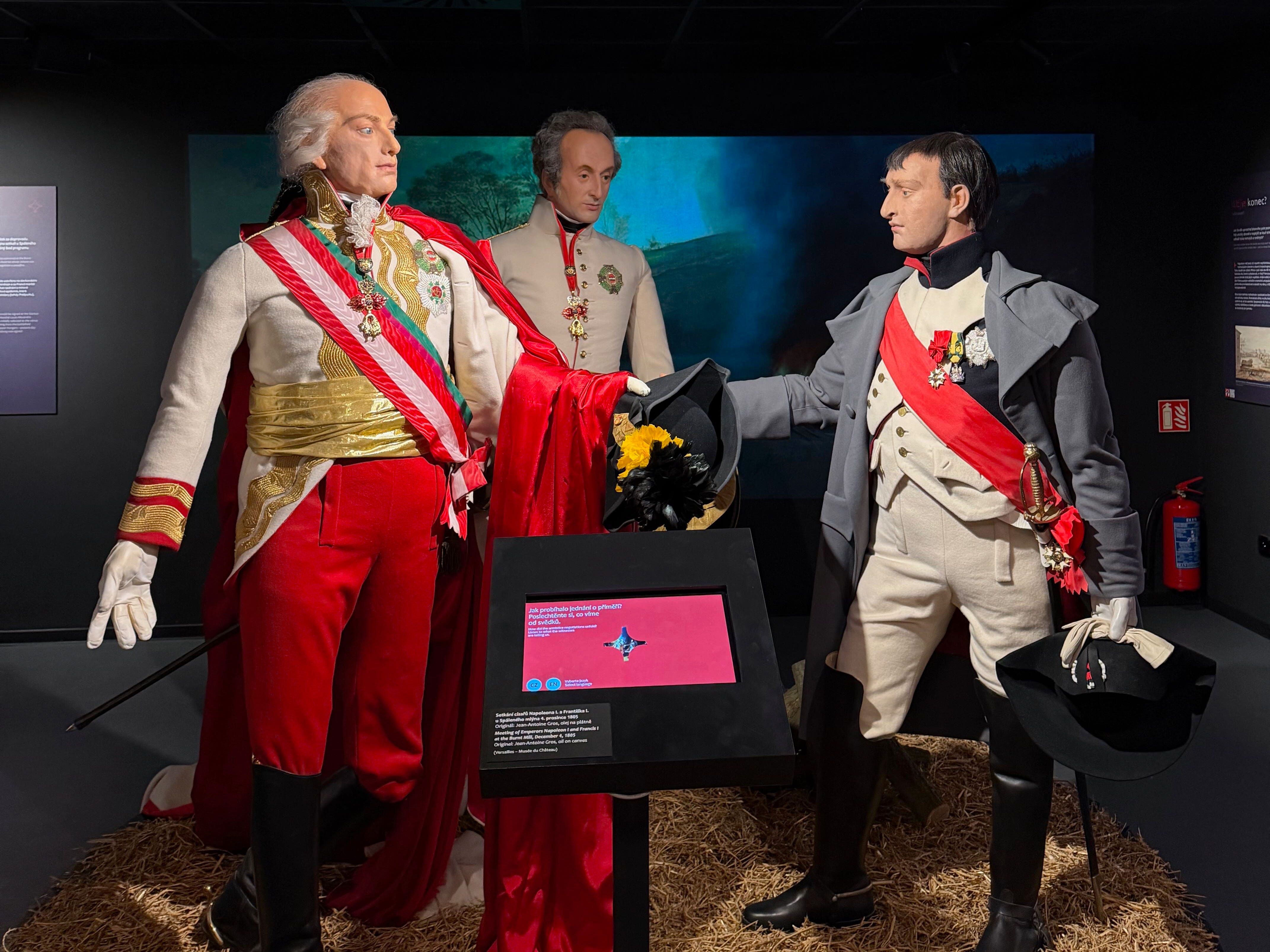
The museum seemed to have been recently renovated and did its job detailing the events of the battle in Czech and English with a café and little museum gift shop attached where they had real looking muskets for sale. Though, I settled for a Napoleon coin and got some coffee to ponder the events while waiting for the rain to settle down.
In the weeks before Austerlitz, despite the victory at the battle of Ulm and the capture of Vienna, Napoleon’s army was further from France than any French army had ever been before and winter had descended upon them. He had also received news of the colossal French loss at the battle of Trafalgar at the hands of a certain Horatio Nelson which would cement British naval supremacy for the next century.
As he made his way back to his own hovel – an outhouse battered by artillery fire – to get a few hours’ sleep before dawn, Napoleon was met by one of most moving spectacles of his spectacular life. His men, and not just his Guard, had come from their own bivouacs and were lining his route with straw torches, cheering themselves hoarse for him. His first thought was that they were getting out of order – his aides had to form a protective ring around him – and that their torches might blow up the ammunition depot. The Russians heard the racket and convened an emergency staff meeting, afraid the French were about to launch a night attack. In fact, the army had remembered it was the first anniversary of the coronation, even if that was the last thing on Napoleon’s mind. A year before – in the cold – many of those now with him in deepest Moravia had lined the route from the Tuileries to Notre-Dame, in the magnificent uniforms that were now rags, to take part in that glorious day. Later, Napoleon said it was one of the finest evenings of his life. From a Spartan like Napoleon – in every sense – this rings true. There was nothing he loved more than his army; nor other men he understood better or who understood him. There could be no greater honour, in his unmoistened eyes, for the torches of his men far outshone the contrived pomp of the Sacre…
In his carriage the night before battle, he composed an address to the troops, after he had toured as many units and spoken to as many of his men as he could. The most important part of it ran thus:
Soldiers, I shall direct every one of your battalions myself; I will be able to keep myself out of range if, through your usual bravery, you bring disarray and confusion into the ranks of the enemy; but if for one instant, victory should look uncertain, you shall behold your Emperor expose himself in the front rank … Let every man carry with him the knowledge that it is essential to defeat these paid lackeys of England, who hate our nation so much …
Michael Broer, Napoleon: Spirit of the Age
While a blog post can’t do justice to the full scope of the battle (the video above is great for visualizing), the briefest summary of the event is as follows. In the week before the battle, Napoleon faked a ‘retreat’ and made the allies think that he was weak. Then on the day of the battle, Napoleon had his army concentrated on the left flank and center. The center was covered by the thick fog and by virtue of being at the base of the Pratzen heights, its angles made it hard to see from the top where the allied forces were located.
Napoleon had the least amount of troops on his right flank and baited the Allies into attacking him there, knowing that Marshal Davout and his men were arriving soon to reinforce it. The Allied plan aimed to exploit Napoleon’s seemingly weak right and they sent much of their army from the Pratzen heights towards the French right as Napoleon had hoped. When the fog cleared at around 8:30am, this led to an opening for the French to break through up the Pratzen heights and seize them, splitting the Allied army in two and allowing them to win a decisive victory.
One of the most popular rumors about the battle is that when the Russians were fleeing Napoleon’s right flank, the French fired cannons on the frozen ponds that the Russians were fleeing on and this led to hundreds of troops drowning in the icy pond. Ridley Scott uses this in his Napoleon (2023) movie and I found it funny that the museum at the Cairn of Peace did point out that this rumor has been spread by movie directors in recent years though they did not mention Ridley Scott directly. The shots of the Russians drowning in ice as the frozen pond below them gives way to the cannon balls did look incredible however and made the French/Napoleon look cool for once in the movie so it was nowhere near my list of qualms that I had with the movie when I first saw it three years ago which you can read about here.

Even at this hour, before this great day shall pass away and be lost in the ocean of eternity, your Emperor must address you, and express how much he is satisfied with the conduct of all those who have had the good fortune to combat in this memorable battle. Soldiers! you are the first warriors in the world! The recollection of this exploit and of your deeds, will be eternal! Thousands of ages hereafter, so long as the events of the universe continue to be related, will record, that a Russian army, of seventy-six thousand men, hired by the gold of England, was annihilated by you on the plains of Olmutz. - Napoleon
While on the train back to Prague, I couldn’t help but think about how surreal it felt to be at Austerlitz. I was originally planning to visit the battlefield of Waterloo from Paris as a day-trip but it seemed antithetical and almost sacrilegious as this whole month-long Europe trip was supposed to be about visiting Napoleonic sites, museums, paintings and the like.
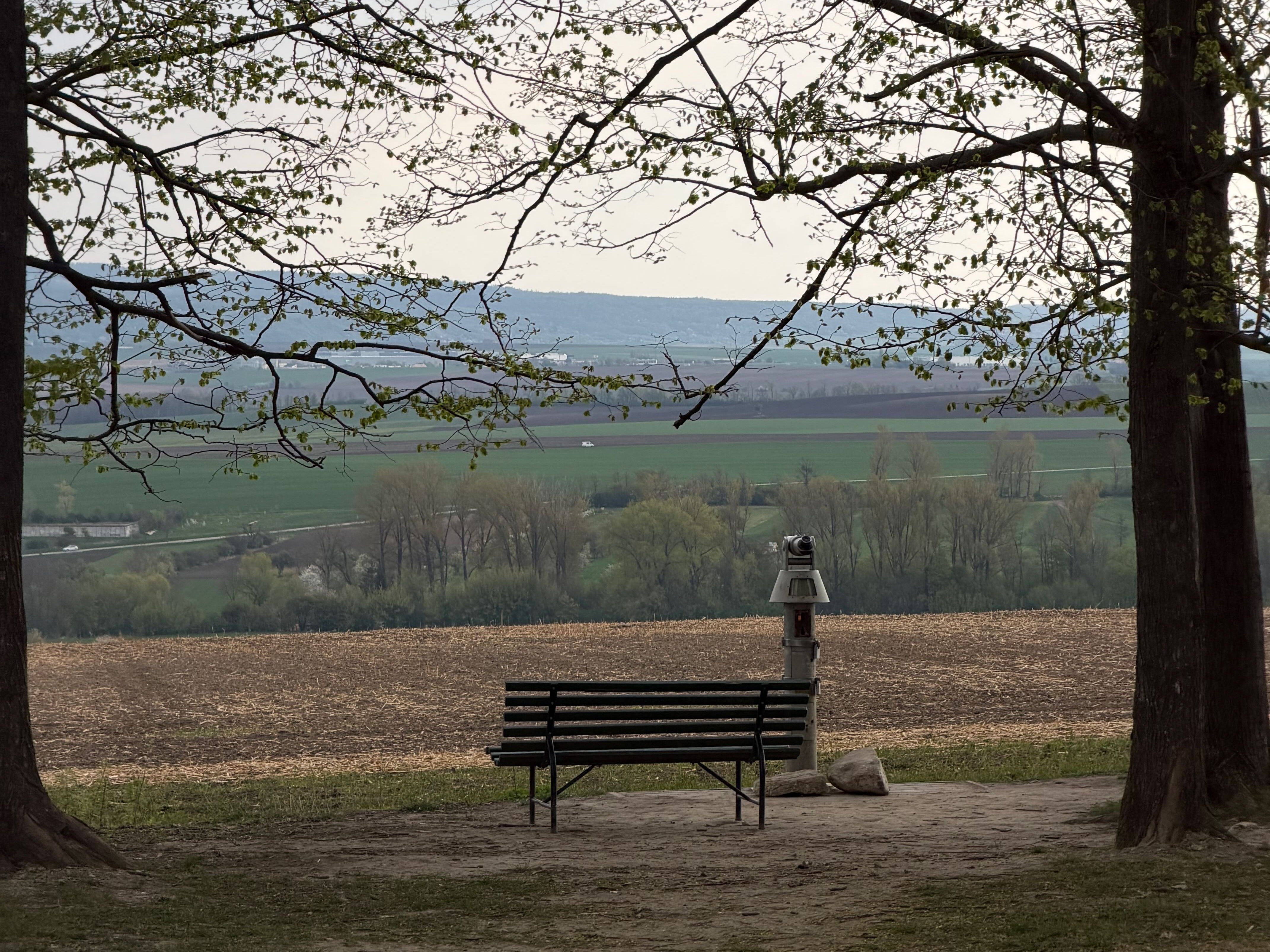
The remnants of the battle are long gone today and the land is used for farming as it had been for centuries with the occasional plaque or two marking where Napoleon or the other Emperors stood as they commanded the battlefield. There are also yearly re-enactments of the battle on the 2nd of December around the site.
Unlike at Waterloo, from which you can draw a clear line in the sand for the end of the Napoleonic Wars, Austerlitz didn’t create lasting peace. There would be the wars of the fourth, fifth, sixth and seventh coalition throughout the ensuing decade before the monarchists would triumph for a fleeting moment before slowly the ‘ideals’ of the French revolution would become somewhat commonplace throughout Europe. I thought about the surreality of how thousands of miles away from the quiet, barren and gray farmlands surrounding the Pratzen heights, Paris still commemorates the victory through iconic landmarks such as the Arc De Triomphe and Place Vendome.
As I waited thirty minutes for someone to accept my Uber ride to bring me back to the Brno train station, I thought about the absurdity of the day that I had. A man born in Corsica just one year after the historically Italian island had just been transferred to France, would crown himself Emperor of the French. He spent his youth obsessing over Alexander and Caesar and would actually end up becoming the next great general in history and two hundred odd years later I would visit the farmlands that were the battlefield of his greatest victory which coincided with the first year anniversary of him crowning himself Emperor.
4.30 p.m., it was over. Silence fell over the carnage, and at 5 p.m. a general ceasefire was sounded by the French buglers and drummers. It was dark now; a light snow was falling.
It did not feel like the greatest victory of the age, although it was. Davout and Soult’s men simply fell down among the corpses on the field and slept there the night of 2/3 December. Their camp fires were made from what was left of the surrounding villages, or, more accurately, from all that was left of them. For all the captured equipment, standards and prisoners taken, no food stores fell into the hands of the troops; the Russians had already ravaged the area. Things would not improve for a few weeks more. Not even the greatest victory ever won could change the onset of winter or the empty fields; the next harvest seemed an eternity away. They were stranded 1,400 kilometres from home, at the onset of winter, with nothing to eat…
Meanwhile, as their commander dropped off to sleep in his dirty shirt, the soldiers of the greatest army Europe had ever seen, the victors of the most emphatic battle in European history, collapsed on the field, with only dead men and horses for shelter. On a frozen cabbage patch in the middle of nowhere, the heroes of Austerlitz wrapped themselves in their threadbare greatcoats, and slept. This was the reality of what soon became known as ‘the sun of Austerlitz’.
Michael Broer, Napoleon: Spirit of the Age