

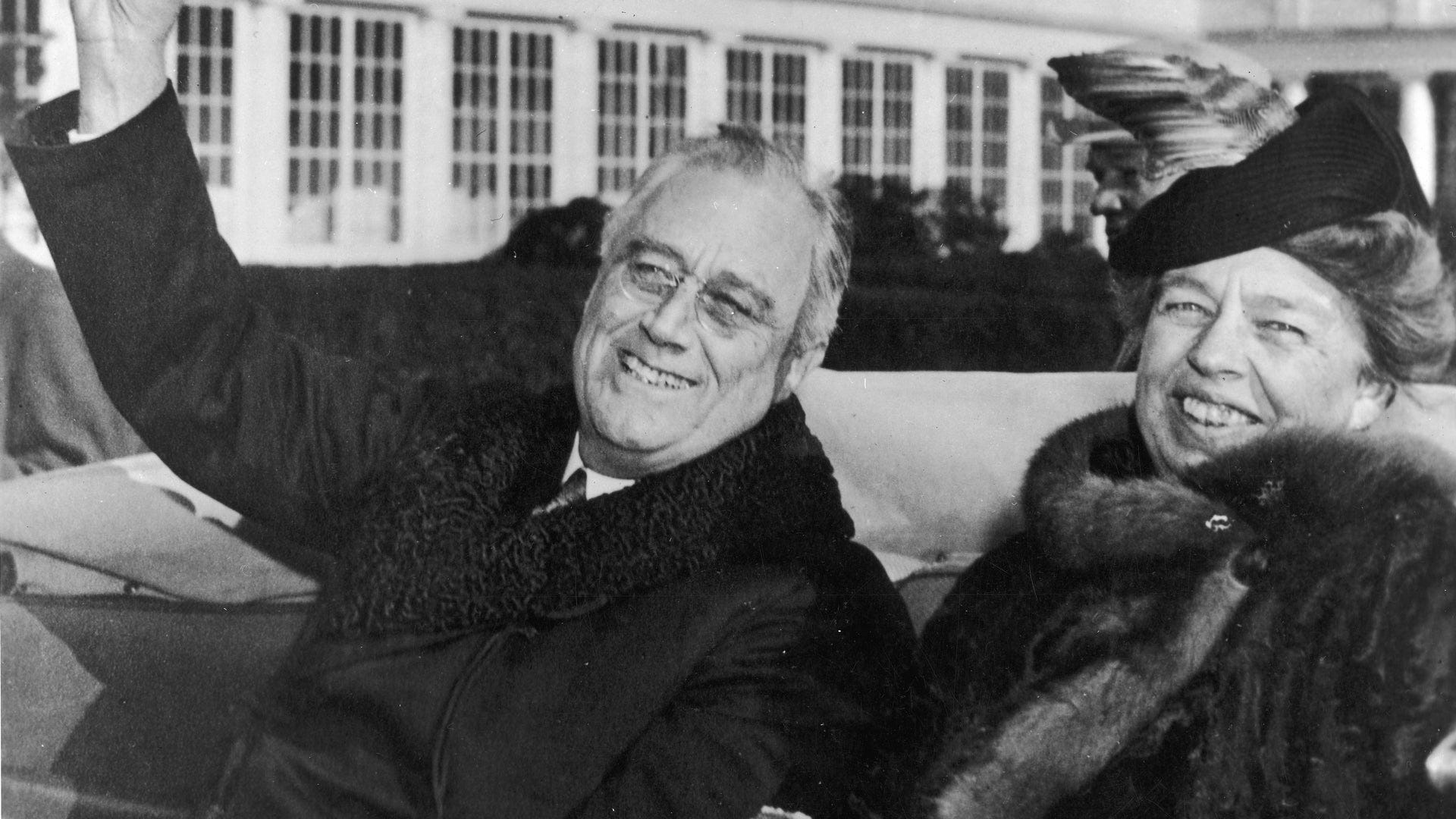
This book’s title is a quote from a speech that Eleanor Roosevelt gave to the 1940 Democratic National Convention when President Franklin Roosevelt wanted to run for a third term but in honorable American fashion couldn’t seem as though he wanted to run for a third term and thereby couldn’t reveal whether he was actually running or not running leading a confused Democratic coalition to nominate him for the President anyway and then fall into disarray as the realization of the magnitude of the party breaking George Washington’s and Thomas Jefferson’s two-term tradition slowly seeped into them while trying to decide on a Vice President which led to FDR sending Eleanor Roosevelt to see what was going on knowing she would be able to fix anything if needed.
It reminded me of the stories of Ulysses Grant in the Ron Chernow biography where Grant didn’t show any indication of wanting to be the Republican nominee as was customary of the political men of his era and was therefore swept into the Presidency twice due to his wartime glory.
Back to 1940, Eleanor became the first First Lady to address a national party convention and calmed everyone down by stressing the importance of unity at home to take them through the ongoing war in Europe and got the party to decide on FDR and his Vice President Henry Wallace.
What was intriguing about this book was the surprisingly unique lens through which Goodwin explored WWII which is perhaps the most written about topic in modern history. She writes about it through FDR and his daily routines and conversations with the various interesting and revolving cast of long-term occupants of the second floor of the White House. Through this we get a very different and raw view of how FDR actually operated. The book also focuses on Eleanor and how she used the office of First Lady to its fullest extent by being a voracious campaigner of issues and basically creating a full-time job for the role which was previously just hostess of the White House.
FDR mainly focuses on the war effort from the White House due to his polio making it difficult for him to move around the country without alerting everyone to the fact that their commander-in-chief was standing on supported iron contraptions and getting carried from vehicles to wheelchairs. Thus, Eleanor acted as his eyes and ears as she constantly travelled around the country and even the world and reported her findings to FDR. She basically ran domestic policy as a cabinet member of sorts and focused on bringing attention to various issues whether that was civil rights for African Americans in the military, adapting to the evolving role of American women in the workforce, helping children escape from Europe etc. I couldn’t help but be reminded of her uncle Theodore Roosevelt and his intensity whenever FDR or the author made a comment about how she was obsessed with spending all hours of the day working and doing something productive.
This book is obviously well-written and great as can be gleaned from the 1995 Pulitzer Prize in History that Goodwin won for this. But what I think made this book most interesting and riveting was how it humanized the Roosevelts despite the stature they found themselves in during this great war.
Whether that was through FDR secretly resuming his relationship with Lucy Mercer after her husband died in 1944 (decades after Eleanor had discovered their original affair and he had promised to end it to save his public marriage and thus political career)1. Or through the relations of the President and First Lady with their children and their spouses who were drafted for the war effort. Or through the friendships that blossomed or mostly dwindled as the New Deal era came to an end with the Second World War era taking a front seat.
Overall, this book was a fascinating read into the Roosevelt White House during WWII and how the headquarters of the American (and sometimes British) government operated during those years. It was also a fascinating introduction to the life of Eleanor who I have to read about next.
This was a betrayal Eleanor would only find out about later, when relatives recounting his death mentioned that Lucy was in the room when he had the final stroke that killed him and that she had fled before Eleanor had arrived.