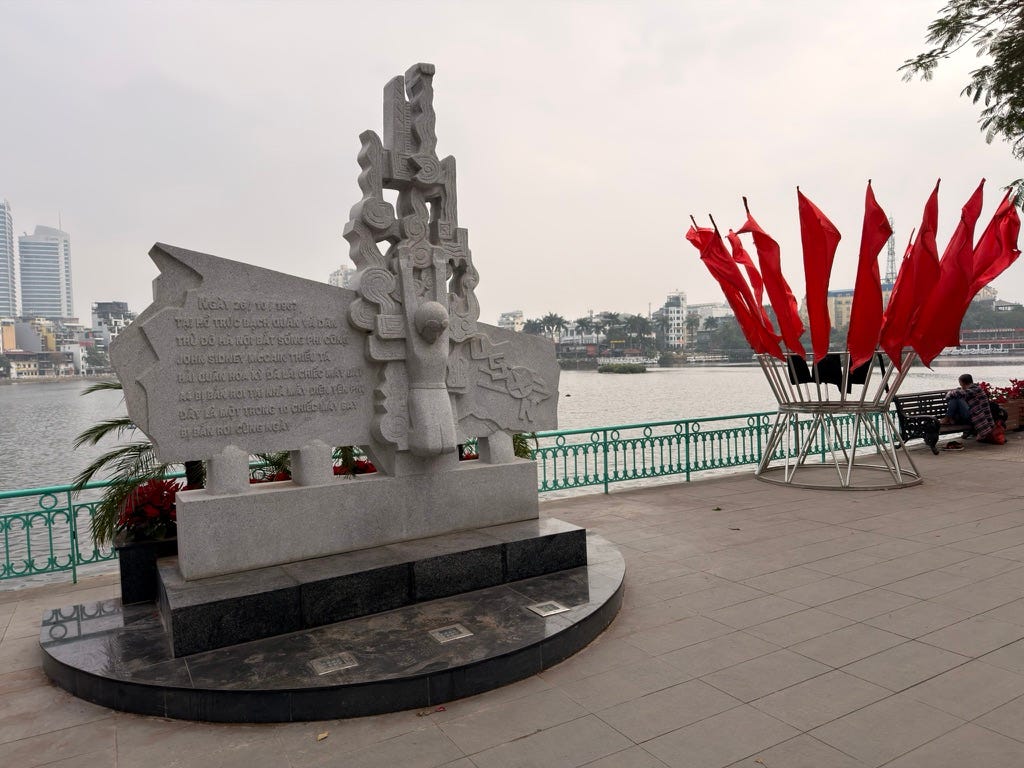
My recent interest as it pertains to Vietnam primarily stems from reading the Lyndon Johnson books that Robert Caro has been working on for the past fifty years. So far, he’s published four out of the five planned volumes and it encompasses Johnson’s childhood up till the 1964 election. The first book Path to Power (1982) took Caro eight years to explore Johnson from literally examining the soil and weather patterns his great-grandparents endured whilst farming to Johnson winning his seat in the House of Representatives. Caro and his wife Ina, who is his primary research assistant for his books, even moved to the Texas Hill Country for three years to understand where Johnson was from and how that shaped the man who would climb the rungs of power.
The second book Means of Ascent (1990) explores Johnson’s career in the House of Representatives and how he put everything on the line to win him a place in the United States Senate by stealing his 1948 election. (Caro would be the first to put together the pieces of how the dramatic stealing of the election and subsequent courtroom battle actually went down by researching further than anyone had done before and hearing confessions from dying old men who had helped Johnson win).
His third book Master of the Senate (2002) is widely acclaimed as the best book in the series. The Senate fits Johnson’s personality perfectly and Johnson makes the Senate work for the first time in a hundred years. It explores how Johnson convinced Senators to break from the strongly held tradition of seniority in the United States Senate to make him Senate Majority Leader and cajoled, manipulated and wielded so much power as he navigated the egos and personalities of the various Senators and made Congress work by passing an unprecedented amount of legislation.
At the time he arrived in the Senate, seniority governed all its workings. New members were not supposed to speak much, or at all, on the floor during their first year or two, and during the remainder of their first six-year term to speak only infrequently, and to participate in other Senate activities in a largely apprentice role. After his first two years in the Senate, Lyndon Johnson was Assistant Leader of his party. In another two years, while he was still in his first term, he became his party’s leader, the Democratic Leader of the Senate. Since the Democrats were in the minority, he was therefore Minority Leader. When, two years later, the Democrats became the majority, he became Majority Leader, the most powerful man in the Senate after just a single term there, the youngest Leader in history—after a rise unprecedented in its rapidity.
Robert Caro, Master of the Senate
The fourth book Passage of Power (2012) explores how Johnson became Kennedy’s Vice President in 1960 in a manner that was incredibly uncharacteristic of the Johnson that the audience had known through the preceding 2500 pages. Throughout the series, Johnson is described as this ruthless political operator who does everything he can to win. He whips his subordinates into shape, he is ruthless about winning and during each of his successful campaigns he pushes his body to such an extreme campaigning that in both winning elections he had major health issues and had to be hospitalized right before election day.
Johnson had only lost one election before and that was in 1941 when he ran for the Senate after four years of being a Congressman. He had FDR’s support and his campaign was generously backed by Texas oil and construction business magnates who had previously supported his Congressional campaigns and whose money Johnson funneled to other political apparatuses and campaigns. However, Johnson was complacent compared to his first congressional campaign and as a result had the election stolen from right under him. The ensuing WWII and post-war period would see Johnson resolve to finally break out of the House of Representatives and give it his all for his successful 1948 campaign. He had to win this as he was giving up his House seat in order to run.
Back to 1960, Johnson doesn’t decide to run for President most of the year. While he’s thinking about how he was already turning 52 and that most of the men in his family had died in their 50s or 60s because of heart issues and that he probably won’t have much longer as he had already had one heart attack a few years prior, he doesn’t rush. Caro ascribes this to Johnson’s fear of failure to confront the final rung of power that he had been running towards his entire life. Johnson was a perfect fit for the Senate and his years as the Majority Leader had turned the position from mere title to an actual powerful position. He was unequivocally the most powerful democrat in the country while Eisenhower was in the White House. However, he thought that his power in the Senate would translate to power at the national level in winning the party primaries and convention. He thought that he was beyond playing the typical national politics game that Presidential hopefuls did in those days in order to win the primary. It was this fear of failure and more so the fear of losing to Kennedy whom he looked down upon as a junior Senator from his position as Majority Leader that made him avoid the game of trying to court votes to win his party’s nomination. Johnson said that he was “tending to the store” (referring to the Senate) whenever he was asked by the press and would not comment on whether he was actually going to run. This led to him being way behind the Kennedy political machine and conceding instead for Vice President as he thought that it was at least a stepping stone if he was lucky enough to survive and run in 1968.
Johnson was immediately depressed through the thousand days of Camelot as while Kennedy enthralled the nation with bold ideas and speeches, Johnson was mocked by the Washington establishment for being irrelevant. Kennedy and the people around him completely disregarded this master parliamentarian even when it came to Congress and soon he became so irrelevant such that Caro would write that even the mockery of Johnson’s downfall from his days as Majority Leader stopped. It had gotten to a point where there were even talks of Johnson being replaced on the Kennedy ticket in 1964 and Robert Kennedy picking up the baton from his brother in 1968 leaving Johnson with no path to the Presidency. Johnson became incredibly depressed and hopeless and thought that his career was over and that he would never reach the apex of political power after working all his life for it and that he would soon die of a heart attack anyways like all the men in his family had as they approached their 60s.
Then Kennedy was assassinated and all of a sudden Johnson had achieved what he had wanted his whole life in the worst possible circumstances. Johnson coped with the tragic event by trying to use the momentum of Kennedy’s assassination and his skill in willing Congress to work by passing landmark legislation like the 1964 Civil Rights Act and more. Then he wins the 1964 election in his own right with the highest percentage votes up till then in American history and there Caro’s telling of the story stopped.
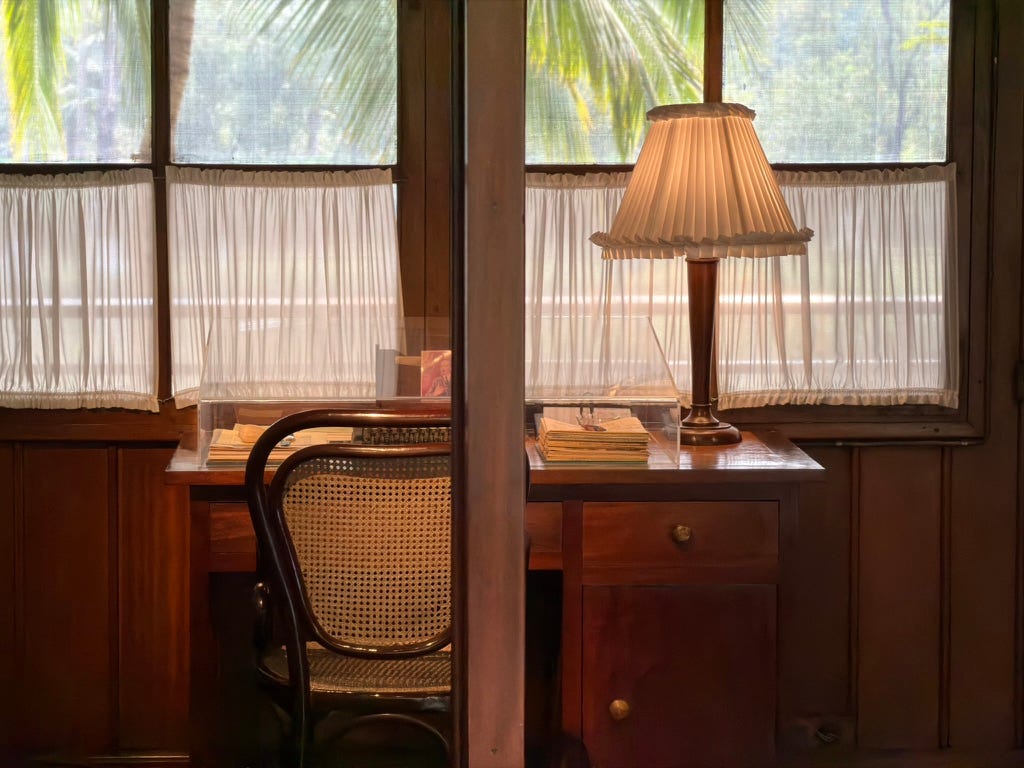
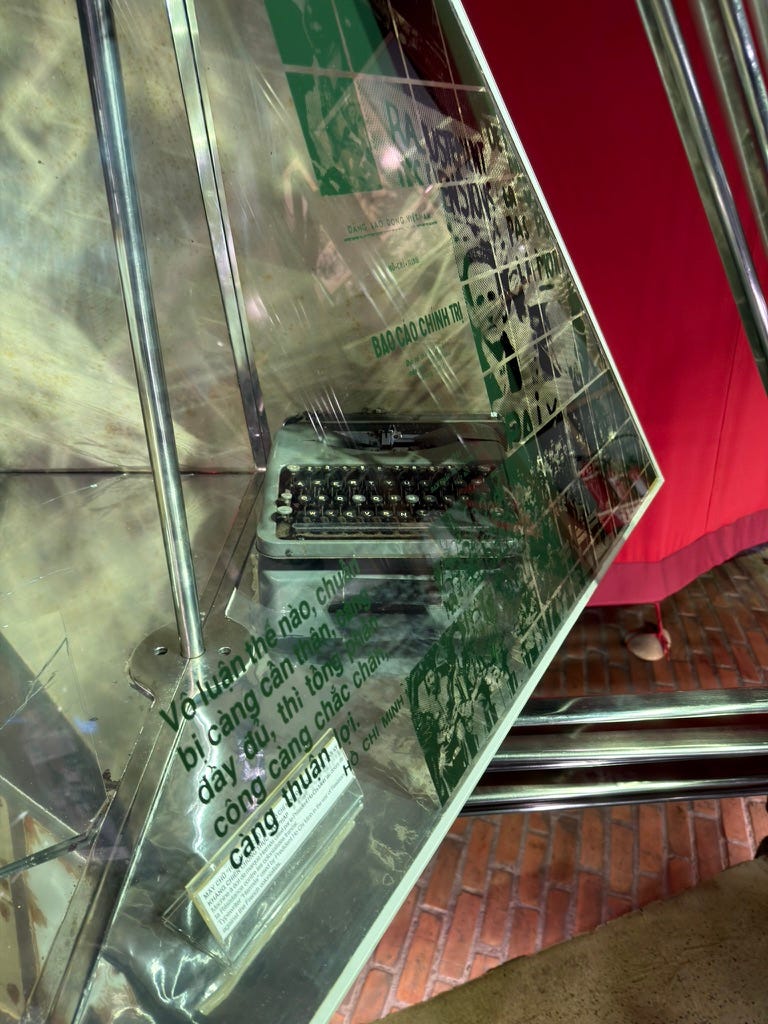
The meat of the Johnson Presidency has yet to be explored and that’s what the ninety-year-old Robert Caro has been working on for the past fifteen years as he wakes up every morning and wears his suit to his Central Park office and types away on his Smith Corona typewriter. The company that makes the typewriter had stopped long ago so he has had to stockpile what he can and try to repair the machine as it wears out and even takes in donations of the model to type his final book the way that he has always typed them.
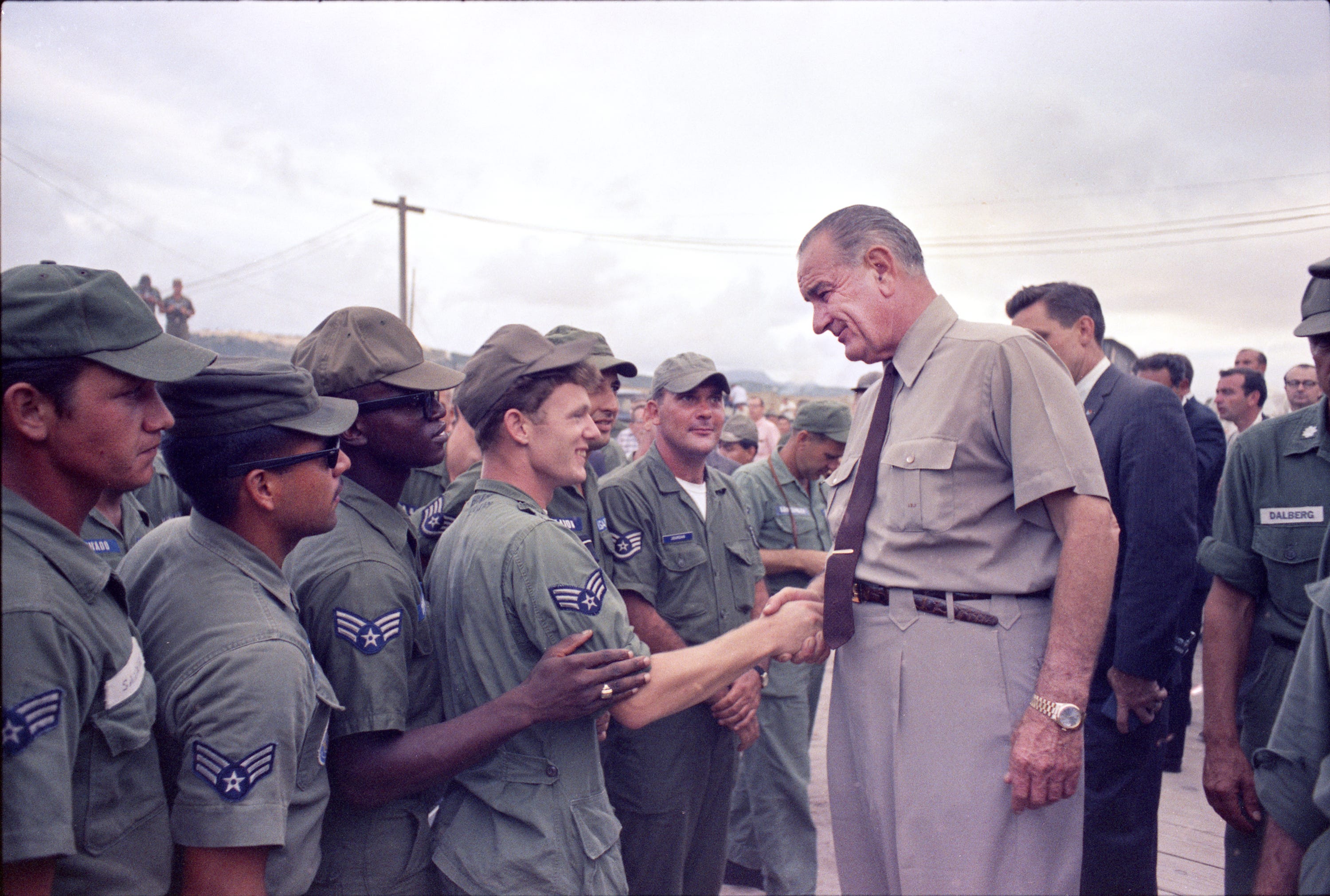
While the landmark legislation that Johnson passed in the wake of Kennedy’s assassination is of course part of Johnson’s legacy, it’s more often that he’s remembered for the tragic loss of American life in the escalation of the Vietnam War and the 1960s which were marked by the war and protests and civil unrest. While the great bulk of Johnson’s legislative agenda through the Great Society programs were dismantled by successive administrations, the core of Civil Rights Act of 1964 and Voting Rights Act of 1965 live on but what strikes the consciousness of people more is the more than 50,000 dead young men that were ordered by President Johnson to fight a war in a jungle 9,000 miles away.
The final pages of the fourth book give a little preview of the extent to which Johnson’s decisions in the war in Vietnam destroyed the credibility and reverence of the office itself. While Nixon would do his part to continue this work, Caro argues that this domino effect started with Johnson.
Robert Caro has given many interviews, been featured in a documentary about his writing process, written a book about how he works, and spoken at many events about Johnson. However, there is one sentence that keeps popping up in recent years as they almost inevitably ask how far along he is into the fifth and what is expected to be the final volume of this great work of art that is The Years of Lyndon Johnson.
“Robert Caro has yet to make his research trip to Vietnam”
Here are some excerpts from a Smithsonian Magazine interview in March 2025 and he was then around 400,000 words into the manuscript or around 700 pages into the fifth book.
In February 2019, Caro mentioned in an interview that he had completed 323 pages of the fifth book’s manuscript. When I ask him where he is up to, he says, “Well, I’ve done a lot more than that now.” I don’t expect him to be more specific, but then he continues: “Well, I’ll tell you what pages I’m up to—951.”
I ask whether he has a number in his head where he thinks it will top out.
“No,” he says. “Because I don’t know what I’m going to find in Vietnam, for one thing.”
Caro is legendary for going further than normal biographers would typically go, a proclivity epitomized by his reporting on Johnson’s childhood in the Texas Hill Country. Realizing that he wasn’t really understanding the milieu from which Johnson emerged, Caro and his wife (who has often played a substantial role alongside him as a researcher) moved to the area—for three years.
Similarly, Caro has long said that he doesn’t feel able to complete this final volume without spending time in Vietnam. He and his wife had a trip scheduled for the first half of 2020, but they had to postpone it because of the Covid-19 pandemic. I half wonder whether Caro will tell me that he no longer sees such a trip as feasible, but I should know better.
“When I finish what I’m writing on now,” he tells me, “we’ll go to Vietnam.”
I ask him how long he thinks they’ll go for, which elicits a dry laugh.
“A long time,” he says. “Because what’s one of the things that I want to do about Vietnam? It’s: what it’s like to fight in the jungle. I mean, you take 600,000 American boys used to cleanliness, and you’re put in this horrible place where you wake up in the morning, there’s these five-inch leeches under your skin. So that’s going to take some time.” He also explains it a different way: “Well, one of the points of this last book is to show the reader how a great power goes to war, how unjust a great power can be because of its greatness. That you can send 600,000 men to a little country. So I think that’s very important. … And I guess I say to myself, you know, if you can show people the horror of this, you will have accomplished something.”
The real decisions about the Vietnam War, Caro goes on, were made “over sherry in this Tuesday lunch” at the White House. He was even recently allowed to sit in the room where these Tuesday lunches played out so he could feel how they might have been. But he clearly wants to describe the effects of such decisions on the other side of the world and not just in the abstract. He compares the Vietnam material to the celebrated “One Mile” section of The Power Broker, where Caro dramatized the repercussions for individual people when Robert Moses built something like a new road (in this case the Cross Bronx Expressway) by routing it though existing communities (in this case a one-mile stretch cutting through the East Tremont neighborhood of the Bronx). To write the section, Caro tracked down and interviewed everyone he could trace from the displaced and destroyed communities. This is precisely the kind of storytelling that Caro feels is so important. “They’re all talking about, ‘Oh, there was a great human cost of building this road.’ And I’m saying, ‘But not one book, not one magazine article has ever examined what that human cost is.’ I said, ‘I’m going to do that.’” Exactly what he might seek in Vietnam, where the human cost is perhaps less unexamined, isn’t yet clear, but it’s a part of the story he feels compelled to tell. “It’s not just Robert Moses who has unchecked power, as you’ll see if I ever finish this book,” Caro says. “There was an element of unchecked power after Lyndon Johnson starts escalating the Vietnam War.”
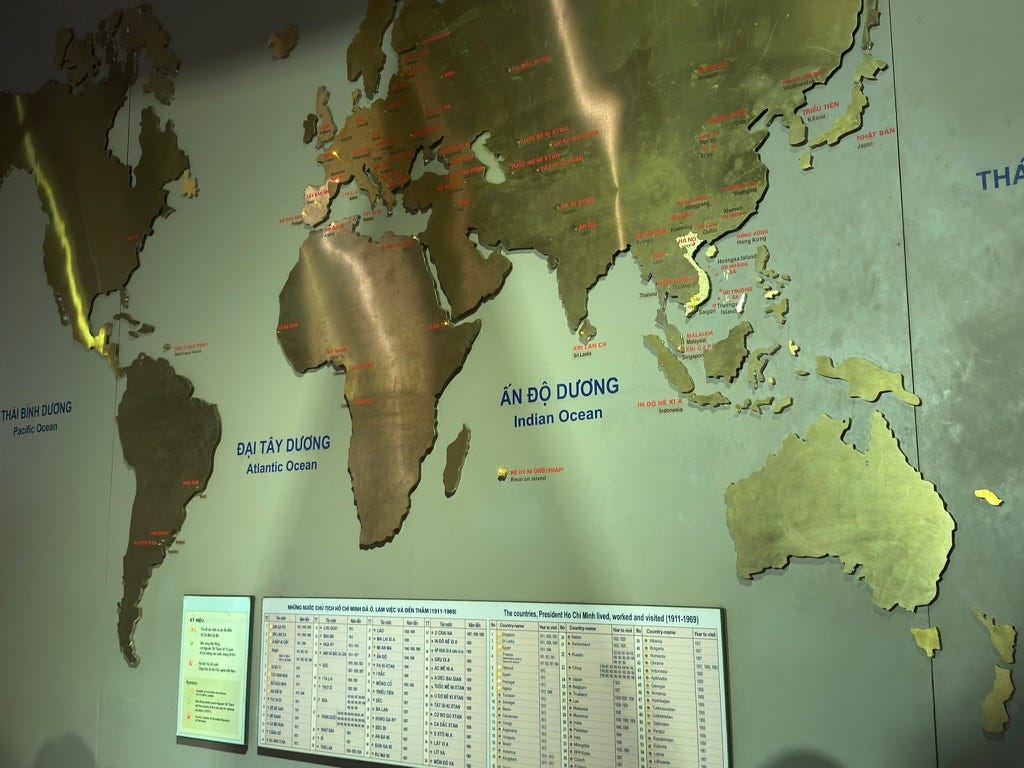
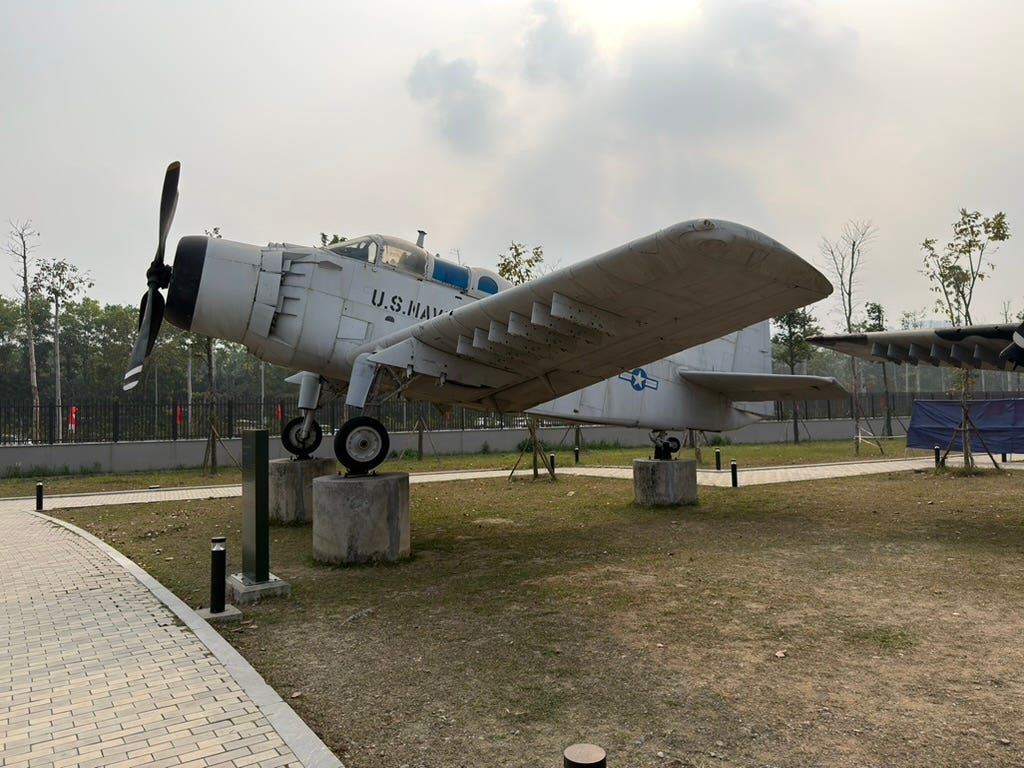
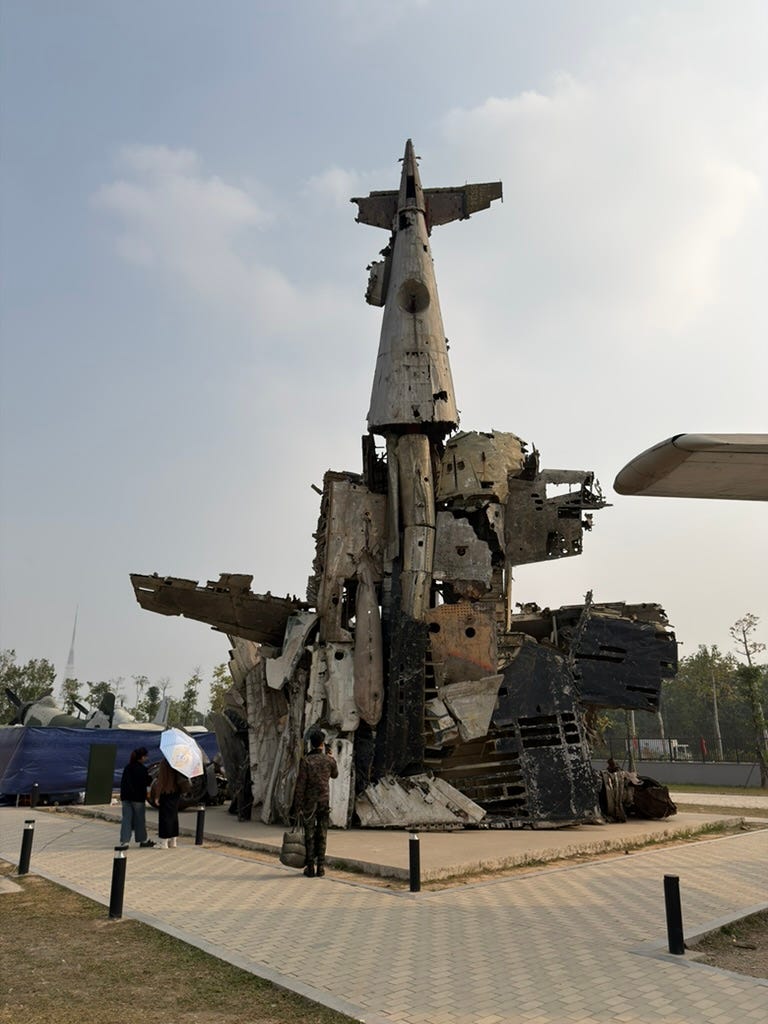
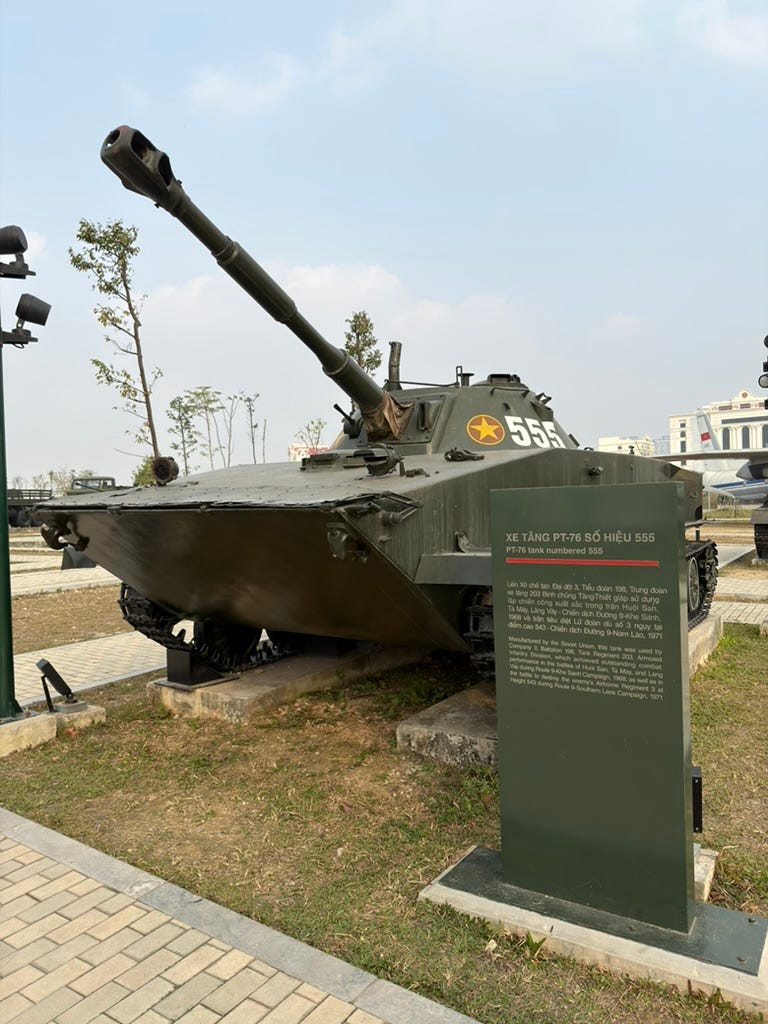
After visiting Japan in December and being disappointed by their lack of museums and history (at least after the Meiji Restoration) with the exception of the Hiroshima Peace Memorial, I decided that Vietnam would probably be better as there was no reason for them to not have giant memorials and museums celebrating their long fought battle for independence.
a trip to hiroshima

During my recent trip to Japan, I realized that Hiroshima was only 300km away from Osaka. While that initially seemed like a lot coming from a country that measures 40x20km, it was just an hour and twenty minutes on the Shinkansen (bullet trains). So it made the two hour journey from my hotel room to the memorial not that bad of a day trip.
To prepare myself for Vietnam, I decided to read the Pulitzer Prize-winning book Embers of War by Fredrik Logevall. While I had read Kissinger by Walter Isaacson and multiple books on Richard Nixon that obviously touched on the bombing campaigns and peace talk negotiations by the Nixon-Kissinger duo, I wanted to learn more about the origins of the war. I prefer to read biographies to understand history as I find them more engaging and it further affirms my longstanding belief in the great man theory of history, but this book was informative yet readable and incredibly well-written as you would expect of a book that won a Pulitzer.
The book’s timeline spans from 1919 to 1959 and Logevall clearly knows how to hook people as he starts off the prelude with the story of a young Congressman Jack Kennedy visiting Saigon in 1951 with his younger siblings Robert and Patricia. They were on a tour in Asia so that Kennedy could learn more about the region that was going to play such a big part in the foreign policy discussions back in Washington.
The prologue of the book then talks about a young 29-year-old Ho Chi Minh trying to get a word in with the American President Woodrow Wilson. The year was 1919 and Wilson had just given a speech at Versailles about the post Great War order. He had suggested he wanted to free colonial peoples to determine their own destinies in his push for the League of Nations. While the young Vietnamese man would be ignored, he would continue on and towards the end of this book’s tale he would have successfully won a war against the French in the First Indochina War and the first two Americans would die in the Second Indochina War in 1959, whose names are the first two among the more than 50,000 names forever engraved into granite stone at the Vietnam War Memorial in the capital of that great power on the other side of the world.
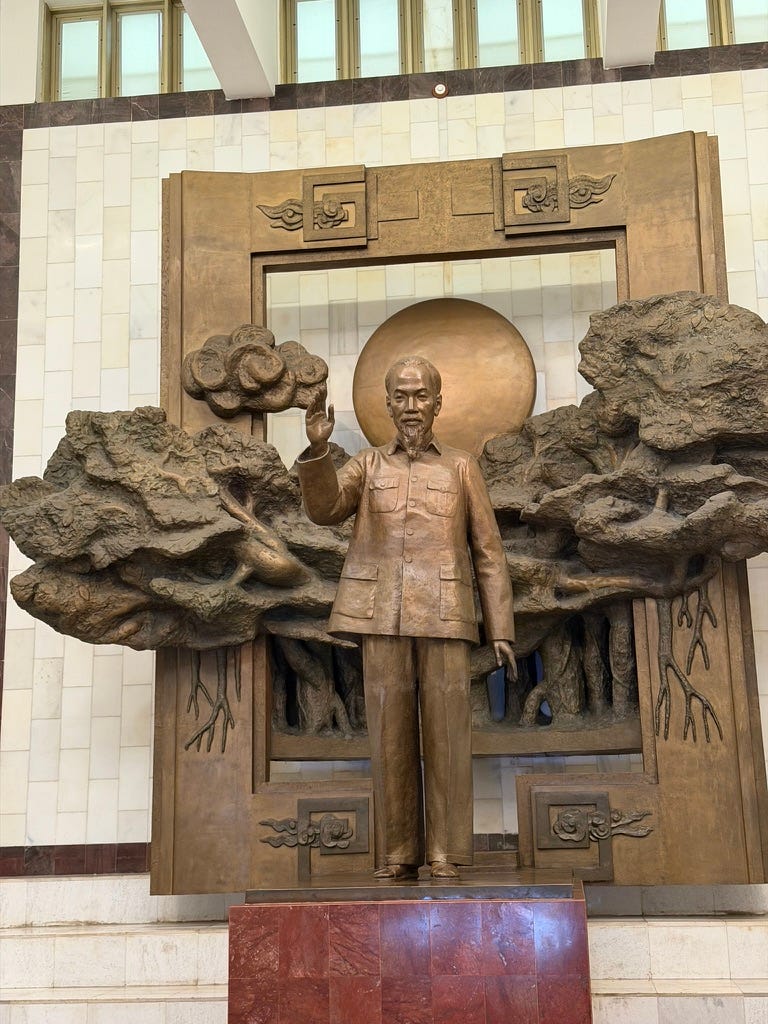
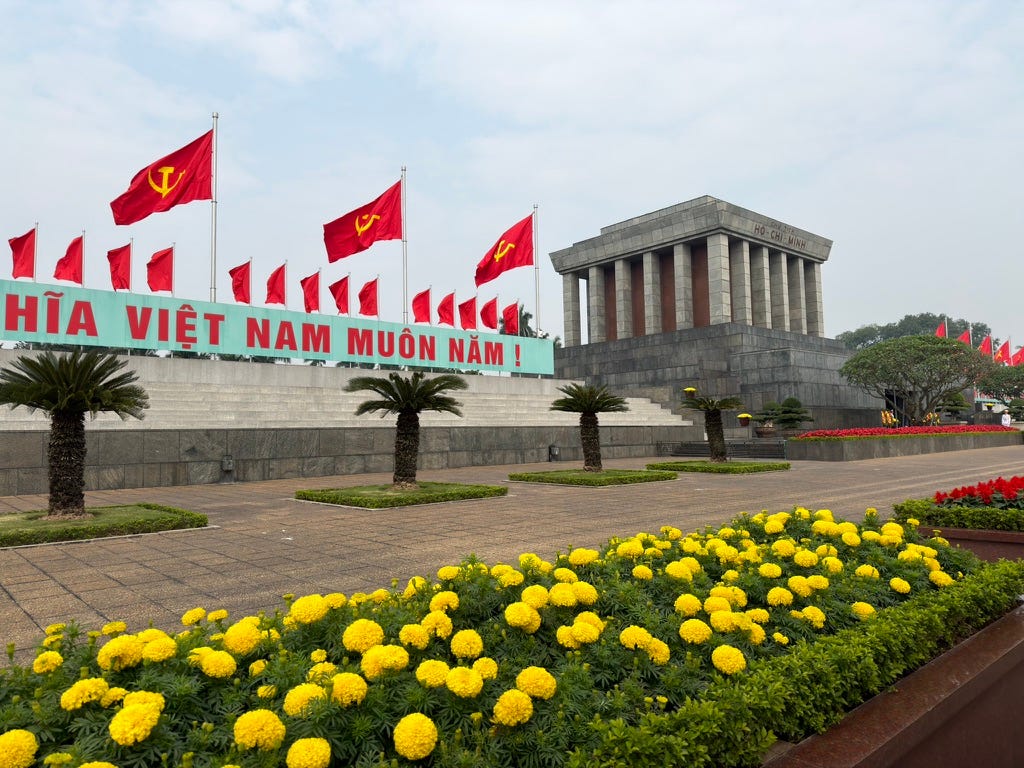
The tale of Ho Chi Minh who left his homeland when he was about twenty and then only returned after three decades after living around the world and fighting for its independence from its colonial master is almost mythical and unreal which makes for great lore. Also while I was in Hanoi, I didn’t realize that a mausoleum especially in a communist country meant that you get to actually see the body of Ho Chi Minh as it is publicly displayed inside this majestic building in the middle of their main square. Apparently Mao and Lenin are also viewable like this which is wild.
Logevall goes through the French colonial history of Indochina from 1919 onwards to WWII when it was temporarily freed from Japanese invasion until they changed their mind one day and had a weird co-colonial enterprise as the Japanese continued their conquest over Southeast Asia. After the Japanese surrendered, the French were back in control but by then the mystique of the colonial white man had been erased as it had been around in colonial countries around the world and resistance had started in the outskirts of major cities like Hanoi and Saigon led by people like Ho Chi Minh. It didn’t take long before Ho Chi Minh and his comrades entered into a full scale hot war with France in 1947 and were supported by the Soviets and Mao’s China. However, Logevall argues that the scale of the Soviets and Maoist China was vastly overestimated by the western allies. The Soviets were not that interested in this part of the world and whilst Ho Chi Minh and other Vietnamese leaders travelled to Moscow to make their case to Stalin and subsequent Soviet leaders, the Chinese had to be there with them and played a more direct role in supporting Ho Chi Minh for the time being.
To set the stage for this book, there are three simultaneous games being played. Firstly, the revolving door of various French generals and high commissioners (or governor-generals as they were known for a time) being assigned to tackle this post-war Indochina question with colonial tensions rising across the globe and a hot war with Ho Chi Minh and his troops in the battlefields across Vietnam. Then there is the diplomatic chess game in Geneva and Paris which revolve around not just what France and her allies should do in this situation but even the extent to which they should care due to the more overarching issue of the communist threat closer to home in the form of the Soviets and the Iron Curtain and the whole host of issues that came about in that same time period. Then there is of course, the third game which was being played in Washington policy circles, the White House and Capitol Hill as they grappled with McCarthyism and the effects of “Losing China” and the concluding war in Korea that had split the country.
Being an American historian, Logevall clearly focuses more on what the American Presidents thought about Vietnam going as far back as Wilson as I mentioned earlier in this post. However, he really focuses on the President’s view starting from FDR. One of the more interesting counterfactuals to think about was what would have happened to Indochina if FDR had lived to complete his term and oversee the end of WWII. Logevall notes that whenever the question of Indochina or any colony came up, FDR was always in favor of giving people their independence. Of course, maybe this fairytale counterfactual is pointless if the Soviet threat of communist expansion and domino theory would have led FDR to make the same decisions as his successors but it’s interesting nonetheless that he had seemingly such a marked difference compared to all the future Presidents. In fact, I recall reading about this recently in No Ordinary Time by Doris Kearns Goodwin which is about Franklin and Eleanor Roosevelt’s relationship through the war focusing on the domestic front. In the book, FDR is said to have brought up letting the Indians govern themselves during one of his meetings with Churchill in the middle of the war and Churchill left the discussion halfway in anger at the thought of giving up the crown jewel of the empire. FDR then decided to not bring it up because there were more important things to focus on in the midst of war but alas it’s still worth mentioning.
No Ordinary Time by Doris Kearns Goodwin

This book’s title is a quote from a speech that Eleanor Roosevelt gave to the 1940 Democratic National Convention when President Franklin Roosevelt wanted to run for a third term but in honorable American fashion couldn’t seem as though he wanted to run for a third term and thereby couldn’t reveal whether he was actually running or not running leading a…
After FDR, Harry Truman inherits the problem and simply follows the status quo when it came to Indochina following his Secretary of State Dean Acheson and what the experts thought which was that they should maintain the communist threat but not involve American troops as not only is that always an unpopular move by any administration but because most Americans didn’t even know what Indochina or Vietnam or Ho Chi Minh were. This made it simply untenable to even fathom participating directly especially since the Korean War was raging on and there were more pressing issues in Europe.
Then we get to the meat of Indochina through the reign of Eisenhower. Eisenhower and his VP Nixon were elected after 20 years of democratic Presidents in the wake of the Red Scare with Nixon being one of the chief political benefactors of this fear as he famously ‘exposed’ a communist spy Alger Hiss while he was in the House of Representatives just a few years ago. The administration was convinced that “Losing China” to the communists and ongoing armistice in Korea that was Truman’s fault was what had lost the democrats the White House and didn’t want to make the same costly political mistake with Indochina.
Ike and his Secretary of State John Foster Dulles didn’t want to negotiate with China because they hadn’t recognized it yet and crucially didn’t understand that the USSR, China and Ho Chi Minh’s Viet Minh forces weren’t exactly the best of allies just because they all happened to be communists. The author argues that this assumption of the three communist states being one singular bloc vying for world domination was the biggest mistake Ike and Dulles made in dealing with the situation. As mentioned before, they didn’t understand that the Viet Minh and their forefathers and the Chinese had a thousand years of history which brought about disagreements and tensions and the Soviets were not all that concerned about this part of the world and were also suspicious as to why at one point Ho Chi Minh had disbanded the communist labelling of his group during negotiations with the French which they took to be proof that they were not actually communists.
Ike and Dulles still have to sell the war and educate the people on why their supplies were going to this colony of France and they did with Ike giving his famous speech on the domino theory and he then went to Congress to ask for permission to fight while Dulles campaigned for a “United Action” coalition in Europe. However, the British were convinced that this United Action would lead to WWIII and opposed it. Interestingly enough, Congress (which includes Minority Leader Johnson at this point) comes back to the President and tells him that they would need British and Allied support first before they could authorize him to fight through this “United Action” front with France for her colony. Logevall argues that this was a political maneuvering by Ike and Dulles as it either means that they genuinely wanted to fight but were blocked by Congress due to it being conditional on Britain or that they didn’t really want to fight but had to appear as though they wanted to because of the political climate and the losses in China and Korea and had an easy way out of actually fighting because of Congress and Britain. Logevall argues that because of Ike asking unrestricted authority from Congress, it was actually the former because you wouldn’t ask for blank check otherwise.
Despite all this wrangling, the main climax of the book comes down to the battlefield in Vietnam that culminated in the battle of Dien Bien Phu in 1954 which resulted in a Viet Minh victory. Logevall says that “for the first time in the annals of colonial warfare, Asian troops had defeated a European army in fixed battle”. I found this quote hard to believe and as I researched further I realized that perhaps the author is right in a technicality as he is specifically referring to colonial warfare which doesn’t involve the Russo-Japanese war etc and further limited it by saying “fixed battle” which I guess doesn’t involve the various Imperial Japan victories during WWII against European colonies etc.
Back in Geneva where the great and mostly middle dwindling powers had met to discuss the fate of Indochina, this sudden victory had certainly shifted the odds in favor of Ho Chi Minh but it wasn’t enough for a full communist Vietnam settlement. The settlement was eventually reached with Vietnam being split into two and Ngo Dinh Diem was installed in South Vietnam as the leader as he had connections in Washington. Interestingly, France and her western allies had won more at Geneva than they had at the battlefield because of fear that the Americans struck in the hearts of the communists through Dulles’ threat of entering the war in the most significant speech that he gave on the matter.
Then, the secretary continued, the United States would “hold this area and fight subversion within with all the strength we have,” using economic and military assistance to the non-Communist governments as well as an American-led regional defense grouping modeled in part on NATO. It was a monumental decision, as important as any made by an American administration on Indochina, from Franklin Roosevelt’s to Gerald Ford’s. Its true import would become clear only with time, but even on that day the weight of the secretary of state’s words were hard to miss."
…
Privately, Eisenhower knew what every other informed observer knew: that the terms of the agreement at Geneva were far better, from France’s perspective and the West’s perspective, than would have been expected on the day the proceedings opened. He felt a measure of vindication. America’s tough words, starting with Dulles’s speech in September 1953 that warned of major retaliation if China intervened directly in the war, had had their effect. The threat of direct U.S. military involvement caused nervousness in Beijing and Moscow and helped persuade the Viet Minh to accept concessions in the final agreement
Fredrik Logevall, Embers of War
Ike and Dulles had saved Vietnam temporarily from falling into communist hands and Diem would be a very popular leader in the minds of American people and the press as he was hailed as a sort of Zelenskyy-esque figure as he was leading his people to fight the good fight. Though, Diem was a vastly different leader in most aspects starting with the fact that his elections were so fake as to warrant the CIA who was propping him up to warn him to not cheat as much and make it somewhat believable (Diem wouldn’t listen and give himself 98.2% of the votes). Moreover, other than his ties to America, he did not have much leadership or military experience that had helped him. In fact, in 1963 under the Kennedy administration he would be accidentally assassinated in a CIA-led military coup because of some misunderstandings and miscommunications.
However, even immediately after the Geneva settlement, everyone knew that the countryside was already in control by the North and their allies but ignored it and knew that their days were numbered even with all the support politically and financially and militarily by the United States. However, the Washington status quo and expert opinion prevailed and the Americans slowly became more and more entrenched and attached to this country that was falling apart almost from the start which is the tragedy of it all.
Logevall argues that Vietnam in the 1960s happened because the leaders in the 40s and 50s simply followed the safe status quo decision backed by the bureaucratic Washington machine instead of making the hard choice of reevaluating the importance of defending Vietnam. Not to mention taking a hard look and whether the domino theory that the rest of Southeast Asia or even Japan, Australia and India would fall to the communists if they had full control of Indochina. As mentioned a few times, they overestimated the strength of the communist bloc and imagined they were more united that they actually were.
Moreover, the American leaders operated on this issue with a fear that if they had been “weaker” or let go of Vietnam that they would be like Truman who had “lost” China and Korea which was damning in the age of McCarthyism and the ever expanding communist threat in the Cold War. Truman passed this along to Eisenhower who passed it along to Kennedy and his entourage who further deepened American commitment to South Vietnam but was assassinated and the issue was once again passed along. But time didn’t give Johnson a chance to pass it along and he was confronted with making the hard choices all these other great men had delayed for way too long.
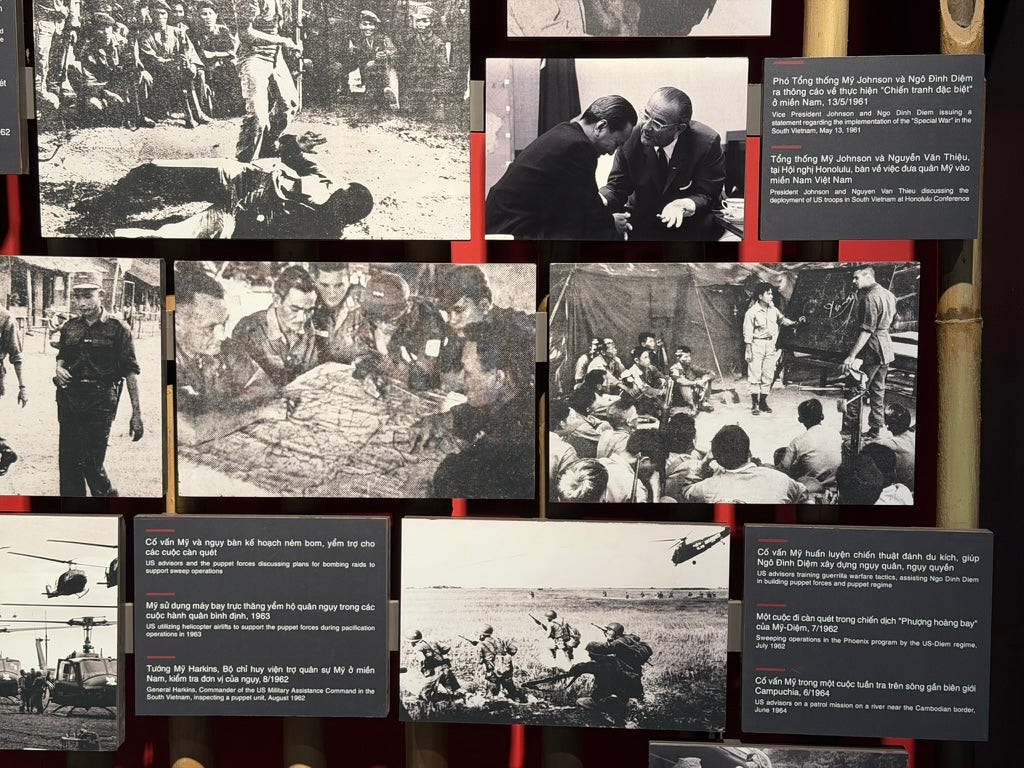
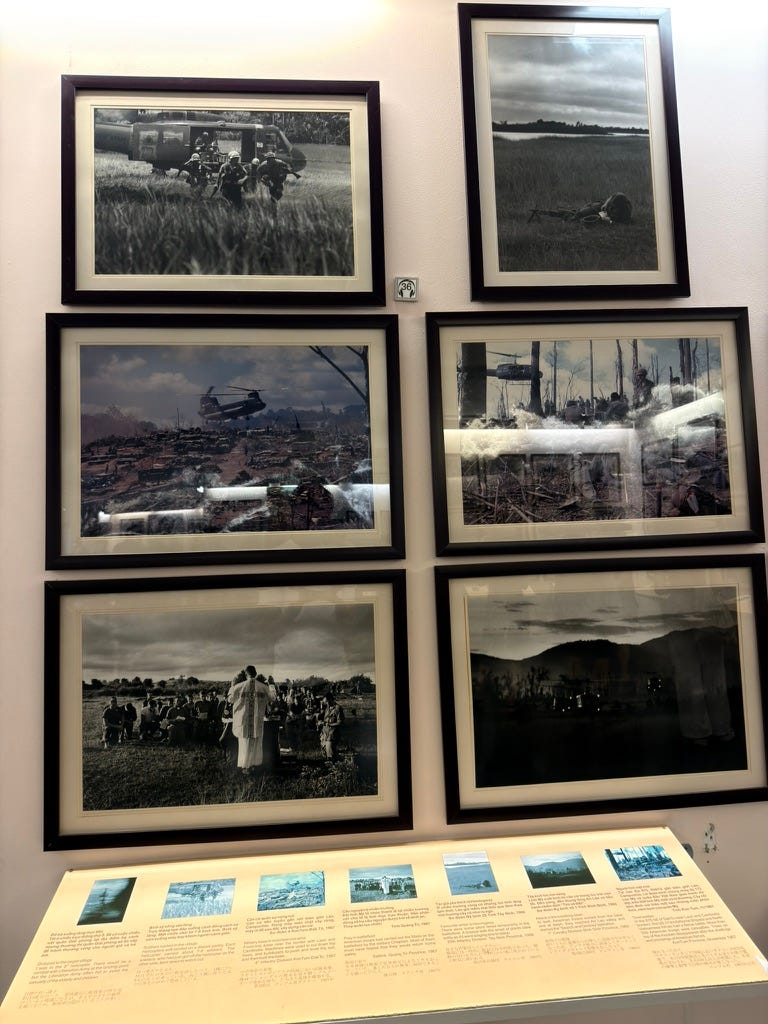
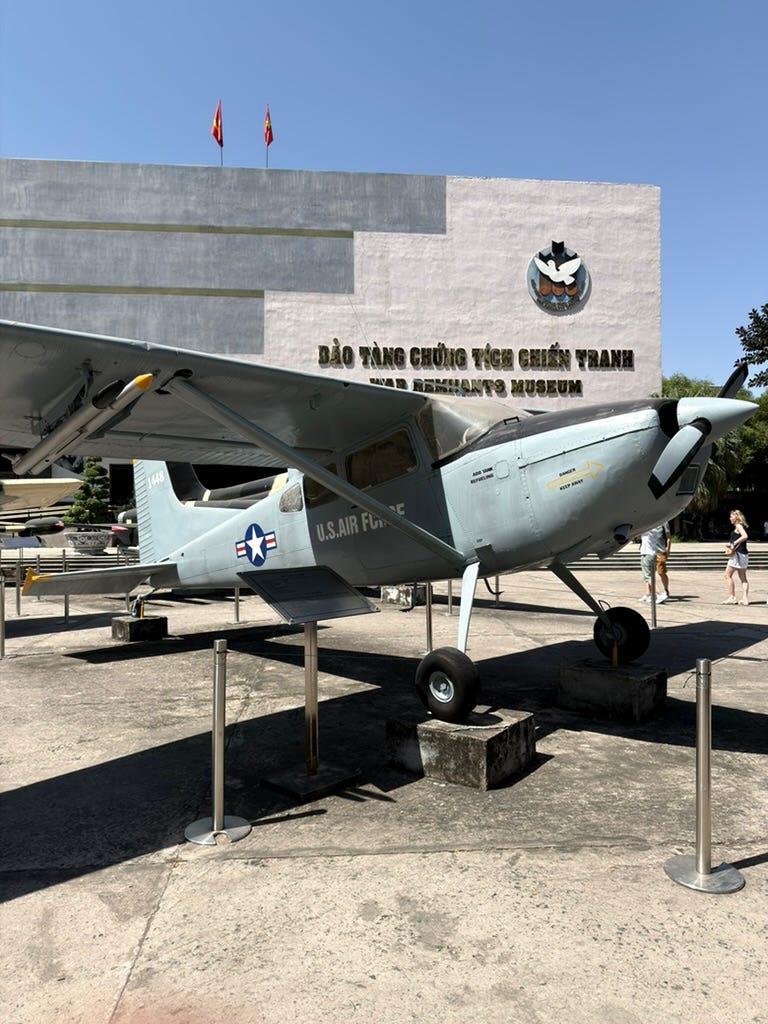
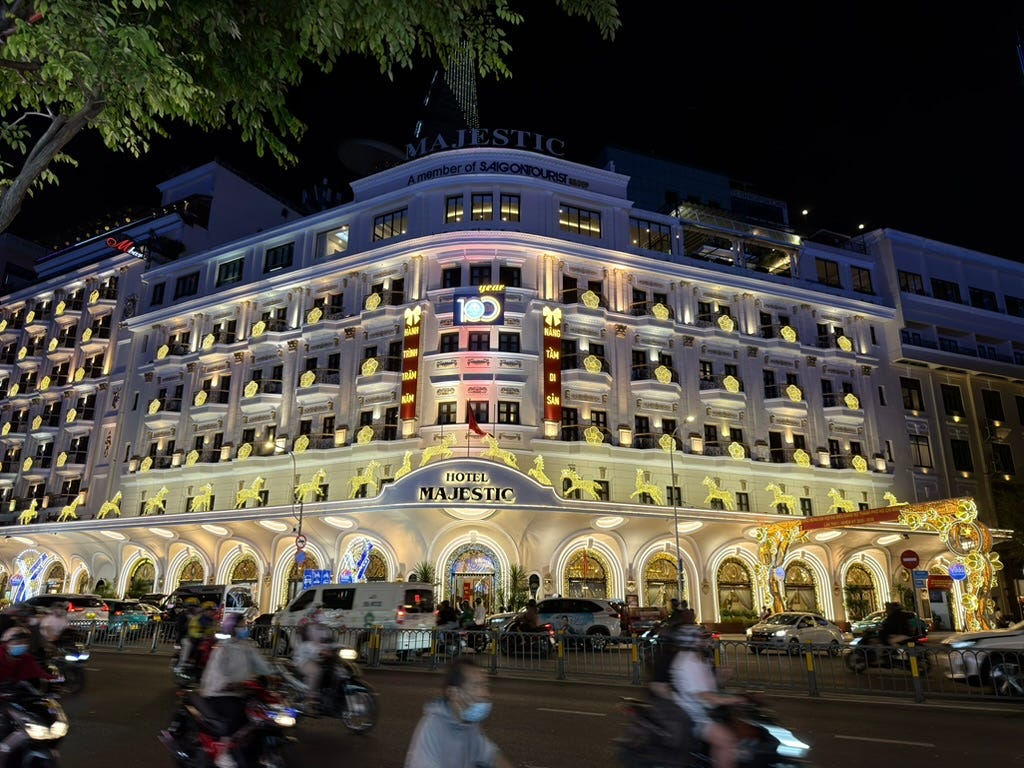
“You know who this is? Robert McNamara. The most hated man in Vietnam. Him and Henry Kissinger”, I overheard a tour guide telling the person on my right while I was at the Saigon War Remnants Museum.
When I came back home, I wanted to learn more about Robert McNamara. I had read about Johnson and Kissinger and Nixon of course. But McNamara was always the person who was mentioned next in these series of names revolving around the war. All I had known was that he was Kennedy appointed and Johnson begged him to stay to show confidence in the government after the assassination. However, unlike most of the other Harvard Kennedy men, McNamara stayed with Johnson until almost the end of his term. He is credited as the architect of the modern policy analysis in the U.S. military and of course escalating the Vietnam War as he was the Defense Secretary from 1961 to 1968. So to understand more, I watched his documentary which was published when he was 87 years old in 2003 titled The Fog of War: Eleven Lessons from the Life of Robert S. McNamara. I had read that McNamara had later apologized for some of the actions he took during the Vietnam War in his memoirs and interviews decades after the fact and this interview had a similar vibe.
McNamara starts off the documentary talking about his life from how his first memory was WWI Victory Day celebrations in California when he was two years old to leaving Harvard to join the army as America was entering WWII. During WWII, he was in the Air Force as an officer under General LeMay who was in charge of Air Force operations in Japan at the time. McNamara recounts how both he and LeMay were aware that they were bombing civilians in firebombing campaigns in places like Tokyo where these campaigns killed as much as 100,000 civilians a night but that they had to do it to end the war. He talks about a conversation he had with LeMay at the time where LeMay told him that if they lost the war that they would surely be tried as war criminals. McNamara in the interview said that he agreed with him but that they had no choice as they didn’t want to send American troops on the ground to brutally fight a land war in Japan which is the same rationale that people give for the atomic bombs on Hiroshima and Nagasaki.
After the war, McNamara had already made a name for himself in the Air Force and was recruited to join the leadership of the Ford Company by the son of Henry Ford. He rose through the ranks quickly becoming the first non-Ford family member to become CEO but within days of being CEO, the new President-elect Kennedy offered him the Defense Secretary role and he accepted.
He moves through the Cuban Missile Crisis and what happened and then the documentary finally came to Vietnam. McNamara stood his ground and used Prussian army general Carl von Clausewitz’s fog of war to talk about how no one has the best information in the midst of making decisions during a war but that while they made mistakes, it was mostly correct and while people would call him a war criminal, he did what he had to do to lead.
I thought the more interesting part was when he met the Cubans and the Vietnamese decades later and had a conversation with Fidel Castro and with Vo Nguyen Giap who was the Minister of Defense of Vietnam from 1946 to 1980.
During the meeting with Castro in 2002 in Havana, Castro revealed that he had urged Nikita Khrushchev to launch nuclear weapons if the Americans had gone ahead with their plans to invade as Kennedy was urged to by the military generals. In the interview, McNamara recalls him being visibly shaken when he first heard this from Castro. Moreover, there were already 42,000 Soviet troops in Cuba compared to the 10,000 that was estimated by U.S. intelligence. On top of that, Castro revealed for the first time that tactical nuclear warheads were already deployed and operational on the island and that a local Soviet commander had full authority to use them which he would have probably done had the Americans gone ahead with the invasion.
At the Hanoi Conference in 1995, McNamara met Giap and other military leaders to discuss the war. McNamara claimed that he was shocked to hear directly from the Vietnamese leaders that it was never about communism spreading but about independence. They said that they would have never become a Chinese proxy as they had been fighting them for a thousand years and thus the domino theory that the Americans espoused was an absurd reading of the actual situation.
After all this, I decided that I had clearly not procrastinated enough from writing about Vietnam and Caro after coming back from my trip. Thus, I decided to watch a lecture on the war by Sarah Paine, a historian and professor at the U.S. Naval War College who had gone viral after being interviewed by AI Podcaster Dwarkesh Patel. Her take on Vietnam is that America didn’t lose in the war as it was just another theatre in the war that truly mattered: the Cold War. While she acknowledges the tragedy of the more than 50,000 dead and what it did for the country, America had won the Cold War. The Sino-Soviet split happened and China and Vietnam were at war with each other as soon as Saigon fell. And most of all, the dominos didn’t fall. Thus, she argues that while Vietnam was a win for Ho Chi Minh and his forces, it wasn’t a loss for America.
While that may have been true from a strategic military analysis point of view, I didn’t want that. I wanted to understand why Johnson made the decision that he did when he inherited this ticking time bomb after Kennedy was shot in Dallas.
One of the sorrows of reading a great biography series like that of Caro’s is that nothing will ever compare again. No other author can spend a decade or more of his life on a single volume and come close to the level of writing that Caro blesses the pages of his books with. While it is non-fiction, the writing is that of a great novel or play and you know that Caro has sweated over and rewrote and contemplated and fought and argued over every single word and turned over every page of thousands and thousands of pages of documents at libraries across the United States to bring Lyndon back to life.
After reading Doris Kearns Goodwin’s book on FDR and Eleanor that I have referenced earlier in this post, I realized that she had written a Johnson biography in 1977 which was earlier than even the first Caro book Path to Power (1982). Moreover, she had actually met and worked with President Johnson in the White House. I was surprised to learn this fact as she is still doing podcasts and interviews today but then realized that she was a 24 year old graduate student at Harvard who was selected as a White House Fellow in 1968. Here’s what transpired as told in Wikipedia:
Johnson initially expressed interest in hiring the young intern as his Oval Office assistant, but after an article by Kearns appeared in The New Republic laying out a scenario for Johnson’s removal from office over his conduct of the war in Vietnam, she was, instead, assigned to the Department of Labor; Goodwin has written that she felt relieved to be able to remain in the internship program in any capacity at all. “The president discovered that I had been actively involved in the anti-Vietnam War movement and had written an article entitled, ‘How to Dump Lyndon Johnson’. I thought, for sure, he would kick me out of the program, but instead, he said, ‘Oh, bring her down here for a year, and if I can’t win her over, no one can’.” After Johnson decided not to run for reelection, he brought Kearns to the White House as a member of his staff, where she focused on domestic anti-poverty efforts.
After Johnson left the White House, he wanted to write his memoirs at his ranch so he would invite a team which consisted of Goodwin to pop by and interview him and basically help with the writing process so that he can tell his story. This led to Goodwin having a lot of interaction with the former President which allowed her to glean insights that only she could have known that she wrote about in the biography she would publish 4 years after his death.
All of this to say, I had to betray waiting loyally for Caro’s final book and dive in to Goodwin’s book to see what she had learned about the character as he dealt with Vietnam.
“LBJ was great in domestic affairs,” elder statesman Averell Harriman once observed. “Harry Truman had programs, but none got through. Kennedy had no technique. FDR talked simply during the crisis, but didn’t act enough later. Johnson went back past the New Frontier all the way to the New Deal. He loved FDR, and it was fantastic what he did. If it hadn’t been for … Vietnam he’d have been the greatest President ever. Even so he’ll still be remembered as great.”
“If it hadn’t been for Vietnam”—how many times this phrase has been spoken in conversations assessing Johnson’s place in history. For it is impossible to disconnect Johnson from that war, and undeniable that the fighting abroad halted progress toward the Great Society. Indeed, from the beginning, Johnson later claimed, he himself foresaw and weighed the devastating consequences of war on domestic reform, but in the end, felt he had no choice but to escalate the war.
“I knew from the start,” Johnson told me in 1970, describing the early weeks of 1965, “that I was bound to be crucified either way I moved. If I left the woman I really loved—the Great Society—in order to get involved with that bitch of a war on the other side of the world, then I would lose everything at home. All my programs. All my hopes to feed the hungry and shelter the homeless. All my dreams to provide education and medical care to the browns and the blacks and the lame and the poor. But if I left that war and let the Communists take over South Vietnam, then I would be seen as a coward and my nation would be seen as an appeaser and we would both find it impossible to accomplish anything for anybody anywhere on the entire globe.
“Oh, I could see it coming all right. History provided too many cases where the sound of the bugle put an immediate end to the hopes and dreams of the best reformers: the Spanish-American War drowned the populist spirit; World War I ended Woodrow Wilson’s New Freedom; World War II brought the New Deal to a close. Once the war began, then all those conservatives in the Congress would use it as a weapon against the Great Society. You see, they’d never wanted to help the poor or the Negroes in the first place. But they were having a hard time figuring out how to make their opposition sound noble in a time of great prosperity. But the war. Oh, they’d use it to say they were against my programs, not because they were against the poor—why, they were as generous and as charitable as the best of Americans—but because the war had to come first. First, we had to beat those Godless Communists and then we could worry about the homeless Americans. And the generals. Oh, they’d love the war, too. It’s hard to be a military hero without a war. Heroes need battles and bombs and bullets in order to be heroic. That’s why I am suspicious of the military. They’re always so narrow in their appraisal of everything. They see everything in military terms. Oh, I could see it coming. And I didn’t like the smell of it. I didn’t like anything about it, but I think the situation in South Vietnam bothered me most. They never seemed able to get themselves together down there. Always fighting with one another. Bad. Bad.
“Yet everything I knew about history told me that if I got out of Vietnam and let Ho Chi Minh run through the streets of Saigon, then I’d be doing exactly what Chamberlain did in World War II. I’d be giving a big fat reward to aggression. And I knew that if we let Communist aggression succeed in taking over South Vietnam, there would follow in this country an endless national debate—a mean and destructive debate—that would shatter my Presidency, kill my administration, and damage our democracy. I knew that Harry Truman and Dean Acheson had lost their effectiveness from the day that the Communists took over in China. I believed that the loss of China had played a large role in the rise of Joe McCarthy. And I knew that all these problems, taken together, were chickenshit compared with what might happen if we lost Vietnam.
“For this time there would be Robert Kennedy out in front leading the fight against me, telling everyone that I had betrayed John Kennedy’s commitment to South Vietnam. That I had let a democracy fall into the hands of the Communists. That I was a coward. An unmanly man. A man without a spine. Oh, I could see it coming all right. Every night when I fell asleep I would see myself tied to the ground in the middle of a long, open space. In the distance, I could hear the voices of thousands of people. They were all shouting at me and running toward me: ‘Coward! Traitor! Weakling!’ They kept coming closer. They began throwing stones. At exactly that moment I would generally wake up … terribly shaken. But there was more. You see, I was as sure as any man could be that once we showed how weak we were, Moscow and Peking would move in a flash to exploit our weakness. They might move independently or they might move together. But move they would—whether through nuclear blackmail, through subversion, with regular armed forces or in some other manner. As nearly as anyone can be certain of anything, I knew they couldn’t resist the opportunity to expand their control over the vacuum of power we would leave behind us. And so would begin World War III. So you see, I was bound to be crucified either way I moved.”
Did Lyndon Johnson believe all this? Yes … some of the time. Was it true? Some of it; and the rest was not simply pure illusion. For even Johnson’s most grotesque exaggerations were always constructed on some fragment of reality, so that they could never be totally disproven by factual evidence or unanswerable logic alone, only by rejecting his judgment for one more reasonable, more consonant with the known facts.
Doris Kearns Goodwin, First paragraphs of Chapter 9:Vietnam in Lyndon Johnson And The American Dream
While the book certainly misses on the charms of the Caro books that I had come to expect when reading about Johnson and some of the bigger stories and revelations like the stealing of elections and getting money from oil and construction moguls and getting government approval for his radio business which made him the wealthiest President to ever be in office up till that point, the conversations that Goodwin had with Johnson more than made up for that.
It’s hard to read 2500 pages about a person without feeling at least the slightest bit of affinity as you understand the strengths and flaws of a person in all its rawness no matter how horrible and ruthless they may appear to be in the pursuit of power. Reading this book and knowing that Johnson ruined his career and America with the choices he made with regards to Vietnam, you can’t help but think about how he was inadvertently placing all these traps around him that made him the perfect person to fall for them when the issue of Vietnam was handed to him. He didn’t have military experience like the others and his actions during WWII speak volumes to this. Caro said that he wanted military glory and was the first Congressman to sign up after Pearl Harbor in the Navy but instead spent his time taking photographs around California in his uniform and visited various camps and did “inspections” and “reports”. The war was more of a holiday for the Congressman. However, when Johnson realized that the war was going to end soon, he decided that he needed some action or otherwise his political career would be in jeopardy. Johnson pushed for a role anywhere near the Pacific so that he would at least be near gunfire.
They eventually sent him to Australia from which he participated in a mission by sitting at the back of a plane with a photographer. One of Johnson’s other political friends on another plane was actually shot down and killed but Johnson survived the harrowing experience as the plane wobbled while it was under attack by the Japanese before they safely made it back to base. Caro said that Johnson’s role in this was as a passenger but he was awarded a Silver Star by General MacArthur himself which he proudly wore on his lapel every day since. The story of his extent of participation was slowly changed until he became a hero and he would retell the story of his heroic actions from dinner party to dinner party back in Georgetown and campaign rallies ending with the story of the great General MacArthur himself awarding him the Silver Star. Understanding this Johnson, you can’t help but think that he was just further digging himself into a trap.
In bequeathing him the problem of Vietnam, history presented Lyndon Johnson with issues alien to his experience, resistant to his methods of leadership, yet decisive for his Presidency. That was a historic misfortune, for Johnson and for America. But Johnson was not simply a victim of circumstance. Destiny and victimization are not the same. The latter assumes neither an act of will nor even a motivating passion; the circumstances appear as exclusively external, arbitrary, and exorbitant. But Lyndon Johnson’s decision to escalate the war in Vietnam was his own, the product of his beliefs, inward needs, and the public experience of decades. Admittedly, unlike his predecessors, he did not choose to be confronted with the need to decide whether the assumption that Vietnam was vital to our security…
Doris Kearns Goodwin, Lyndon Johnson And The American Dream
Goodwin then argued that while any President might have intervened in Vietnam in 1965, it was uniquely Johnson who would have wanted both the Great Society and Vietnam at the same time which ultimately caused his downfall. She says that only Johnson could have imagined that his domain expertise in domestic issues and wrangling with Congress that it would translate to the battlefield despite having little expertise unlike an Ike or even a Kennedy with foreign policy.
Perhaps only Johnson would have dared to conceal the cost of the war from senior members of Congress, so that he might receive the Great Society appropriations before the truth came out. Probably the fact that he was, in fact, a master of the Congress had allowed him to engage in so complicated and immense an undertaking. The very qualities that had led to Johnson’s political and legislative success were precisely those that now operated to destroy him: his inward insistence that the world adapt itself to his goals … Here more than anywhere, the people must have an opportunity to make a choice. For in the end, no statesman can pursue a policy of war unless he knows for what goals, and for how long, his people are prepared to fight. Lyndon Johnson had wanted to surpass Franklin Roosevelt; and Roosevelt, after all, had not only won the reforms Johnson envied, he had also waged a war. But there was a critical difference: Roosevelt did not attempt the New Deal and World War II at the same time. Only Johnson among the Presidents sought to be simultaneously first in peace and first in war; and even Johnson was bound to fail.
Doris Kearns Goodwin, Lyndon Johnson And The American Dream
“And then beside Fulbright there were all those liberals on the Hill squawking at me about Vietnam. Why? Because I never went to Harvard. That’s why. Because I wasn’t John F. Kennedy. Because I wasn’t friends with all their friends. Because I was keeping the throne from Bobby Kennedy. Because the Great Society was accomplishing more than the New Frontier. You see, they had to find some issue on which to turn against me and they found it in Vietnam. Even though they were the very people who developed the concept of limited war in the first place.”
Doris Kearns Goodwin, Lyndon Johnson And The American Dream
“How is it possible,” Johnson repeatedly asked, “that all these people could be so ungrateful to me after I had given them so much? Take the Negroes. I fought for them from the first day I came into office. I spilled my guts out in getting the Civil Rights Act of 1964 through Congress. I put everything I had into that speech before the joint session in 1965. I tried to make it possible for every child of every color to grow up in a nice house, to eat a solid breakfast, to attend a decent school, and to get a good and lasting job. I asked so little in return. Just a little thanks. Just a little appreciation. That’s all. But look at what I got instead. Riots in 175 cities. Looting. Burning. Shooting. It ruined everything. Then take the students. I wanted to help them, too. I fought on their behalf for scholarships and loans and grants. I fought for better teachers and better schools. And look what I got back. Young people by the thousands leaving their universities, marching in the streets, chanting that horrible song about how many kids I had killed that day. And the poor, they, too, turned against me. When Congress cut the funds for the Great Society, they made me Mr. Villain. I remember once going to visit a poor family in Appalachia. They had seven children, all skinny and sick. I promised the mother and father I would make things better for them. I told them all my hopes for their future. They seemed real happy to talk with me, and I felt good about that. But then as I walked toward the door, I noticed two pictures on the shabby wall. One was Jesus Christ on the cross; the other was John Kennedy. I felt as if I’d been slapped in the face.”
Doris Kearns Goodwin, Lyndon Johnson And The American Dream
After his first heart attack when he was Majority Leader, Johnson mostly stopped smoking and drinking and became more health conscious. However, the day of Nixon’s inauguration, Johnson pulled out his first cigarette in more than a decade. One of his daughters pulled it out of his mouth saying “Daddy, what are you doing? You’re going to kill yourself.” He replied, “I’ve now raised you girls. I’ve now been President. Now it’s my time!”.
Johnson went into a self-destructive spiral while he was working on his memoirs and grappling with his legacy and Vietnam on his ranch and would only live 4 years and 2 days out of office dying at the age of 64 from his third heart attack after leaving office. He was known to play the song “Bridge Over Troubled Water” on loop ruminating and being depressed about the war as an outcast ex-President while he saw Nixon dismantling all the domestic agendas that he had worked to put into law as part of the Great Society.
Robert Caro is ninety years old. Every morning, he puts on his suit and goes to his office overlooking Central Park and continues typing away on his Smith Corona typewriter that hasn’t been manufactured in decades. He is 951 pages or so into the manuscript of the final Johnson book. He has sat in the White House room where the Tuesday lunches were held determining the fate of the country 9000 miles away over sherry.
As Caro says, “Well, one of the points of this last book is to show the reader how a great power goes to war, how unjust a great power can be because of its greatness. That you can send 600,000 men to a little country. So I think that’s very important. … And I guess I say to myself, you know, if you can show people the horror of this, you will have accomplished something.”
I can’t wait.